Stable material flow is critical to keeping construction projects on schedule and within budget. Choosing the right carbon steel pipe supplier for construction projects helps reduce delays, control sourcing risks, and maintain consistent quality. When supply remains steady, site work, fabrication, and installation move forward with fewer interruptions.
Why does stable pipe supply matter so much in construction?
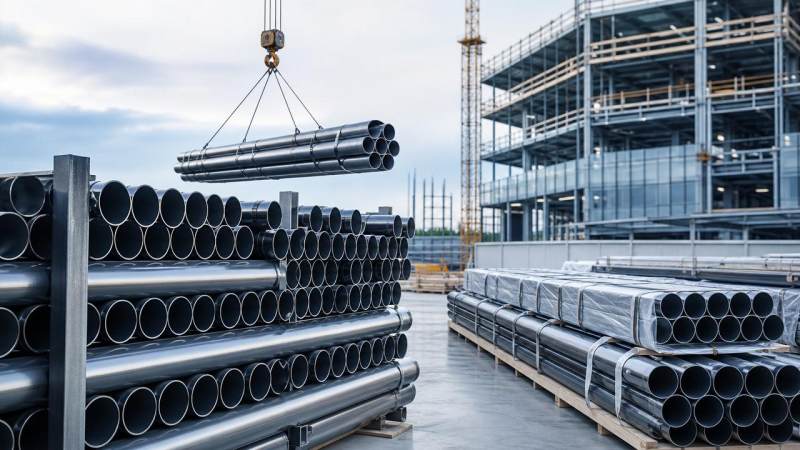
Construction schedules depend on sequencing. Foundations, structural frames, mechanical systems, and utility lines often rely on timely pipe delivery. A missed shipment can disrupt several linked tasks at once.
That is why a dependable carbon steel pipe supplier for construction projects is not only a vendor. It becomes part of the project execution chain, affecting labor efficiency, equipment use, and handover timing.
Carbon steel pipe is widely used because it offers strength, weldability, and cost efficiency. It supports structural, fluid transfer, fire protection, and general industrial applications across many job sites.
If supply is unstable, crews may wait, substitute materials, or reorder in smaller batches. Each choice can increase freight costs, create quality variation, and raise the risk of installation errors.
Stable supply also improves planning. When quantities, specifications, and delivery windows are reliable, fabrication drawings, cutting plans, and site allocation can be managed with greater confidence.
What problems happen when pipe supply is inconsistent?
The first problem is schedule slippage. Even short delays can affect trenching, welding, pressure testing, coating, and final commissioning. One late batch often creates a chain reaction.
The second problem is quality inconsistency. Different sources may provide mixed tolerances, wall thickness differences, or unclear documentation. That can complicate welding, fit-up, and inspection work on site.
The third issue is cost escalation. Emergency procurement usually means higher unit prices, extra shipping charges, and rushed processing. Indirect costs from idle labor can become even larger.
In some cases, safety is affected. When teams try to maintain progress using nonstandard substitutions, compatibility problems may appear in joints, supports, or pressure-bearing sections.
A reliable carbon steel pipe supplier for construction projects helps prevent these issues through stable capacity, repeatable production, export documentation, and clear communication before shipment.
How do you identify a reliable carbon steel pipe supplier for construction projects?
Start with production capability. A supplier should show stable output, not just trading flexibility. Real manufacturing control usually supports better lead time accuracy and stronger consistency.
Next, check standards compliance. Construction work often requires ASTM, EN, JIS, or GB alignment. Mill test reports, dimensional control, and traceable quality records are essential.
Export experience also matters. International projects need reliable packing, labeling, customs support, and shipment coordination. A supplier familiar with global delivery reduces avoidable risks.
Communication quality is another sign. Clear replies on grade, size range, coating, tolerance, and lead time show operational maturity. Vague answers often predict future problems.
It is also useful to review related steel supply capability. Many projects combine pipes with structural sections for framing, supports, and reinforcement systems.
For example, some sites also need Angle Steel Supplier support for brackets, framing elements, and bracing components. Integrated steel sourcing can simplify coordination and reduce procurement fragmentation.
Common angle steel grades include S235JR-S335JR Series, St-37/52, Q195-Q420, Q235, Q345, SS400, and ST52. Thickness typically ranges from 3-20mm, with lengths such as 5.8m, 6m, 9m, and 12m.
In construction and engineering, angle steel supports framing, reinforcements, brackets, and trim. When supplied under AiSi, ASTM, DIN, GB, and JIS standards, it improves compatibility across structural packages.
Which project stages benefit most from stable pipe supply?
Early-stage civil work benefits first. Underground networks, sleeves, and embedded pipe sections often need delivery before major concrete work progresses. Delays here are difficult to recover later.
The structural phase also gains value. Carbon steel pipes may be used in temporary works, supports, and specific structural applications. Timely arrival keeps fabrication teams aligned with erection plans.
Mechanical and utility installation depends heavily on coordination. Fire systems, water lines, drainage systems, and industrial service networks require size accuracy and repeatable supply batches.
Final testing and commissioning benefit as well. When all pipe sections follow consistent specifications, testing, certification, and acceptance become smoother and faster.
Stable supply is especially important on export-based projects. Longer logistics routes increase the need for reliable packing, booking, documentation, and milestone-based shipment planning.
How can stable supply lower total project cost instead of only material risk?
Unit price is only one part of procurement cost. Delayed pipe arrivals can trigger overtime, rescheduling, storage disruption, and idle equipment expenses that exceed the original material savings.
Stable supply improves batch planning. Larger, properly timed deliveries often lower freight inefficiency and reduce repeated handling. It also helps avoid partial installation and rework.
Consistent product quality saves money during fitting and welding. Predictable dimensions reduce modification work and support faster joining, alignment, and inspection acceptance.
A strong carbon steel pipe supplier for construction projects also supports cost control through realistic lead times. Honest planning is more valuable than aggressive promises that fail during execution.
What should be checked before placing a pipe order?
Confirm grade, diameter, wall thickness, length, coating, and standard first. Small specification errors can cause major delays after production begins or cargo reaches the site.
Review expected delivery milestones, not only final shipment date. Staged delivery often works better for large construction programs and reduces site storage pressure.
Request quality documents in advance. Material certificates, inspection records, and packing details should match project approval requirements before dispatch.
Check whether the supplier can support changes. Construction projects sometimes require revised quantities or added sections. Flexible but controlled response is a major advantage.
Use this checklist when assessing a carbon steel pipe supplier for construction projects:
- Production capacity and realistic lead times
- Compliance with ASTM, EN, JIS, or GB standards
- Stable export packing and shipment coordination
- Traceable quality control documentation
- Clear communication on changes and batch schedules
- Capability to support related structural steel needs
Are there common mistakes when choosing a supplier?
Yes. The most common mistake is selecting by price alone. A lower quote may hide uncertain delivery, inconsistent quality control, or weak export handling.
Another mistake is ignoring documentation readiness. Even acceptable material can cause delays if certificates, markings, or shipping records are incomplete.
Some buyers also underestimate logistics complexity. Port congestion, packaging weakness, and poor container planning can damage material flow before it reaches the project.
A further risk is fragmented sourcing without coordination. When pipes, structural members, and accessories come from unrelated channels, timing and compatibility become harder to manage.
Working with an experienced Chinese structural steel manufacturer and exporter can help. Strong production control, international standards compliance, and dependable lead times support smoother project delivery.
Quick FAQ table: what matters most in supplier selection?
In construction, stable pipe supply supports more than purchasing. It protects schedules, controls hidden costs, improves installation quality, and reduces avoidable project risk.
Choosing the right carbon steel pipe supplier for construction projects means evaluating production strength, quality systems, export capability, and response speed together.
For projects that also require structural sections, integrated support from a trusted Chinese steel partner can further improve coordination, consistency, and delivery confidence.
The next practical step is simple: review technical specifications, confirm standards, map delivery milestones, and compare suppliers by total project value rather than price alone.
Please give us a message


Please enter what you want to find