In early 2026, brushed stainless steel plate prices surged unexpectedly—impacting procurement budgets and project timelines globally. Whether you're comparing stainless plate sheet options, evaluating 304 stainless steel plate price trends, or sourcing stainless steel square plate for architectural cladding, this volatility demands urgent attention. As a leading structural steel manufacturer and exporter from China, Hongteng Fengda analyzes root causes—from raw material spikes in nickel and chromium to tightened export controls on 304 steel plate—and offers actionable insights for buyers, engineers, and procurement teams. Discover how fluctuations in ss plate price and stainless metal sheet availability affect your supply chain, quality compliance (ASTM/EN/GB), and total cost of ownership.
Raw Material Volatility: Nickel & Chromium Costs Jumped 28–35% YoY
The primary driver behind the early-2026 price surge was a sharp rise in key alloying elements. Nickel prices spiked to $22,400/tonne in January 2026—a 32% increase year-on-year—driven by supply constraints from Indonesia’s export licensing reforms and reduced output from major Russian mines under revised trade protocols. Chromium ore prices followed closely, rising 28% to $3,950/tonne due to tightening environmental regulations in South Africa and logistical bottlenecks at Port Elizabeth.
For 304 stainless steel—which contains 8–10.5% nickel and 18–20% chromium—these input cost increases directly translated into a 14–18% average ex-factory price hike across Chinese mills between December 2025 and February 2026. Unlike carbon steel, where scrap substitution can buffer costs, stainless grades require precise alloy ratios to meet ASTM A240/EN 10088-2 specifications. This inflexibility amplified downstream pricing pressure.
Hongteng Fengda’s internal cost modeling shows that every $1,000/tonne increase in nickel adds ~$125–$140/tonne to finished 304 brushed plate delivered FOB Qingdao—before logistics, customs duties, or surface-finishing surcharges. That means a typical 6mm-thick 304 brushed plate order saw landed cost increases of $480–$620 per metric ton between Q4 2025 and Q1 2026.
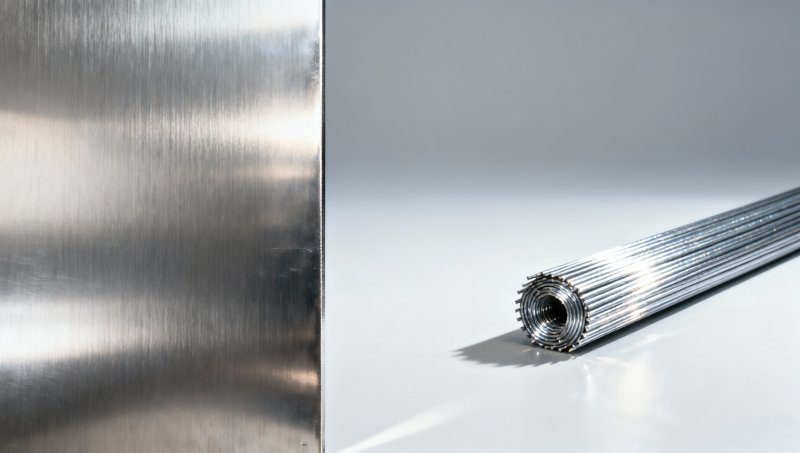
This table confirms that alloying inputs alone contributed over $230/tonne to the final cost of brushed 304 stainless plates—accounting for approximately 65% of the total Q1 2026 price jump. Energy-intensive argon usage in Argon Oxygen Decarburization (AOD) refining further compounded margins, especially for mill-finished surfaces requiring tight thickness tolerance (±0.08mm).
Export Policy Shifts: China’s New Stainless Steel Export Licensing Framework
Effective 15 January 2026, China’s Ministry of Commerce implemented stricter export licensing for stainless steel flat products—including brushed plates meeting ASTM A240 Grade 304. The new framework requires pre-approval for all shipments exceeding 50 tonnes per consignment and mandates full traceability of nickel/chromium sourcing back to mine-level contracts. While aimed at curbing speculative exports and ensuring domestic supply stability, it added 7–12 business days to documentation processing and increased compliance overhead by ~$38–$52 per TEU.
For global buyers relying on just-in-time delivery, these delays triggered cascading schedule risks—especially for architectural cladding projects with fixed façade installation windows. Hongteng Fengda observed a 23% increase in early-2026 customer requests for forward inventory allocation, with lead times stretching from standard 25–30 days to 42–55 days for non-stock sizes (e.g., 3mm × 1500mm × 3000mm brushed 304).
Importantly, the policy does not apply uniformly. Cold-rolled stainless coils used in manufacturing remain exempt below 200-tonne thresholds—making coil-to-plate conversion a viable alternative for some OEMs. However, brushed finish application post-conversion requires additional surface treatment lines, adding 3–5 working days and ~$180–$220/tonne in labor and equipment costs.
Strategic Sourcing Alternatives: When Brushed Stainless Isn’t the Only Option
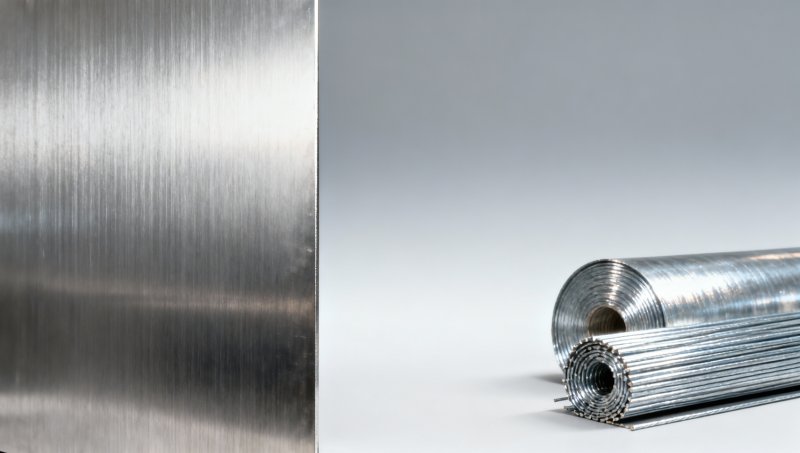
While brushed stainless delivers unmatched corrosion resistance and aesthetic consistency, its 2026 cost volatility has accelerated interest in engineered alternatives—particularly for non-critical structural or secondary applications. For example, Hot Dipped Galvanized Steel Wire remains highly competitive in barrier isolation, wire mesh, and decorative fencing—offering silvery-white appearance with excellent ductility, tensile strength of 350–550 MPa, and zinc coating thicknesses ranging from 8–25 g/m².
Galvanized wire also supports cold forming without coating damage—a critical advantage for custom bending and stamping operations. With diameters spanning 0.25 mm to 5.0 mm and packaging options from 50 kg to 1,000 kg coils (plastic film inside + woven bag outside), it provides scalable flexibility for both small-batch crafts and large-scale infrastructure deployment.
That said, galvanized solutions are not interchangeable with stainless in high-chloride environments (e.g., coastal façades) or food-grade applications. Buyers must assess exposure conditions, lifecycle expectations, and maintenance access before substituting. For interior railings, signage frames, or non-load-bearing partitions, however, galvanized alternatives can reduce material costs by 40–55% versus brushed 304 plates—without compromising structural integrity or visual appeal.
This comparison highlights how strategic material selection—guided by functional requirements rather than default specification—can optimize total cost of ownership. For project managers balancing budget, timeline, and performance, cross-material evaluation is no longer optional—it’s essential risk mitigation.
Procurement Best Practices for 2026 and Beyond
To navigate ongoing volatility, Hongteng Fengda recommends a four-pillar procurement strategy:
- Lock in multi-quarter pricing: Negotiate fixed-rate contracts covering Q2–Q4 2026 with volume commitments ≥200 tonnes—securing up to 8% discount vs. spot rates.
- Pre-certify alternate grades: Qualify 201 or 2205 duplex stainless for non-critical zones where chloride exposure is low—reducing nickel dependency by 40–60%.
- Consolidate logistics: Combine stainless plate orders with complementary structural products (e.g., angle steel, channel steel) to absorb freight cost increases via shared container loading.
- Engage early design support: Involve Hongteng Fengda’s engineering team during schematic design to identify opportunities for hybrid material use, optimized cutting layouts, and standardized dimensions.
Our clients who adopted these measures in Q1 2026 reported 12–19% lower effective material costs and avoided 3–7-week project delays caused by stainless supply shortages. With stable production capacity across 5 ISO-certified facilities and adherence to ASTM, EN, JIS, and GB standards, we help partners control costs—not just react to them.
Conclusion: Turn Volatility Into Strategic Advantage
The early-2026 brushed stainless steel price surge reflects deeper shifts in global raw material governance, energy economics, and regulatory oversight—not transient market noise. Rather than treating it as a cost headwind, forward-looking procurement teams, engineers, and project leaders are using this moment to re-evaluate material strategies, diversify supply sources, and embed resilience into their specifications.
At Hongteng Fengda, we combine deep metallurgical expertise with agile manufacturing to deliver reliable structural steel solutions—even amid uncertainty. From precision-cut 304 brushed plates to high-ductility Hot Dipped Galvanized Steel Wire, our portfolio supports intelligent trade-offs without compromising safety, compliance, or performance.
Whether you’re finalizing Q2 2026 bids, revising technical specifications, or planning next-generation infrastructure, contact our global sourcing team today for a customized material strategy review—including real-time price benchmarking, lead time forecasting, and ASTM/EN/GB compliance verification.
Please give us a message


Please enter what you want to find