Steel rebar cost can vary sharply from one project to another, affecting budgets, procurement plans, and construction timelines. For project managers and engineering leaders, understanding what drives these price differences is essential to reducing sourcing risks and improving cost control. From raw material trends to specifications, logistics, and supplier capabilities, this article explains the key factors behind steel rebar cost changes and how to make smarter purchasing decisions.
Why a Checklist Approach Works Better for Cost Decisions
When teams review steel rebar cost only at the quotation stage, they often miss the deeper reasons behind price gaps. Two offers may look similar on a per-ton basis, yet result in very different total project costs once grade, processing, delivery, wastage, compliance, and schedule risks are included. That is why project managers need a checklist-based method rather than a simple price comparison.
A structured review helps answer practical questions: What must be confirmed first? Which cost drivers are fixed and which are variable? Where do hidden charges usually appear? And how can procurement teams compare suppliers fairly across different project conditions? For engineering and construction decision-makers, this approach improves budget forecasting and reduces change-order pressure later in the project.
First Checks: The Main Factors That Change Steel Rebar Cost
Before approving a purchase, review these core items in order. In many cases, steel rebar cost changes because several small variables stack together rather than because of one major issue.
- Raw material market movement: Billet, scrap, iron ore, energy, and alloy prices directly influence mill pricing. Even if design remains the same, the steel rebar cost can rise quickly during volatile commodity cycles.
- Grade and strength requirement: Higher strength grades such as HRB400 or HRB500 may cost more than lower grades, but they can reduce total tonnage in some designs. The cheapest unit price is not always the lowest project cost.
- Diameter and length mix: Common sizes are easier to source. A project requiring many non-standard diameters, mixed lengths, or special cut schedules usually sees a higher steel rebar cost due to production and inventory complexity.
- Standard and certification needs: Material supplied to ASTM, EN, JIS, or GB standards may require different testing, documentation, and traceability. Third-party inspection can also add cost but may reduce approval risk.
- Quantity and purchase timing: Large, stable orders usually receive better pricing than fragmented, urgent orders. Buying in phases may improve cash flow, but it can expose the project to future price increases.
- Fabrication and processing: Straight supply is simpler than bending, cutting, bundling by drawing mark, or special packaging. Every extra operation changes labor hours, scrap rate, and handling costs.
- Logistics and destination: Ocean freight, inland transport, port congestion, customs procedures, and unloading conditions can shift final steel rebar cost more than buyers expect, especially in international sourcing.
- Supplier reliability: A low quote loses value if lead times slip, documentation is incomplete, or quality claims lead to site delays. Total procurement risk must be priced in.
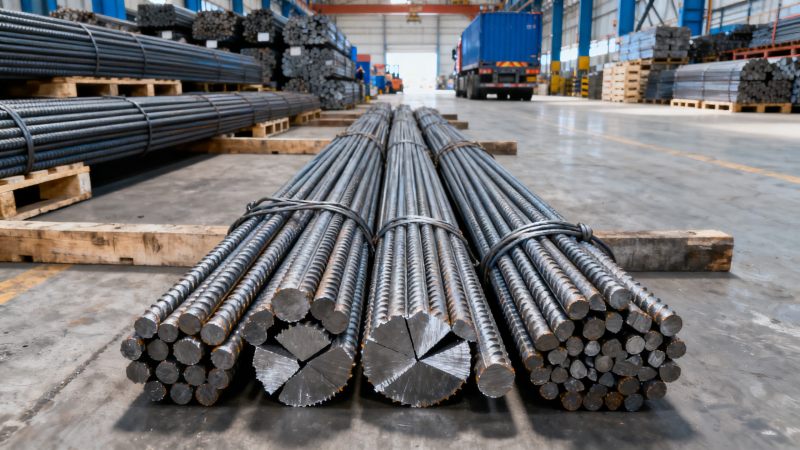
Use This Cost Review Checklist Before Comparing Quotations
To assess steel rebar cost properly, compare suppliers using the same technical and commercial basis. If one quotation includes hidden exclusions, the apparent savings can disappear during execution.
Technical checklist
- Confirm grade, yield strength, diameter range, and tolerance requirements.
- Check whether the material is hot rolled or cold processed and whether this matches design needs.
- Verify applicable standards and certifications required by the consultant or local authority.
- Review required surface condition, corrosion protection, or coating treatment.
- Clarify if cut-to-length, bending, punching, or bundling by sequence is included.
Commercial checklist
- Request a clear price basis: EXW, FOB, CFR, or CIF.
- Confirm payment terms such as 30% TT advance plus 70% balance, or LC at sight.
- Ask whether testing fees, certificates, packaging, and loading are included.
- Check delivery lead time, production slot availability, and shipment frequency.
- Define claim handling, replacement responsibility, and document support in case of non-conformance.
Project Conditions That Often Explain Price Differences
Different construction environments create different cost structures. Project managers should avoid assuming that steel rebar cost in one job should match another job, even within the same region.
Infrastructure vs. building projects
Bridges, highways, tunnels, railways, dams, and flood-control works often require stricter technical control, higher traceability, and larger-volume continuity. Residential or commercial building projects may use more repetitive sections but can still face higher steel rebar cost if delivery needs are fragmented by tower, zone, or phase.
Local supply vs. import sourcing
Local supply can shorten lead times and simplify inspection, but it may not always offer the best price or specification range. Imported material may provide better base pricing, yet total steel rebar cost depends on freight, port handling, customs, insurance, and schedule certainty. For global buyers, the right decision depends on both cost and execution risk.
Standard products vs. processed products
Standard straight bars are easier to price. Once projects require tailored lengths, welded assemblies, or special corrosion treatment, the steel rebar cost rises because processing time, quality checks, and scrap management all increase.
Mid-Project Material Planning: Do Not Ignore Related Steel Products
In many projects, rebar procurement should be reviewed together with related reinforcement or structural materials to optimize total sourcing. For example, buyers may also need Wire rod for civil engineering construction, foundations, beams, columns, walls, slabs, and public facility applications. Available grades can include HRB335, HRB400, and HRB500, with common specifications from 6mm to 50mm and length options such as 5m-14m, 6m, or 12m.
This type of product may be supplied in materials such as Q195, Q235, Q345, 16Mn, ST37, ST52, or ASTM-related grades, with hot rolled or cold rolled techniques, ±1% tolerance, and processing services including bending, welding, decoiling, cutting, and punching. Surface treatment can also vary between galvanized, PVC, black or color painting, and anti-rust oil. For project managers, the key lesson is simple: steel rebar cost should not be reviewed in isolation when adjacent material categories affect freight consolidation, production planning, and supplier coordination.
Commonly Overlooked Items That Push Steel Rebar Cost Higher
Many budget overruns come from items that were technically predictable but commercially overlooked. Use the following risk reminders during tender review and procurement planning.
- Wastage assumptions are unrealistic: If site cutting is high, the true steel rebar cost per installed ton may be far above the purchase price.
- Specification revisions happen after ordering: Design changes in bar diameter, lap length, or grade can create unusable inventory and urgent replacement purchases.
- Lead times are judged only by production days: Real delivery time includes document approval, inspection booking, loading, customs, shipping, and local transport.
- Certification needs are discovered too late: If the project later requires SGS, BV, CE-related documents, or additional mill test reports, cost and delay risks increase.
- Packaging is not matched to site handling: Poor bundling or unclear marking can raise unloading time, internal transport costs, and damage risk.
- Currency and payment exposure is ignored: Exchange-rate movement can materially affect steel rebar cost for imported purchases.
Practical Ways to Control Steel Rebar Cost Without Sacrificing Quality
Cost control should focus on specification clarity, sourcing discipline, and schedule stability. The following actions are usually more effective than simply pushing for the lowest quote.
- Freeze technical requirements early. Lock grade, diameter schedule, standards, and processing scope before supplier comparison.
- Bundle demand where possible. Larger, better-planned lots often achieve stronger pricing and more stable production arrangements.
- Compare total landed cost. Include inspection, freight, duties, inland delivery, and handling, not only ex-factory price.
- Prequalify supplier capability. Review manufacturing capacity, export experience, quality control, and history with international standards such as ASTM, EN, JIS, and GB.
- Use forecast-based procurement. If the project is long-term, staged procurement tied to market monitoring may reduce exposure to sudden cost spikes.
- Align procurement with installation sequence. Proper phasing lowers site congestion, protects material condition, and reduces avoidable wastage.
How to Evaluate Suppliers When Price Gaps Seem Large
If one quotation is much lower than others, project teams should investigate before assuming it is the best option. A meaningful steel rebar cost review includes both numbers and execution confidence.
For example, a reliable structural steel manufacturer and exporter should be able to explain production route, testing method, standard compliance, processing range, and realistic lead time. Companies with modern facilities, stable capacity, and strict quality control are often better positioned to support global construction and industrial projects, especially when requirements extend beyond standard stock items. This matters because the cheapest source can become the most expensive if it causes schedule disruption or quality disputes.
Decision Guide: What Project Managers Should Prepare Before Requesting a Quote
To receive accurate pricing and reduce quotation gaps, prepare a complete inquiry package. This saves time for both buyer and supplier and leads to more reliable steel rebar cost comparisons.
- Bar grade, standard, and certification requirements
- Diameter list, estimated tonnage, and required lengths
- Whether cutting, bending, welding, or marking is needed
- Project destination and preferred trade term
- Target delivery schedule and unloading conditions
- Inspection, traceability, and documentation expectations
- Payment term preference and commercial constraints
Final Takeaway for Better Procurement Control
Steel rebar cost changes so much between projects because every job combines a different mix of material grade, processing scope, standards, logistics, timing, and supplier risk. For project managers and engineering leaders, the best response is not to chase a single low number, but to use a disciplined checklist that compares total cost, technical fit, and delivery reliability together.
If you need to move from budget estimate to actual procurement, the next step is to confirm parameters, standards, tonnage, processing requirements, shipment terms, and lead-time expectations with your supplier as early as possible. Clear communication at that stage is one of the most effective ways to control steel rebar cost, reduce sourcing risk, and keep construction progress on track.
Please give us a message


Please enter what you want to find