When comparing stainless steel pipe wholesale prices, buyers often see huge gaps between suppliers and assume someone is either overcharging or cutting corners. In reality, quote differences usually come from a mix of steel grade, manufacturing standard, wall thickness tolerance, surface finish, testing scope, packaging, delivery terms, and supplier capability. For procurement teams, engineers, project owners, and distributors, the key is not simply finding the lowest stainless steel pipe price, but understanding what is included, what risks are hidden, and which quote best fits the application.
What usually causes stainless steel pipe wholesale quotes to vary so much?
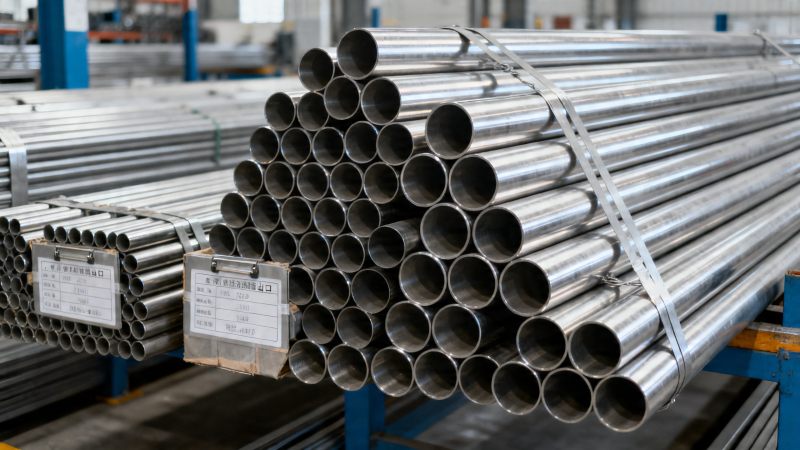
The biggest reason is simple: many quotes are not based on the same product, even when they appear similar on paper. Two suppliers may both offer “stainless steel pipe,” but one may quote 201 grade with lighter wall tolerance and basic mill finish, while another quotes 304 or 316 with stricter dimensional control, polished surface, full inspection, export packaging, and compliance with ASTM or EN standards.
In wholesale purchasing, price differences often come from these factors:
- Material grade: 201, 304, 304L, 316, and 316L have very different alloy costs and corrosion performance.
- Raw material source: Prime coil from large mills usually costs more than secondary material, but quality is more stable.
- Pipe type: Welded pipe and seamless pipe differ significantly in manufacturing cost and application suitability.
- Standard and certification: ASTM, EN, JIS, and GB requirements are not always equivalent in testing, chemistry, and tolerance.
- Size and tolerance: Tighter OD, wall thickness, straightness, and length tolerances increase production difficulty.
- Surface finish: Pickled, bright annealed, mirror polished, or custom-finished pipe all carry different processing costs.
- Testing requirements: PMI, hydrostatic test, eddy current test, third-party inspection, and MTC documentation add cost.
- Order quantity: Full container loads usually get better unit pricing than mixed small-batch orders.
- Packaging and logistics: Export-worthy packing, wooden cases, end caps, labeling, and destination shipping terms affect the final quote.
- Supplier service scope: Technical support, custom cutting, OEM marking, and after-sales responsiveness all have value.
So when stainless steel pipe suppliers give very different offers, it does not automatically mean one is unfair. It often means the quote basis is different.
Which quote differences reflect real value, and which ones may signal hidden risk?
For buyers, the most important task is separating justified cost differences from dangerous price gaps. A higher quote may be reasonable if it includes better traceability, tighter tolerances, more reliable material, or lower failure risk in service. On the other hand, a very low quote may hide problems that only appear after delivery or installation.
Here are the most common warning signs behind unusually low wholesale prices:
- Substituted grade: A supplier may quote lower-grade material while describing it loosely.
- Negative wall tolerance: Pipes may technically pass minimum weight sales practices but provide less actual material than expected.
- Inconsistent chemistry: Poor raw material control can reduce corrosion resistance and weldability.
- Weak weld quality: In welded stainless steel pipe, poor seam quality can create long-term leakage or cracking risk.
- Insufficient annealing or pickling: This can affect formability, corrosion resistance, and appearance.
- Incomplete documentation: Missing MTCs, test reports, or heat number traceability complicates quality claims later.
- Loose packaging: Damage, contamination, or surface scratches during transport can create rework costs.
- Unclear trade terms: FOB, CIF, EXW, and DDP differences can make one quote appear cheaper while shifting major costs to the buyer.
In practical sourcing, the cheapest quote often becomes expensive if it causes installation delays, rejection, project disputes, or early replacement.
How should procurement and technical teams compare stainless steel pipe quotes correctly?
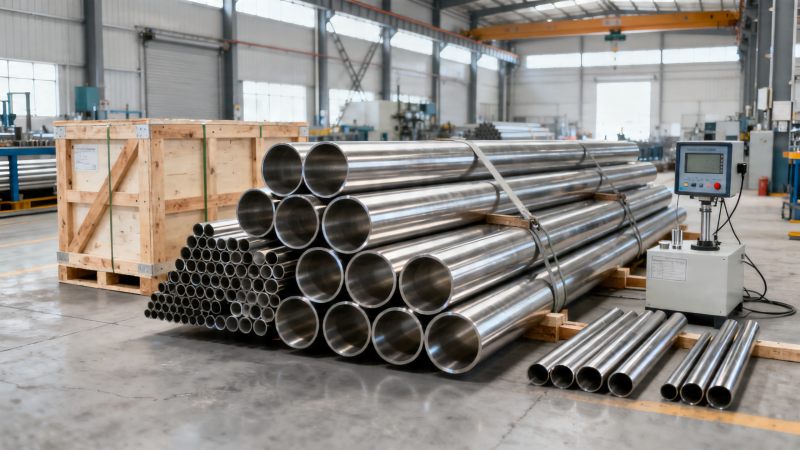
The best way to compare quotes is to standardize the RFQ and force suppliers onto the same technical baseline. If the inquiry is vague, quote variation will naturally become large. A strong comparison sheet should include:
- Exact grade, such as 304, 304L, 316, or 316L
- Welded or seamless requirement
- Outside diameter, wall thickness, and length
- Applicable standard, such as ASTM A312, ASTM A554, EN, or JIS
- Surface finish requirement
- Quantity by size
- Testing and inspection requirement
- Mill test certificate and traceability requirement
- Packaging requirement
- Trade term and delivery location
- Required delivery time
Once suppliers quote against the same conditions, buyers can compare more accurately. A useful evaluation method is to review four layers:
- Material compliance: Is the chemical composition and standard clearly defined?
- Manufacturing consistency: Can the supplier hold dimensional tolerance and finish quality consistently?
- Total landed cost: Does the quote include freight, packing, duties, and inspection costs?
- Supply risk: Can the supplier deliver on time and handle claims professionally?
This approach is especially important for project managers, QA teams, and decision-makers who care about total project cost rather than just purchase price.
How do standards, application scenarios, and processing requirements change the price?
Different applications require very different levels of performance, and this is one of the clearest reasons why stainless steel pipe wholesale quotes vary. A decorative tube for indoor use is not priced the same as a pipe used in chemical processing, marine environments, food-grade systems, or pressure-related industrial service.
For example:
- Construction and architecture: Surface appearance, straightness, and polishing may matter more than pressure performance.
- Industrial processing: Corrosion resistance, weldability, and dimensional stability become more important.
- Food and sanitary systems: Surface cleanliness, finish quality, and traceability requirements are stricter.
- Marine or chemical projects: Higher alloy grades such as 316/316L may be necessary, increasing cost substantially.
In many procurement discussions, buyers also compare stainless steel pipe with galvanized pipe for lower-pressure or more cost-sensitive applications. Where corrosion resistance needs, fluid medium, and service conditions allow, some projects evaluate alternatives such as Galvanized Pipe Manufacturers for general low-pressure fluids, construction support structures, transportation systems, agricultural use, and machinery-related applications. Products such as DX52D hot-dip galvanized pipe are often chosen for their anti-corrosion performance, broad usability, and service-life extension in suitable environments. This kind of cross-material comparison helps buyers avoid over-specifying stainless steel where a galvanized solution may be more economical.
That said, material substitution should never be based only on upfront cost. Engineers and sourcing teams must verify medium compatibility, expected life cycle, coating performance, processing requirements, and relevant ASTM, EN, JIS, or GB compliance before making a decision.
What should buyers ask a stainless steel pipe manufacturer before placing a wholesale order?
To reduce sourcing risk, buyers should go beyond price and ask focused commercial and technical questions. This is where a reliable stainless steel pipe manufacturer or exporter can stand out.
Key questions include:
- What is the exact material grade and standard?
- Is the pipe welded or seamless?
- What tolerance range can you guarantee for OD and thickness?
- Can you provide MTC, heat number traceability, and inspection reports?
- What testing is included in the quote, and what is optional?
- What is your usual production lead time for this size and quantity?
- How do you handle non-conforming goods or claim cases?
- Do you support custom lengths, end finishing, marking, or OEM packaging?
- Which export markets do you regularly serve?
- Can you supply according to ASTM, EN, JIS, or GB requirements?
These questions matter because wholesale purchasing is rarely just about one shipment. For distributors, EPC contractors, and industrial buyers, supplier consistency over multiple orders often matters more than getting the lowest first quote.
How can decision-makers balance price, quality, and supply reliability?
The best sourcing decision usually sits between the cheapest offer and the highest-spec option. For finance approvers, business evaluators, and company leaders, the right question is: Which quote gives the best risk-adjusted value?
A practical decision framework is:
- Choose low-cost options only when the application is simple, standards are clear, and replacement risk is acceptable.
- Choose mid-range qualified suppliers when project schedules, quality consistency, and documentation matter.
- Choose higher-spec suppliers when failure consequences are expensive, compliance is strict, or end users require traceability.
Reliable exporters and manufacturers add value by helping buyers match specification to real application, avoid unnecessary overspending, and reduce quality disputes. For international projects, this support is especially useful when dealing with multiple standards, destination market requirements, and shipping coordination.
In summary, stainless steel pipe wholesale quotes vary so much because buyers are often not comparing the same grade, standard, tolerance, finish, testing scope, or service package. The smartest way to evaluate stainless steel pipe suppliers is to look beyond unit price and compare the full technical and commercial offer. When buyers standardize RFQ details, check compliance carefully, and assess total landed cost plus supply risk, they can make better purchasing decisions, protect project quality, and control long-term cost more effectively.
Please give us a message


Please enter what you want to find