Rebar corrosion often begins long before visible cracks appear, quietly weakening concrete structures and raising lifecycle costs. For engineers, buyers, and project managers comparing Rebar, H-beam, Z-beam, or even asking is cheap steel from China reliable, understanding the early causes of corrosion is critical to safer material selection, better quality control, and more durable construction outcomes.
Why does rebar corrosion start earlier than many teams expect?
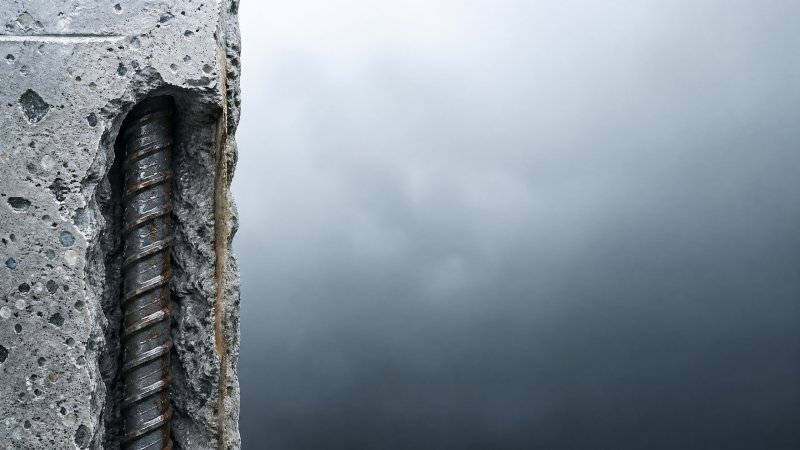
Many stakeholders assume steel reinforcement starts corroding only after concrete cracks become visible. In practice, corrosion can begin much earlier, often during the first service stage, when chloride ingress, carbonation, poor cover thickness, or moisture exposure gradually destroy the passive layer protecting the steel. The process is slow at first, but once initiated, expansion of corrosion products can accelerate internal stress within months or over a few seasonal cycles.
For technical evaluators and quality managers, the key point is that concrete is not a perfect barrier. Its permeability, curing quality, water-cement ratio, and placement defects all influence how quickly oxygen, water, and aggressive ions reach embedded rebar. Even a difference of a few millimeters in concrete cover, or uneven compaction across a large pour, can change corrosion risk significantly in marine, industrial, or deicing salt environments.
For procurement and commercial teams, early corrosion is not only a material issue. It is also a specification issue, a logistics issue, and a supplier control issue. Rebar exposed to prolonged outdoor storage before placement, steel arriving with contamination, or project substitutions made without reviewing exposure class requirements can increase lifecycle cost long before the structure enters full operation.
For project leaders and financial approvers, the hidden danger is timing. Repairs usually appear later, but the conditions that trigger corrosion often develop during design review, purchasing, transportation, site storage, or early construction. That means a decision made in week 1 to week 4 of a project can influence maintenance burden for 10 to 30 years, depending on environment and protection strategy.
The four early triggers most often underestimated
- Low or inconsistent concrete cover, especially at corners, joints, and congested reinforcement zones, where placement errors are common.
- Chloride exposure from marine air, splash zones, deicing salts, contaminated aggregates, or process water used without proper control.
- Carbonation in urban or industrial atmospheres, which lowers concrete alkalinity and reduces rebar passivation over time.
- Poor handling and curing, including rain exposure, standing water, honeycombing, and shortened curing periods below common 7-day targets for many site conditions.
These triggers rarely appear alone. In real projects, corrosion starts early when 2 to 3 risks overlap. A coastal warehouse slab with marginal cover, fast-track curing, and chloride-laden air is far more vulnerable than a well-cured inland structure designed to the correct exposure class.
Which conditions increase corrosion risk in steel and concrete systems?
In steel-related construction, corrosion risk is strongly linked to service environment, fabrication detail, and protection strategy. Rebar inside concrete behaves differently from exposed structural sections, but the evaluation logic is similar: identify the medium, estimate the exposure duration, define the protective layer, and verify execution quality. Engineers and purchasers should ask not only what grade is used, but also how the surrounding system controls moisture, salts, and damage points.
Common high-risk scenarios include parking decks exposed to deicing salts, port infrastructure, sewage and chemical facilities, industrial floors with wet-dry cycling, and foundations in aggressive soil. In these cases, corrosion may initiate earlier than expected because structures experience repeated wetting and drying, which provides both electrolyte presence and oxygen access. That cycle is often more damaging than constant dry conditions or fully submerged conditions.
The broader steel supply chain also matters. Structural steel manufacturers and exporters serving global markets must control chemistry, dimensional consistency, coating integrity where required, and packing conditions during transport. For buyers comparing suppliers across regions, the key question is not whether low-cost steel exists, but whether process control, documentation, and delivery discipline are strong enough to keep corrosion-related risk predictable.
Hongteng Fengda supports global construction, industrial, and manufacturing projects with structural steel products, OEM solutions, and production aligned with major standards such as ASTM, EN, JIS, and GB. For buyers who need to reduce sourcing risk, stable production and strict quality control are especially relevant when projects involve corrosion-sensitive environments, tight lead times, or multiple approval stakeholders.
Typical exposure conditions and early warning signs
The table below helps technical teams and procurement managers connect service conditions with likely corrosion triggers before visible cracking appears.
For decision-makers, this comparison shows that corrosion prevention is not a single product choice. It is a coordinated system involving design, storage, fabrication, site execution, and inspection. Where exposure is severe, prevention cost is usually easier to control than repair cost after corrosion propagation begins.
How should buyers compare steel solutions for corrosion-sensitive projects?
When buyers evaluate steel for durability, they often focus first on base grade and price. That is necessary, but not sufficient. In many projects, the better question is which steel form, coating method, and fabrication route best fit the environment, service life target, and installation method. Rebar inside concrete may require one strategy, while support plates, cladding substrates, access components, or enclosure parts may require another.
For example, galvanized flat products are often used where atmospheric corrosion resistance, formability, and downstream fabrication matter. In industrial, agricultural, transportation, construction, and light manufacturing applications, Steel Plate Galvanized can serve as a practical option for parts that need zinc-based protection, easier processing, and support for standard or customized dimensions.
The available range includes grades such as DX51D, DX52D, DX53D, SGCC, S220GD, S250GD, S350GD, and S550GD, with thickness from 0.12mm to 6.00mm, width from 600mm to 1500mm, and length from 1m to 12m with customization support. Coating options may include hot galvanizing from 60g/m² to 275g/m² and pre-galvanized ranges from 80g/m² to 275g/m², depending on application and forming needs.
This does not replace correct rebar specification inside reinforced concrete, but it highlights an important procurement principle: corrosion control must match component function. Reinforcement, connection parts, cover plates, formed sections, and external steel elements should not all be evaluated through the same cost-only lens. The wrong comparison can create savings in purchase price but losses in fabrication efficiency, coating life, or maintenance planning.
Selection factors buyers should verify before approval
- Check whether the environment is mainly atmospheric, embedded, splash-zone, chemical, or cyclic wet-dry exposure.
- Confirm required standards, such as ASTM, EN, JIS, or GB, and make sure documentation matches the project specification.
- Review thickness range, coating mass, forming demands, and welding sequence before finalizing coated steel products.
- Ask for inspection scope covering dimensions, surface condition, traceability, and packing method for export shipment.
A practical comparison for procurement review
The table below is useful for purchasing teams balancing price, durability, fabrication, and approval speed across different steel-related options.
This comparison helps commercial and technical teams align earlier. Instead of debating only unit price, they can screen 4 key decision layers: exposure, fabrication, compliance, and delivery. That usually shortens approval cycles and reduces costly late-stage substitutions.
What should engineers, QC teams, and project managers inspect before corrosion becomes visible?
Early prevention depends on inspection discipline. Waiting for rust staining or cracking is already too late for low-cost control. A stronger approach is to set a 3-stage review process: pre-delivery verification, on-site receiving inspection, and pre-pour or pre-installation confirmation. This sequence is especially useful when multiple subcontractors handle storage, cutting, bending, or installation across a 2 to 6 week site window.
For QC and safety personnel, the first checkpoint is incoming material condition. Rebar and structural steel should be checked for identification, dimensional conformity, surface contamination, packing damage, and moisture exposure. Light surface oxidation may be acceptable depending on specification, but oil, chlorides, standing water, and severe scaling demand clear review before use.
For operators and project managers, storage discipline matters more than many teams expect. Steel should be elevated from the ground, drained properly, separated by specification, and protected from trapped moisture under damaged wraps. Long outdoor storage through repeated rain-dry cycles can create avoidable risk, especially when material traceability becomes mixed across batches.
For technical approvers, pre-installation checks should include exposure-class match, cover spacers, bar placement, congestion zones, weld or cut edge treatment where relevant, and curing readiness. In corrosion-sensitive work, 5 inspection items often matter more than broad acceptance language written in procurement contracts.
A 5-point field checklist for early corrosion prevention
- Verify material grade, standard, and batch traceability against drawings and purchase documents.
- Inspect storage conditions at least once per receiving cycle and after major rain events.
- Measure concrete cover setup in high-risk zones such as edges, joints, corners, and dense reinforcement areas.
- Confirm curing duration and moisture management meet project requirements, especially during the first 7 days.
- Document deviations quickly so procurement, engineering, and site teams can decide on hold, replacement, or corrective action.
This kind of checklist improves communication across operations, procurement, and finance. It turns corrosion control into a measurable process rather than a vague quality objective, which is important when projects need fast approvals and low rework rates.
Common misconceptions, procurement risks, and practical answers
A common misconception is that visible rust on delivered steel always means rejection, while hidden chloride exposure or poor curing is less serious. In reality, superficial appearance is only one factor. The more important question is whether the steel and surrounding system still meet the project’s corrosion-control intent. Some visible conditions are manageable, while some invisible conditions create much higher long-term risk.
Another misconception is that lower purchase price automatically improves project economics. For finance approvers, the better comparison is total installed and lifecycle cost. A lower-cost shipment that causes sorting delays, traceability gaps, coating mismatch, or accelerated maintenance can erase savings quickly. This is why supplier capability, lead-time stability, and standards alignment matter in B2B steel procurement.
Buyers also sometimes assume one anti-corrosion method works across every steel component. In practice, concrete-embedded reinforcement, exposed structural sections, thin formed parts, and welded assemblies each need different evaluation. Matching the right steel solution to the actual service condition is usually more effective than applying one generic rule across the full bill of materials.
For distributors, contractors, and end users asking whether Chinese structural steel can be reliable, the answer depends on supplier management, not nationality alone. A manufacturer with modern facilities, export experience, controlled production, and standards-based inspection can reduce sourcing risk significantly. The practical task is to verify documents, tolerances, packaging, and communication responsiveness before placing volume orders.
FAQ for decision-makers and technical reviewers
How early can rebar corrosion begin?
It can begin before any crack becomes visible if the passive layer is compromised by chlorides, carbonation, low cover, or persistent moisture. In aggressive environments, the initiation phase may develop during early service years or even earlier if construction quality is poor. What matters is exposure severity and barrier quality, not only structure age.
What are the most important purchasing checks for corrosion-sensitive steel projects?
Focus on 4 core checks: compliance with the required standard, suitability for the exposure environment, surface or coating condition on delivery, and traceable inspection documentation. If the project includes formed or coated components, also verify coating mass range, thickness tolerance, and handling method during transport and storage.
Is galvanized steel always better than uncoated steel?
Not always. It depends on the component role, environment, and fabrication sequence. Galvanized products are often effective for atmospheric exposure and fabricated parts, but embedded reinforcement inside concrete requires a broader assessment that includes concrete quality, cover depth, and exposure class. The right solution is application-based, not universal.
How long do approval and delivery discussions usually take in B2B steel sourcing?
For standard specifications, technical clarification and quotation review may move within several business days. For customized structural steel or mixed-product orders, confirmation can take 1 to 3 weeks depending on drawings, standards, quantity, inspection scope, and shipment planning. Early alignment between engineering and procurement usually shortens the cycle.
Why choose a supplier with structural steel experience and how to move forward?
Corrosion prevention starts with design and site control, but supplier capability still plays a major role. Buyers need consistent product quality, standard-based manufacturing, clear technical communication, and dependable lead times. When projects involve structural steel, cold formed profiles, beams, channels, or customized components, coordination across specification, fabrication, packing, and export handling becomes a real commercial advantage.
Hongteng Fengda provides structural steel manufacturing and export support for global construction, industrial, and manufacturing projects. The strength of this approach lies in combining standard specifications with OEM flexibility, while keeping quality control aligned with common international standards such as ASTM, EN, JIS, and GB. For buyers managing risk across regions, that helps reduce uncertainty in sourcing and execution.
If you are comparing rebar-related durability strategies, structural sections, galvanized flat products, or custom steel components, the most useful next step is a focused technical and commercial review. That review can cover 6 practical topics: application environment, grade selection, size confirmation, coating or protection method, delivery schedule, and inspection documentation.
You can contact us to discuss parameter confirmation, product selection, coating range, compliance requirements, sample support, customization scope, packing method, and quotation planning. If your project involves corrosion-sensitive environments or multiple stakeholders, sharing drawings, target standards, and expected lead time early will help create a more accurate and lower-risk sourcing solution.
Please give us a message


Please enter what you want to find