Why does galvanized steel pipe price shift noticeably across regions? The answer goes far beyond one factory quote.
In steel markets, regional pricing reflects raw materials, zinc costs, labor structures, logistics pressure, duties, standards, and supply stability.
For cross-border sourcing, a lower unit offer may still mean a higher final landed cost.
Understanding why galvanized steel pipe price changes by region helps improve budget accuracy, supplier evaluation, and long-term procurement planning.
Regional price gaps are becoming more visible in the steel supply chain
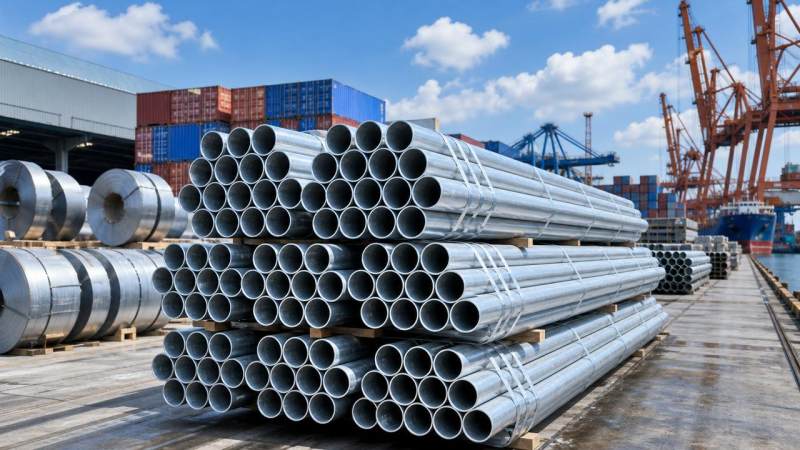
Recent years have made galvanized steel pipe price more sensitive to geography than many buyers expected.
The same specification can carry very different quotations in Asia, Europe, the Middle East, or North America.
This trend is linked to changing freight routes, volatile energy markets, environmental rules, and uneven local demand.
Steelmakers also face different production constraints. Some regions enjoy integrated supply chains, while others depend heavily on imported coil, billet, or zinc.
As a result, galvanized steel pipe price is no longer driven only by steel weight or coating thickness.
It is increasingly shaped by the total regional operating environment behind the product.
The main drivers behind galvanized steel pipe price differences
Several cost layers explain why one market can price the same pipe far above another.
Raw material spreads shape the starting point
Base steel pricing is often the first source of regional variation in galvanized steel pipe price.
Regions with strong steelmaking capacity may offer better cost control during stable ore and scrap conditions.
Import-reliant markets usually face more exposure to currency shifts and shipment delays.
Zinc volatility directly changes coating economics
Since galvanizing depends on zinc, regional access to refining, warehousing, and transport matters greatly.
If zinc rises globally, galvanized steel pipe price usually follows, especially in markets with limited local inventory.
Local rules, logistics, and delivery expectations amplify the gap
A quote should never be judged by mill price alone. Regional operating conditions can change total value dramatically.
- Stricter environmental controls may raise galvanizing and wastewater treatment costs.
- Peak construction seasons can tighten local pipe supply and lift spot quotations.
- Long inland transport from mill to port increases handling damage risk and cost.
- Shorter lead times often require higher inventory buffers, raising supplier pricing.
- Special packaging, marking, or inspection requests can further affect offer levels.
These factors explain why galvanized steel pipe price may differ even between nearby countries with similar demand profiles.
Price changes also influence adjacent steel categories and project choices
Regional steel pricing trends rarely stay isolated within one product family.
When infrastructure budgets tighten, buyers often compare pipes with other structural components and delivery bundles.
This is where broader product sourcing becomes relevant, especially for projects requiring rails, beams, channels, and formed sections together.
For example, Rail products are used in railway systems, bridge railings, and deck handrails.
Available grades include U74, U71Mn, PD2, PD3, BNbRE, Q235, 55Q, and 50Q.
Typical lengths range from 12m to 30m, with rail height from 134mm to 170mm.
Projects comparing galvanized steel pipe price across regions often also examine bundled structural supply for better freight efficiency.
A supplier with abundant stock, prompt delivery, and ISO9001-2008 quality systems can reduce hidden coordination costs.
What these regional differences mean for cost planning and sourcing risk
Regional price variation affects more than purchase budgets. It also changes schedule confidence and contract exposure.
When galvanized steel pipe price rises unexpectedly in one region, projects may face delayed approvals or forced specification adjustments.
In contrast, very low-priced offers can create risks related to coating quality, tolerance control, or shipment reliability.
- Budget forecasting becomes harder when zinc and freight are both volatile.
- Supplier comparison becomes unreliable without unified Incoterms and standards.
- Inventory planning suffers when lead times differ by production region.
- Project execution risk rises if substitute sources lack stable certification.
This is why galvanized steel pipe price should always be reviewed together with quality assurance, export capability, and delivery history.
Key signals worth tracking before accepting any quotation
Short-term price swings are easier to interpret when a few core indicators are monitored consistently.
- Hot rolled coil trend in the production region
- International zinc price direction
- Ocean freight and port congestion status
- Exchange rate movement against the settlement currency
- Trade policy updates and possible duty changes
- Factory capacity utilization and holiday shutdown schedules
- Applicable standard revisions for target markets
Tracking these signals helps explain whether a galvanized steel pipe price increase is temporary, structural, or supplier-specific.
Practical ways to respond when regional prices move unevenly
A reliable regional quote should balance price, standards, and delivery confidence
The lowest visible number does not always represent the best procurement result.
A strong offer on galvanized steel pipe price should align with specification clarity, stable production, export readiness, and realistic lead times.
Hongteng Fengda, as a structural steel manufacturer and exporter from China, supports global projects with dependable steel supply and customized solutions.
Its product range includes angle steel, channel steel, steel beams, cold formed profiles, and OEM structural components.
Products comply with major international standards such as ASTM, EN, JIS, and GB.
For any cross-region comparison, it is wise to request a full quotation breakdown, standard confirmation, coating details, and shipment terms together.
That approach turns galvanized steel pipe price from a confusing number into a usable decision tool.
If regional pricing differences are affecting current planning, the next step is simple: compare offers on a landed-cost basis and verify technical compliance before committing.
Please give us a message


Please enter what you want to find