Why does carbon steel price often move faster than buyers expect? The short answer is that carbon steel is influenced by several fast-moving cost layers at the same time: raw materials, mill operating costs, freight, exchange rates, environmental policy, and short-term demand from construction and manufacturing. That means prices can rise or fall before many buyers have time to adjust budgets, confirm orders, or compare alternative suppliers.
For importers, contractors, engineers, distributors, and project managers, this matters because carbon steel is rarely purchased in isolation. When carbon steel moves, buyers often also see changes in steel coil price per ton, steel rebar cost, and even galvanized steel price. Understanding why this happens is the first step toward better procurement timing, lower sourcing risk, and more reliable project cost control.
Why carbon steel prices can change so quickly
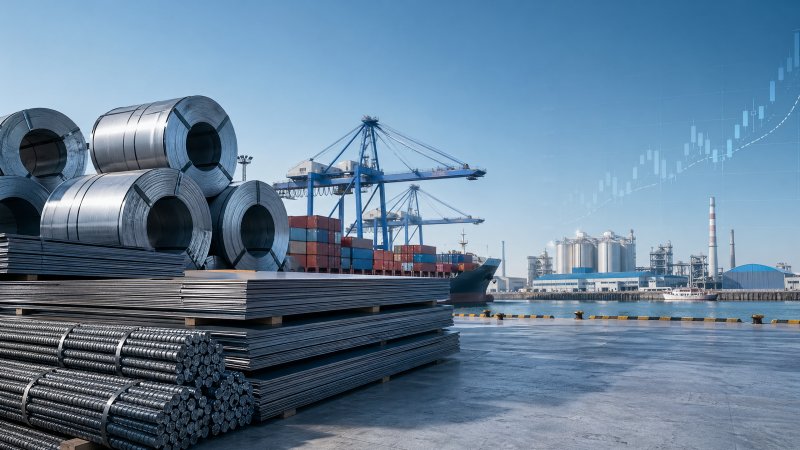
The main reason carbon steel prices can move faster than expected is that the market reacts to both upstream and downstream pressures at once. Unlike products with stable input costs, carbon steel pricing depends on a chain of variables that can shift weekly, and sometimes daily.
The most important factors include:
- Raw material volatility: Iron ore, scrap steel, coking coal, and ferroalloys can all change in price quickly.
- Energy costs: Electricity, natural gas, and fuel directly affect mill production costs.
- Supply-side adjustments: Mill maintenance, production cuts, or environmental controls can tighten supply.
- Freight and logistics: Ocean freight, inland trucking, port congestion, and container availability can all reshape landed cost.
- Exchange rate movements: For international buyers, currency shifts can change the actual import price even if the mill price stays similar.
- Demand cycles: Construction, infrastructure, automotive, and machinery demand can create sudden procurement waves.
- Policy changes: Export rebates, tariffs, environmental regulations, and trade restrictions can affect market direction almost immediately.
Because these factors often move together, carbon steel buyers may feel that prices “jump” unexpectedly. In reality, the market is repricing risk and cost in real time.
What buyers care about most: budget risk, timing, and supply reliability
Most readers searching this topic are not looking for theory alone. They usually want to answer practical questions such as:
- Should we buy now or wait?
- Is the current quote likely to remain valid?
- Why did one supplier raise prices while another did not?
- How can we avoid cost overruns on a project?
- What signals show that prices may move again soon?
For procurement teams and financial approvers, the biggest concern is cost uncertainty. A steel quote that looks competitive today may no longer be workable if raw materials rise, freight changes, or mill lead time extends. For engineers and technical evaluators, the concern is balancing cost with specification compliance. For project managers, the issue is often whether delayed purchasing will create schedule risk or material shortages.
That is why price should never be judged only by the number on the quotation. Buyers also need to assess validity period, production lead time, standard compliance, coating or finishing requirements, and shipment flexibility.
Raw materials are often the first trigger behind fast price changes
When buyers ask why carbon steel price changes faster than expected, raw materials are usually the first place to look. Steel mills face direct exposure to the price of iron ore, scrap, and coal. If input costs rise sharply, mills may update offers very quickly to protect margins.
This effect is especially visible when:
- Scrap supply tightens in regional markets
- Iron ore futures rise on global demand expectations
- Coking coal prices increase due to mining or export disruptions
- Energy-intensive steelmaking becomes more expensive
Even if your required product is a structural section rather than sheet or rebar, the broader steel market still influences offer levels. This is why buyers often notice parallel movement across categories, including steel coil price per ton and steel rebar cost.
Policy, trade, and environmental controls can move the market faster than demand alone
Many buyers underestimate how strongly government policy affects steel pricing. In China and other major steel-producing countries, environmental inspections, emissions controls, winter production restrictions, or energy consumption targets can reduce mill output. When available supply tightens, prices may rise even if end-user demand has not surged yet.
Trade policy also matters. Tariffs, anti-dumping measures, export controls, or tax rebate adjustments can immediately change export competitiveness. For overseas buyers, this may lead to:
- Sudden quote revisions
- Shorter quote validity windows
- Allocation limits on popular sizes
- Longer lead times for compliant export orders
That is why global buyers should watch not only steel demand, but also production and trade policy in key supply markets.
Freight, currency, and lead time can change the real purchase cost more than expected
In international sourcing, the mill base price is only one part of the final cost. Buyers often focus on ex-works or FOB steel price, but the delivered cost can change substantially due to freight and currency fluctuations.
For example, a stable steel offer may still become more expensive if:
- Ocean freight rates increase
- Port handling fees rise
- The buyer’s local currency weakens against the supplier’s settlement currency
- Delivery delays create extra inventory or project standby costs
This is particularly important for large construction and industrial projects where a material delay can cost more than a moderate unit price increase. In many cases, a slightly higher but more reliable quote delivers better total value than a low quote with uncertain shipment timing.
How to evaluate whether a carbon steel quote is reasonable
If prices are moving quickly, buyers need a better way to judge quotations than simply comparing the lowest number. A reasonable quote should be evaluated across five dimensions:
- Specification clarity: Grade, size, tolerance, surface condition, and standard must be clearly defined.
- Price validity: In a volatile market, short validity periods are common and should be taken seriously.
- Lead time reliability: Confirm production slot availability, not only nominal delivery promises.
- Compliance and quality control: Materials should meet relevant ASTM, EN, JIS, or GB standards as required.
- Total landed cost: Include packaging, freight, customs exposure, and risk of delay.
For buyers needing formed or application-specific material, product suitability also affects cost efficiency. For example, some projects may require material with good strength and forming balance rather than simply the lowest ton price. In such cases, High Carbon Steel Plate may be considered for applications that need high tensile strength, smooth surface finish, and dependable forming performance across processes such as stamping, bending, and deep drawing. Available in widths from 100 mm to 3000 mm, lengths from 1 m to 12 m, and thicknesses from 0.1 mm to 400 mm, it can support varied industrial uses while meeting standards such as ASTM, EN, JIS, and ISO.
What smart buyers do when the market is unstable
Experienced buyers do not try to predict every short-term market move perfectly. Instead, they build a sourcing process that reduces exposure to sudden changes. Effective actions include:
- Split purchasing in stages: Avoid betting the full volume on one moment if the market is unclear.
- Track key indicators weekly: Watch raw materials, freight, exchange rates, and mill lead times.
- Lock specifications early: Specification changes during volatility often increase cost and delay.
- Qualify multiple suppliers: This improves comparison and reduces dependence on one source.
- Prioritize dependable production capacity: Stable output matters when supply tightens.
- Align technical and purchasing teams: This prevents over-specifying or under-specifying material.
For distributors and project buyers, another good practice is to compare not only current offers but also supplier consistency over time. A supplier with modern production, stable quality control, and export experience can often help buyers manage volatility better than a seller focused only on spot pricing.
Why supplier selection matters as much as market timing
Even in a volatile market, not all sourcing risk comes from the market itself. Some risk comes from weak communication, inconsistent quality, uncertain standards compliance, or poor production planning. This is why supplier capability plays a major role in cost control.
A reliable structural steel manufacturer and exporter should be able to provide:
- Clear product specifications and standard compliance
- Consistent quality supported by inspection and quality control
- Realistic lead times instead of overly aggressive promises
- Flexible support for standard and customized structural steel needs
- Export coordination for North America, Europe, the Middle East, and Southeast Asia
For buyers sourcing angle steel, channel steel, steel beams, cold formed steel profiles, or custom structural steel components, this support can be the difference between a controlled project and an expensive delay.
Final takeaway: carbon steel prices move fast because the whole supply chain moves fast
Carbon steel price changes faster than many buyers expect because it reflects a chain of connected costs and risks, not just one factory’s selling decision. Raw materials, energy, policies, logistics, exchange rates, and demand cycles can all affect pricing at the same time. That is why related benchmarks such as steel coil price per ton, steel rebar cost, and galvanized steel price also tend to shift quickly.
The best response is not guesswork. It is a disciplined sourcing approach: monitor market signals, evaluate total landed cost, confirm quality and standards, and work with suppliers that offer stable production and dependable delivery. Buyers who understand these drivers are in a much stronger position to protect budgets, reduce procurement risk, and make better steel purchasing decisions.
Please give us a message


Please enter what you want to find