Looking for a reliable source of galvanized steel sheet China buyers can trust? This guide explains why global contractors, distributors, and project managers choose Chinese suppliers for quality, cost efficiency, and flexible production. From flat rolled steel coil to custom steel profiles and hot dip galvanized angle steel, understanding sourcing advantages helps reduce risk and improve project performance.
Why do global buyers source galvanized steel sheet from China?
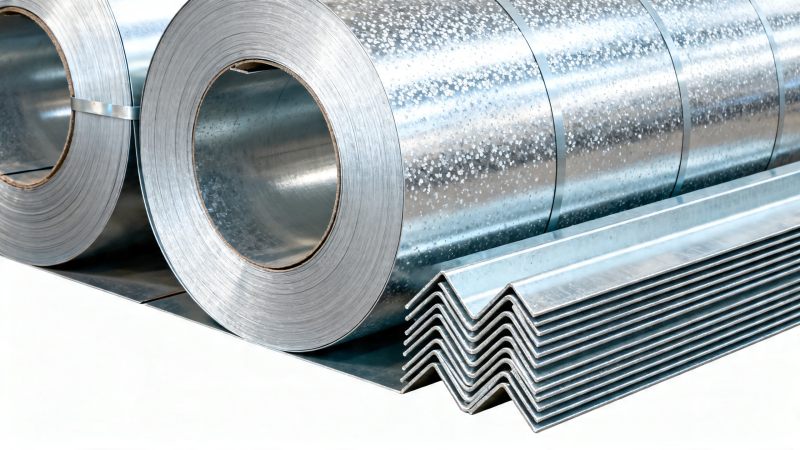
For many steel buyers, the question is not only price. It is whether a supplier can combine stable quality, practical lead times, and production flexibility in one sourcing plan. China remains a major manufacturing base for galvanized steel sheet because it supports both standard volume supply and customized fabrication for construction, industrial, and manufacturing projects.
This matters to procurement teams working with 2-4 week scheduling pressure, engineering teams checking coating consistency, and finance departments reviewing total landed cost rather than ex-works price alone. A capable Chinese supplier can often support multiple product categories in one order, such as galvanized sheet, hot dip galvanized angle steel, channel steel, beams, and cold formed profiles.
Hongteng Fengda serves this demand as a structural steel manufacturer and exporter from China. The company focuses on angle steel, channel steel, steel beams, cold formed steel profiles, and customized structural components, while supporting global buyers with production planning, OEM supply, and standard compliance under ASTM, EN, JIS, and GB frameworks.
For project managers and distributors, one practical advantage is supply chain consolidation. Instead of splitting orders across 3-5 vendors, buyers can reduce communication gaps, inspection complexity, and logistics risk by working with one supplier able to coordinate several steel categories under one shipment schedule.
Key sourcing reasons buyers usually compare
- Cost efficiency across raw material sourcing, processing, and export packaging, especially for medium and large volume orders.
- Broader production range, from common galvanized sheet sizes to customized profiles and structural steel components.
- Compliance support for international projects that require ASTM, EN, JIS, or GB aligned production and documentation.
- More flexible lead time planning, often with staged production, pre-shipment inspection, and mixed container loading.
What makes galvanized steel sheet attractive in real projects?
Galvanized steel sheet is widely selected because it offers a useful balance of corrosion resistance, mechanical performance, and fabrication convenience. In roofing, cladding, ducting, framing, equipment housings, and industrial supports, it reduces maintenance pressure compared with uncoated carbon steel in humid or outdoor conditions.
In many applications, buyers are not purchasing sheet alone. They are purchasing service life, fabrication compatibility, and easier inventory planning. That is why sourcing decisions often include coating type, base steel grade, thickness tolerance, sheet flatness, and packaging condition as part of the same evaluation process.
What should buyers evaluate before placing a galvanized steel sheet China order?
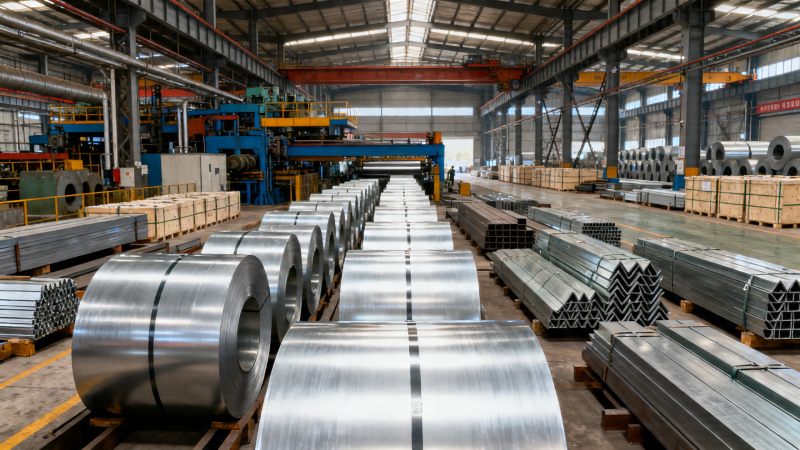
A good buying decision starts with matching the material to the operating environment. For indoor dry applications, standard galvanized sheet may be sufficient. For coastal, high humidity, or industrial environments, buyers usually need stricter coating control, better edge protection, and more attention to storage and transport conditions during the 15-45 day export cycle.
Technical assessors often focus on 5 key checks: base material grade, coating method, thickness range, dimensional tolerance, and end-use fabrication needs. Procurement teams then add commercial factors such as minimum order quantity, packaging method, inspection points, and whether mixed products can be shipped together to reduce freight cost.
For distributors and resellers, consistency matters as much as nominal specification. If sheet thickness, coating appearance, or bundle labeling changes too much from one batch to the next, inventory control becomes harder and customer claims increase. A supplier with stable quality control is therefore more valuable than one offering only a lower unit price.
Hongteng Fengda supports buyers with structured communication before production. That typically includes specification review, standard confirmation, production arrangement, quality inspection, and shipment coordination. This 5-step approach helps reduce rework risk when multiple products are ordered for the same project.
A practical procurement checklist
Before sending an inquiry for galvanized steel sheet from China, buyers should prepare technical and commercial details in a format the supplier can act on quickly. Clear data shortens quotation time and reduces later changes.
This checklist is especially useful when the buyer is responsible for both technical approval and commercial negotiation. A clear inquiry can shorten the supplier response cycle from several rounds of clarification to one workable quote and one technical confirmation process.
How Chinese suppliers support mixed steel sourcing
Many global projects need more than galvanized sheet. A warehouse extension may also require channel steel, beams, bracing members, and custom fabricated sections. An industrial skid may need galvanized plate in one area and pipe or profile sections in another. This is where manufacturing breadth becomes commercially important.
In the middle of such sourcing plans, some buyers also compare related tubular products for heat transfer or structural systems. For example, A36 Steel Pipe may be reviewed when the project includes tubular heat exchangers, condensers, or similar heat transfer equipment. Common dimensional references include outer diameters from 1/8 inch to 3 inches, broader market size ranges from Diameter 10mm to 914.4mm, thickness from 1mm to 100mm, and unit lengths such as 3m, 5.8m, 6m, 11.8m, 12m, or 13.5m depending on the application.
This kind of inserted evaluation matters because procurement teams rarely buy in isolation. They compare standards such as ASTM A106, A53, A179, API 5L, EN10210, JIS G3452, and GB/T 8163 across different steel categories, then align the order with end-use, inspection scope, and shipment timing. A supplier familiar with both structural steel and related steel products can simplify that process.
How does galvanized steel sheet from China compare on cost, quality, and flexibility?
Cost comparison should never stop at the quoted ton price. Buyers need to review processing options, packaging quality, damage risk in transit, inspection method, and whether the supplier can hold dimensional consistency across repeated orders. The cheapest offer can become the most expensive if coating defects, flatness issues, or document gaps delay installation.
In practice, Chinese suppliers are often competitive because they can support several combinations at once: standard sheet for routine applications, custom cutting for fabrication efficiency, and companion products for integrated project supply. This can lower the hidden costs associated with converting, re-handling, or buying from multiple sources.
For financial reviewers, the smarter question is which source gives the best total procurement result over one full project cycle of inquiry, production, shipping, arrival inspection, and site use. That cycle may span 4-10 weeks depending on product mix, destination, and quantity. Predictability in that cycle is often worth more than a small unit price difference.
The following comparison helps buyers weigh practical trade-offs when evaluating galvanized steel sheet China suppliers against fragmented or purely trading-based sourcing options.
Comparison factors that influence total buying value
This comparison does not mean every Chinese supplier performs equally. The real advantage appears when the supplier has modern manufacturing capability, documented quality control, and export experience across different regions. That combination is what helps reduce sourcing risk and keep project schedules realistic.
Where buyers often save money without lowering standards
1. Better specification matching
Over-specification is common. Some buyers request heavier coating or unnecessary tolerances for moderate indoor applications. A technically reviewed quote can align the sheet to the real exposure class, fabrication process, and service requirement, reducing avoidable cost.
2. Fewer secondary processes
When sheet arrives cut to usable dimensions or grouped with matching structural components, workshop handling time can decrease. This is valuable for projects that run on weekly installation targets and cannot absorb avoidable reprocessing delays.
3. Consolidated shipping
Combining galvanized steel sheet with angle steel, channels, or beams in one export plan may improve container utilization and reduce per-unit logistics cost. For repeat buyers, this also makes inventory forecasting easier over quarterly purchasing cycles.
What standards, quality controls, and service steps reduce sourcing risk?
Quality in steel procurement is rarely one single test result. It is a process covering raw material selection, production control, dimensional checks, surface inspection, marking, packing, and shipment review. Buyers who define these checkpoints early usually face fewer claims after the cargo arrives.
For global structural and industrial projects, common reference systems include ASTM, EN, JIS, and GB. The exact applicable standard depends on product category and project requirement, but the principle is the same: the buyer should request clear alignment between specification, intended use, and certificate package before production begins.
Hongteng Fengda supports this approach with strict quality control and export-oriented production management. For buyers in North America, Europe, the Middle East, and Southeast Asia, this helps coordinate technical acceptance with commercial execution, especially where lead times, documentation, and delivery reliability all affect project performance.
A practical risk-control model for galvanized steel sheet sourcing usually includes 4 stages: inquiry clarification, production confirmation, in-process inspection, and pre-shipment review. If any one of these stages is skipped, the chance of downstream disagreement increases significantly.
Typical control points buyers should request
- Confirm the exact product form: coil, slit coil, cut sheet, or fabricated steel component.
- Review thickness, dimensional tolerance, and any project-specific edge or flatness requirement.
- Define inspection timing, such as in-process checks and pre-shipment verification for quantity, marking, and packaging.
- Align document expectations, including mill test certificates, packing lists, and shipment identification details.
Service process buyers can use as a benchmark
A clear service process is useful for project managers, quality teams, and finance approvers because it reduces decision ambiguity. The table below summarizes a practical export workflow often used in steel sourcing.
This structure is valuable because it converts a broad supplier promise into visible control points. Buyers can ask specific questions at each stage instead of waiting until cargo arrival to discover gaps in marking, packing, or specification interpretation.
Common questions buyers ask before importing galvanized steel sheet from China
Many inquiries about galvanized steel sheet China sourcing are not only technical. They also involve risk allocation, budgeting, and project timing. The questions below reflect what buyers across engineering, procurement, distribution, and project management frequently need to clarify before making a final decision.
How do I choose between standard stock and custom production?
Choose standard stock when your application uses common sizes, your schedule is tight, and secondary processing at your side is acceptable. Choose custom production when installation efficiency, dimensional matching, or mixed project supply will save more cost than the extra manufacturing lead time. For many B2B buyers, the break-even point appears when custom cutting or matched profiles reduce enough workshop labor and waste.
What should quality teams inspect first when the cargo arrives?
Start with 4 visible checks: package condition, product marking, quantity consistency, and surface condition. Then compare the received dimensions and documents against the approved order details. If the shipment includes multiple steel categories, isolate each bundle by item code before warehouse entry to avoid traceability confusion during later installation or resale.
Is lower price always the better procurement decision?
No. Lower unit price may come with thinner actual tolerance control, weaker packing, limited documentation, or poor schedule reliability. A better decision is to compare at least 5 dimensions: specification clarity, quality process, delivery predictability, logistics arrangement, and after-sales communication. In steel procurement, small failures in these areas can create large downstream cost.
How long does a typical export order take?
There is no single fixed answer because quantity, customization level, and destination all matter. As a general industry range, standard items may move through confirmation and production in about 1-2 weeks, while mixed or customized orders may need longer. Shipping time then depends on route and port conditions. Buyers should always separate production lead time from transit lead time during planning.
Which buyers benefit most from a structural steel manufacturer rather than a pure trader?
Manufacturers are especially useful for project owners, EPC teams, distributors, and fabricators who need repeated supply, dimensional consistency, or integrated orders covering several product lines. A manufacturer-exporter can often provide faster technical feedback, clearer production coordination, and more controlled quality follow-up than a source that only resells material.
Why work with Hongteng Fengda for galvanized steel sheet and structural steel sourcing?
Choosing a supplier is really choosing a project partner for specification control, manufacturing coordination, and shipment execution. Hongteng Fengda brings together structural steel manufacturing and export experience for buyers who need dependable support across construction, industrial, and manufacturing projects. The advantage is not a single product. It is the ability to connect product quality with delivery discipline.
The company specializes in angle steel, channel steel, steel beams, cold formed steel profiles, and customized structural steel components, while supporting standard and OEM needs. For buyers searching for galvanized steel sheet from China, this broader capability is useful when the project also requires associated structural members or fabricated steel items in the same sourcing plan.
With modern manufacturing facilities and strict quality control, Hongteng Fengda aligns production with international standards commonly used in global trade, including ASTM, EN, JIS, and GB. That helps procurement teams, technical reviewers, and quality managers make more confident decisions when evaluating compliance, inspection scope, and long-term supplier fit.
If you are comparing galvanized steel sheet China suppliers, the next step should be specific. Send the required grade, thickness range, dimensions, coating expectation, application environment, target quantity, and destination port. You can also ask about mixed product supply, OEM fabrication, lead time planning, sample support, inspection documents, and quotation structure for your project stage.
What you can discuss before requesting a final quote
- Parameter confirmation for galvanized steel sheet, structural sections, and related steel components.
- Product selection based on project environment, fabrication method, and budget target.
- Lead time discussion for standard orders, mixed orders, and custom processing requirements.
- Certification and document needs for ASTM, EN, JIS, GB, or customer-specific compliance review.
- Sample support, packing requirements, shipment planning, and quotation communication for your destination market.
When the goal is reliable sourcing rather than short-term purchasing only, a structured manufacturer-exporter relationship can reduce risk across repeated orders, approval cycles, and site delivery milestones. That is why many global buyers look beyond unit price and focus on production capability, standard compliance, and service coordination from the start.
Please give us a message


Please enter what you want to find