Angle steel prices change so often because the cost base behind every ton of steel is constantly moving. Iron ore, scrap, energy, zinc for galvanizing, labor, freight, exchange rates, and local project demand can all shift within weeks or even days. For buyers comparing angle steel price with structural steel beams for construction, using steel beam weight calculator estimates, or reviewing offers from a carbon steel manufacturer and a Steel Channel supplier, the key point is simple: frequent price movement is normal in the steel trade, but it can be managed with the right buying strategy.
For procurement teams, engineers, distributors, and project managers, the real question is not only “why did the price change?” but also “which changes matter, which are temporary, and how can we reduce risk?” That is where market understanding becomes practical. If you know what drives angle steel pricing, you can budget more accurately, negotiate better, and avoid buying at the wrong time or from the wrong supply base.
In this article, we break down the main reasons angle steel prices fluctuate, explain how those changes affect different types of buyers, and offer practical ways to evaluate quotations from suppliers in China and other export markets. The goal is to help you make better decisions, not just track prices.
What actually causes angle steel prices to move so frequently?
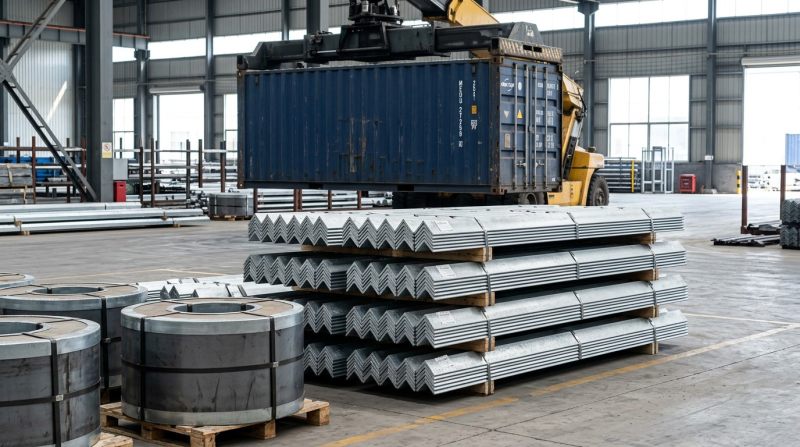
The most important driver is raw material cost. Angle steel is closely tied to the price of billet, hot rolled coil in related market chains, scrap steel, iron ore, coke, and energy. When upstream inputs rise, mills usually adjust their ex-works pricing quickly. Even if your project uses relatively standard equal angle or unequal angle sections, the underlying steelmaking cost can change before your purchase order is finalized.
Energy is another major factor. Electricity, natural gas, and fuel costs affect rolling mills, reheating furnaces, galvanizing lines, and transport fleets. In periods of tight power supply or high industrial utility rates, steel producers often pass part of that burden into product pricing. This is especially visible in export-oriented markets where mills must protect margins while meeting international quality standards.
Supply and demand can move just as fast as production costs. When infrastructure, warehouse, transmission tower, solar mounting, shipbuilding, or fabrication demand increases, angle steel orders can surge. If mill capacity is already committed, available stock tightens and prices rise. On the other hand, when construction slows, inventory builds up and suppliers may reduce prices to secure orders and cash flow.
Why can two quotes for the same angle steel size be very different?
Many buyers assume that angle steel is a simple commodity and that one quote should look much like another. In practice, quotations often differ because the “same” angle steel may not be fully comparable. Grade, standard, rolling tolerance, length tolerance, straightness, edge condition, and test documentation all influence cost. A low quotation may reflect looser tolerances, lower traceability, or different surface condition rather than a true market advantage.
Coating and post-processing also matter. Black steel angles, pickled material, and hot-dip galvanized angle steel are not priced the same. Zinc prices can be volatile, and galvanizing thickness requirements have a direct impact on cost. If one supplier includes zinc coating to a specific standard while another does not, the apparent price difference may have little to do with the base angle steel price.
Order quantity and production planning play a large role as well. Mills usually price more competitively when the order matches standard rolling schedules, common sizes, and full-container export loading. Small mixed orders, uncommon dimensions, tight deadlines, and secondary processing such as punching or cutting usually increase the per-ton price. That is why buyers should compare quotations on a fully aligned specification basis rather than on headline price alone.
How do freight, export factors, and global trade conditions affect angle steel price?
For international buyers, freight can change the economics as much as the steel itself. Ocean freight rates, container availability, port congestion, inland trucking, and customs handling all affect landed cost. A supplier may keep the same ex-works or FOB price while your delivered cost changes significantly because of logistics. This is especially relevant when comparing Chinese suppliers with regional alternatives.
Exchange rates also influence export steel pricing. If the supplier’s cost base is in RMB but the transaction is in USD or EUR, currency movement can affect quote validity and negotiation behavior. In volatile currency periods, some suppliers shorten quotation validity or build more buffer into pricing. Buyers who understand this can time discussions better and avoid confusion over frequent revisions.
Trade policy adds another layer. Anti-dumping duties, import duties, local certification requirements, and changing customs rules can shift sourcing preferences very quickly. A buyer may move from one country to another, creating sudden demand increases in some export markets and oversupply in others. That is one reason angle steel price trends may differ by region even when global steel sentiment appears similar.
How do mills, stock levels, and lead times influence short-term price changes?
Mill operating rates are a major signal. When producers reduce output due to maintenance, environmental controls, power restrictions, or weak profitability, market supply tightens. If demand remains steady, prices often rise. Conversely, when mills restart capacity or push production to improve utilization, more material reaches the market and pricing can soften, especially for standard construction sections.
Inventory levels at mills, traders, and service centers are equally important. High stock levels often lead to discounting because suppliers want to free up cash and storage space. Low stock levels, especially in popular sizes, usually strengthen the market. For project buyers, this means that timing matters: buying from a supplier with healthy inventory and predictable replenishment can reduce both price volatility and delivery risk.
Lead time is closely connected to price. When buyers need immediate shipment, they often rely on stock material, which may carry a premium in tight markets. Longer planning windows allow mills to schedule production more efficiently, usually resulting in better pricing. From a procurement perspective, better forecasting is one of the simplest ways to reduce exposure to frequent angle steel price changes.
How should different stakeholders interpret angle steel price fluctuations?
Procurement teams should focus on total landed cost and quote comparability. A lower unit price is not always the better commercial decision if it comes with uncertain lead time, weaker quality control, or a higher risk of claim disputes. Buyers should examine standard compliance, mill test certificates, packaging, logistics terms, and payment conditions alongside the angle steel price itself.
Engineers and technical evaluators should pay attention to substitution risk. In some projects, teams compare angle steel with channel steel or structural steel beams for construction based on load needs, fabrication convenience, and installed cost. This is where technical tools such as a steel beam weight calculator or section property comparison become useful. The cheapest section per ton may not be the cheapest structural solution once fabrication, welding, and handling are considered.
Project managers and financial approvers need a broader view of timing risk. If steel is a major share of project material cost, frequent price movement can affect margin, bid competitiveness, and cash flow planning. Instead of treating every market fluctuation as a surprise, teams should build procurement windows, quote validity controls, and contingency allowances into their project planning process.
What practical steps can buyers take to control sourcing risk?
First, define the specification in detail before requesting quotations. Include steel grade, standard, dimensions, tolerances, length, surface condition, galvanizing requirement if any, inspection needs, and delivery term. The clearer your requirement, the easier it is to compare suppliers fairly. Many pricing disputes come from unclear scope rather than actual market movement.
Second, track the price structure, not just the final number. Ask suppliers what portion of the quotation is based on raw material, processing, coating, packaging, and freight. You do not always need a full cost breakdown, but understanding the main cost levers helps you judge whether a price increase is reasonable or negotiable. It also makes internal approval easier because the commercial logic is clearer.
Third, work with suppliers that have stable production capacity and export experience. Reliable mills and exporters are often better at managing lead times, quality consistency, and document compliance. That stability may not always produce the lowest short-term quote, but it often reduces total project risk. For structural steel buyers, consistent execution is frequently worth more than a temporary discount.
When does it make sense to compare angle steel with other steel products?
Buyers often review multiple section types when optimizing cost. If a project is evaluating supports, frames, brackets, or reinforcement structures, angle steel may be compared with channel steel, beams, flats, or fabricated components. The decision should be based on mechanical requirements, fabrication efficiency, availability, and final installed cost rather than on spot angle steel price alone.
In some cases, related stainless or specialty products also enter the discussion, especially when corrosion resistance, appearance, or hygiene requirements matter. For example, applications in decorative engineering, kitchenware, or equipment manufacturing may use alternatives such as Stainless Square steel rod in 201 stainless steel. With tensile strength of at least 520 and yield strength of at least 275, it offers high formability and can be used in construction, automotive parts, shipbuilding, and household product applications where the material environment differs from standard carbon structural sections.
This does not mean stainless and angle steel are direct substitutes in every project. It means informed buyers compare products based on use condition, processing method, life-cycle expectation, and total value. A carbon steel manufacturer, structural section exporter, and downstream fabricator may each recommend different materials depending on whether the priority is load-bearing performance, corrosion resistance, appearance, or budget control.
How can buyers read the market more intelligently before placing an order?
Start by watching several indicators together rather than following one price source. Monitor billet or scrap trends, local construction demand, export freight rates, and supplier lead times. If raw materials are rising but trader inventories remain high, the market may not move immediately. If materials are stable but freight jumps sharply, the landed price can still increase. Smart procurement decisions come from connecting these signals.
It is also useful to ask suppliers forward-looking questions. Instead of only requesting today’s rate, ask whether the mill has confirmed production slots, whether common sizes are in stock, and whether quote validity is linked to raw material movement. Suppliers that can answer clearly usually have better control over their supply chain. This improves both pricing transparency and project confidence.
Finally, avoid overreacting to every short-term fluctuation. Steel markets are naturally cyclical. A small weekly increase does not always indicate a long-term uptrend, and a short-term discount does not always mean it is the best time to buy. The right decision depends on your project schedule, stock position, cash flow, and tolerance for risk. In many cases, a disciplined buying plan beats trying to predict the exact bottom of the market.
Conclusion: frequent price changes are normal, but unmanaged risk is not
Angle steel price changes so often because the product sits at the intersection of volatile raw materials, changing mill output, shifting logistics costs, and uneven project demand across global markets. That volatility is not a sign that the market is unstable beyond control. It is a normal feature of the steel industry, especially in international trade.
For buyers, the best response is not to chase every low quote, but to improve comparison logic, planning accuracy, and supplier selection. When you understand what is driving the change, you can distinguish between temporary noise and meaningful cost pressure. That leads to better budgeting, stronger negotiation, and fewer sourcing surprises.
If your business depends on structural steel sourcing, the most valuable habit is to evaluate price together with quality, standards, lead time, and service reliability. A well-informed purchase decision protects not only your material budget, but also your production schedule, project margin, and long-term supply chain performance.
Please give us a message


Please enter what you want to find