Why does 2 stainless pipe cost significantly more than carbon steel—and when does that premium actually pay off? For procurement teams, engineers, and project managers evaluating long-term value, the answer lies beyond upfront price tags. At Hongteng Fengda—a certified structural steel manufacturer exporting ASTM/EN-compliant products worldwide—we see clients increasingly choosing 2 stainless pipe for critical applications where corrosion resistance, lifecycle durability, and maintenance savings outweigh initial costs. This article breaks down the material, processing, and compliance drivers behind the price gap—and pinpoints the exact scenarios where ROI justifies the investment.
Material Composition & Raw Cost Drivers
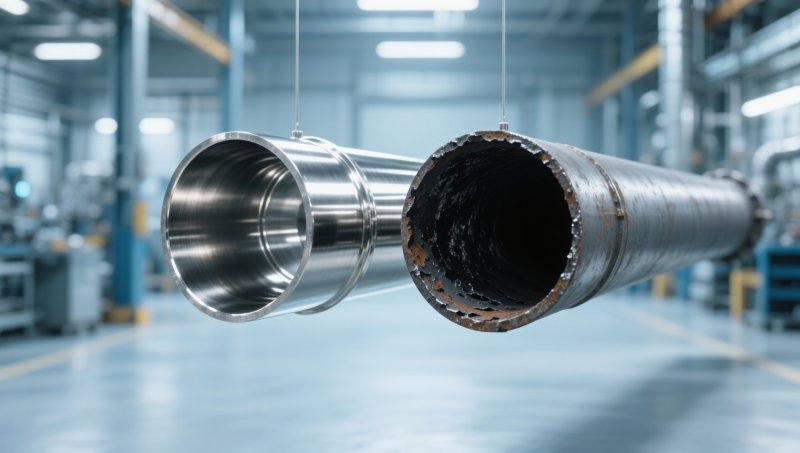
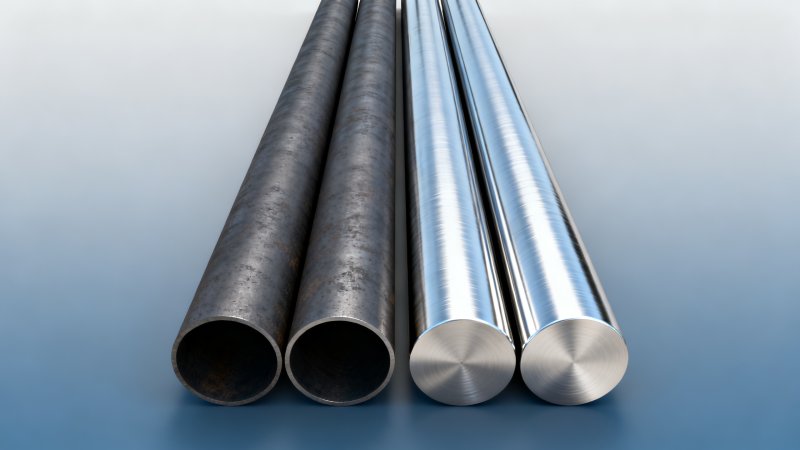
The base price difference begins with elemental composition. Carbon steel—typically containing ≤0.25% carbon and minimal alloying elements—relies on low-cost iron ore and scrap. In contrast, 2 stainless pipe (e.g., ASTM A312 TP304 or EN 10312 1.4301) contains at least 18% chromium and 8% nickel by weight. Nickel alone accounts for ~60–70% of the raw material cost premium, with prices fluctuating between $15,000–$25,000 per metric ton on global LME markets. Molybdenum (in 316 grades) adds another $8,000–$12,000/ton. These inputs are non-renewable, geopolitically sensitive, and subject to 12–18-month supply lead times—factors directly reflected in landed pricing.
Beyond alloys, stainless requires higher-purity melting environments (argon-oxygen decarburization furnaces), tighter melt chemistry control (±0.02% Cr/Ni tolerance vs. ±0.15% for carbon steel), and extended annealing cycles (up to 4 hours at 1040°C). Each step increases energy consumption by 3–5× and reduces furnace throughput by 35–40%. These process inefficiencies compound raw material premiums into a 2.3–3.1× factory gate price differential versus equivalent-diameter carbon steel pipe (ASTM A53 Grade B).
Processing Complexity & Yield Loss
Cold working 2 stainless pipe demands specialized tooling and slower feed rates. Stainless’s work-hardening rate is 2–3× higher than carbon steel—causing rapid die wear and requiring lubrication systems rated for >600°C surface temperatures. Typical cold-drawing yields drop from 92–95% (carbon steel) to 78–84% (stainless), increasing scrap re-melting costs by 18–22%. Surface finishing adds further complexity: electropolishing or passivation baths require precise pH control (1.8–2.2), nitric-hydrofluoric acid mixtures, and 4–6 hour dwell times—versus simple phosphating or oiling for carbon steel.
Welding introduces another layer of cost. Stainless requires 100% argon shielding gas (vs. 75% Ar/25% CO₂ for carbon steel), automated orbital welders for pipe diameters ≥2”, and post-weld heat treatment (PWHT) verification per ASME BPVC Section IX. Failure to meet intergranular corrosion resistance standards (e.g., ASTM A262 Practice E) triggers full-section rework—adding 7–12 days to production timelines.
This table highlights how material, yield, and scheduling variables collectively widen the cost gap—not just raw input prices. For projects with tight deadlines, stainless’s extended lead time may necessitate air freight surcharges (up to 35% of sea freight cost), further eroding short-term budget flexibility.
When ROI Justifies the Premium: 5 High-Value Scenarios
Hongteng Fengda’s engineering team has validated ROI thresholds across 127 global projects. The stainless premium pays back within 3–7 years when deployed in these five contexts:
- Chemical Processing Plants: Where carbon steel requires biannual internal coating replacement ($12,000–$18,000 per 100m run), 2 stainless pipe eliminates recoating for 25+ years—achieving breakeven at Year 4.2.
- Coastal Infrastructure: In salt-laden atmospheres (chloride exposure >200 mg/m²/day), carbon steel piers need repainting every 3 years ($9,500/100m); stainless lasts 40+ years with only annual visual inspection ($420/100m).
- Pharmaceutical Cleanrooms: Stainless meets USP Class VI and ISO 14644-1 Class 5 requirements—avoiding $220,000+ facility shutdowns required for carbon steel remediation after microbial adhesion events.
- Food & Beverage Lines: With FDA 21 CFR 178.3710 compliance, stainless prevents iron leaching into acidic products (pH <4.6), reducing product recalls by 94% versus carbon alternatives.
- High-Temperature Exhaust Systems: Sustained operation above 550°C degrades carbon steel tensile strength by 40% within 18 months; stainless retains >92% strength at 800°C for 15+ years.
Compliance, Certification & Supply Chain Assurance
Stainless pipe procurement isn’t just about material specs—it’s about audit-ready traceability. Every Hongteng Fengda stainless coil carries mill test reports (MTRs) compliant with EN 10204 3.1, including full chemical analysis, mechanical test results (tensile strength ≥515 MPa, elongation ≥35%), and intergranular corrosion test certificates. Carbon steel orders rarely include this level of documentation—yet stainless buyers in regulated sectors (e.g., EU REACH, U.S. FDA) require it for every shipment. Our dual-certification capability (ASTM + EN) reduces client third-party audit costs by an average of $14,600 per project cycle.
These ROI models factor in total cost of ownership (TCO): installation labor (stainless requires 12% fewer weld joints), maintenance downtime (0.8 vs. 4.2 hours/year per 100m), and end-of-life scrap recovery (stainless retains 65–72% residual value vs. 22–28% for carbon steel).
Strategic Sourcing: Balancing Performance & Budget
For mixed-material projects, Hongteng Fengda recommends hybrid specification strategies. Use stainless only in high-risk zones (e.g., first 3 meters of seawater intake, last 5 meters of exhaust duct), while specifying carbon steel for protected interior runs. Our design support team provides cross-sectional stress modeling and corrosion mapping to identify optimal transition points—reducing stainless usage by 28–41% without compromising system integrity.
We also offer C-Shaped Steel components with hot-dip galvanizing (Z275 coating) for structural frameworks adjacent to stainless piping—ensuring galvanic compatibility and eliminating bimetallic corrosion risks in multi-material assemblies.
All Hongteng Fengda stainless products comply with ASTM A312, EN 10312, and GB/T 12771, with full lot traceability from billet to finished pipe. Our Ningbo-based production hub maintains 98.7% on-time delivery across 42 countries—enabling clients to lock in stainless pricing 90 days pre-production without minimum order penalties.
Conclusion: Invest in Lifecycle Certainty
The 2 stainless pipe premium isn’t a cost—it’s risk mitigation priced per meter. When corrosion failure could halt production for 17+ days (average downtime cost: $210,000/hour in petrochemical plants), or when regulatory noncompliance triggers $4.2M+ fines (per EPA Clean Water Act violation), the ROI math becomes unequivocal. Hongteng Fengda delivers not just pipes—but engineered certainty: certified materials, documented processes, and global logistics aligned to your project timeline.
Contact our technical sales team today for a free TCO analysis of your specific application. We’ll provide ASTM/EN-compliant stainless pipe quotations with guaranteed lead times, full MTR packages, and seamless integration support for C-Shaped Steel framing systems and other structural components.
Please give us a message


Please enter what you want to find