For coastal construction, choosing the right roofing material is critical to long-term performance, cost control, and project reliability. Wholesale Corrugated Roofing Sheets offer a practical solution for project managers who need durable, corrosion-resistant, and cost-efficient materials for demanding marine environments. Backed by professional steel manufacturing and export experience, Hongteng Fengda helps global buyers secure dependable supply and consistent quality for large-scale coastal projects.
In marine and shoreline projects, roofing failure rarely starts with a dramatic event. More often, it begins with salt exposure, fastener corrosion, coating breakdown, or inconsistent sheet thickness. For project leaders managing warehouses, workshops, industrial shelters, equipment covers, and port-side buildings, early material selection can influence maintenance cycles for the next 10 to 20 years.
That is why Wholesale Corrugated Roofing Sheets are not simply a commodity purchase. They are part of a broader structural decision involving corrosion resistance, span performance, coating choice, drainage design, logistics planning, and compatibility with purlins and support steel. A reliable supplier must support both material quality and project execution needs.
Why Coastal Projects Demand More from Roofing Steel
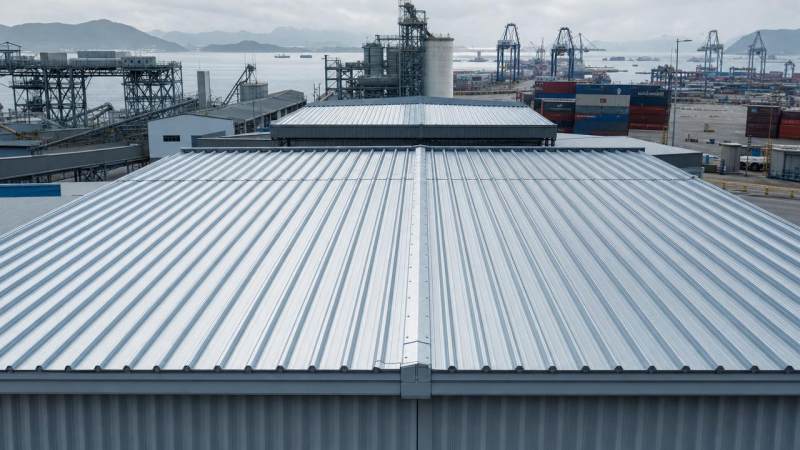
Coastal zones create a harsher service environment than inland sites. Salt-laden air, seasonal storms, high humidity, and rapid temperature shifts can accelerate corrosion on exposed steel surfaces. In many industrial coastal applications, roofing sheets face daily moisture cycles, UV exposure, and wind uplift pressure, all of which shorten service life if the material grade or coating system is not properly selected.
For project managers, the challenge is balancing 4 priorities at once: corrosion resistance, structural reliability, procurement cost, and delivery predictability. A lower upfront price may look attractive, but if coating thickness is insufficient or profile consistency is poor, replacement and repair costs can rise within 3 to 5 years.
Key exposure factors in marine environments
- Salt spray and chloride deposition on roofing surfaces and fixing points
- Wind-driven rain affecting laps, edges, and penetrations
- High humidity above 75% for extended periods in many coastal regions
- Strong sunlight and thermal cycling that stress paint and galvanized layers
- Storm conditions that increase uplift loads and fastening requirements
The following table outlines common performance concerns when evaluating Wholesale Corrugated Roofing Sheets for coastal construction projects.
A practical takeaway is that sheet quality must be reviewed together with the support system. In coastal buildings, roofing sheets do not perform alone. Purlins, wall beams, channels, and brackets all influence long-term durability and installation quality.
Why project teams prefer wholesale procurement
For projects above 5,000 square meters, wholesale sourcing usually improves consistency across batches and simplifies quality control. It also reduces the risk of mixed sheet profiles from multiple suppliers. In export-oriented procurement, standardized packing, mill traceability, and stable lead times of 2 to 6 weeks often matter as much as unit price.
Hongteng Fengda supports international buyers with structural steel production and export coordination, helping procurement teams align roofing materials with related steel components used in frames, purlins, and secondary supports. This integrated sourcing approach is especially useful when project schedules are tight and cross-border logistics must be controlled carefully.
How to Select Wholesale Corrugated Roofing Sheets for Long-Term Coastal Performance
Selecting the right Wholesale Corrugated Roofing Sheets starts with understanding the project’s service conditions and structural layout. A roof for a storage shed 3 kilometers inland may require a different specification than a processing plant located directly beside a port. Exposure intensity, roof pitch, span distance, and maintenance access should all be reviewed before finalizing the purchase specification.
1. Define the environment and design life
Project managers should first define whether the site is low, medium, or high marine exposure. If the building is within 500 meters to 1 kilometer of open seawater, corrosion control becomes more critical. The expected design life may also vary, commonly from 8 to 15 years for temporary industrial roofing and 15 to 25 years for longer-term facilities.
2. Verify sheet thickness and profile stability
Thickness affects both structural behavior and perceived value. Buyers should confirm base metal thickness rather than relying only on total coated thickness. In practice, tighter tolerances support easier installation and more consistent overlap performance, especially when hundreds or thousands of sheets are installed in sequence.
3. Check coating and anti-corrosion compatibility
Coastal projects often require galvanized or similarly protected steel surfaces, but the right choice depends on actual exposure and project budget. It is also important to review cut-edge treatment, drainage detail, and contact points with supporting steel. Corrosion frequently begins where water stands or dissimilar metals meet.
The table below provides a practical selection framework for project teams evaluating Wholesale Corrugated Roofing Sheets in marine environments.
A well-written purchase specification helps avoid 3 common problems: underperforming anti-corrosion protection, dimensional mismatch at site, and delivery delays caused by unclear packaging or batch requirements. For project leaders, a detailed inquiry usually saves more time than a rushed quote comparison.
Coordinating roofing sheets with structural support steel
In many coastal buildings, corrugated roofing sheets are fixed onto purlins, wall beams, or lightweight roof framing that must also resist corrosion. This is where integrated sourcing becomes valuable. For example, a project may require channel-based support members with reliable thickness control and galvanized protection to match the roofing system.
For buyers who also need supporting sections, Channel Steel Supplier solutions can be relevant for construction, wall beam systems, steel structure purlins, lightweight roof frames, brackets, and mechanical columns. Available materials may include carbon structural steel, hot-dip galvanized channel steel, and hot-blown galvanized channel steel, with thickness from 1.5mm to 25mm, height from 80mm to 160mm, and standard lengths of 6m to 12m.
For coastal use, project teams often favor anti-corrosion support sections with practical tolerances such as thickness control of ±0.02mm and height tolerance of ±2mm. Depending on the project, models such as Q195, Q235B, Q345B, 304, or 316 may be evaluated alongside the roofing specification, especially where the environment is strongly corrosive or where fabrication and welding quality are important.
Procurement Planning, Quality Control, and Delivery Management
Even well-specified Wholesale Corrugated Roofing Sheets can create problems if procurement planning is weak. Coastal projects often run on compressed timelines because site work depends on weather windows, crane availability, and sequential steel erection. Delays of 7 to 10 days in roofing delivery can affect cladding, electrical work, and interior equipment installation.
A 5-step sourcing workflow for project managers
- Confirm application, exposure level, and target service period.
- Define sheet profile, thickness, coating, length, and accessory requirements.
- Review supplier production capability, export packing, and inspection procedure.
- Check lead time, loading plan, and shipment split by installation sequence.
- Verify incoming material against drawings, quantity list, and surface condition.
For international buyers, reliable exporters should be able to support standard-based production and quality review against ASTM, EN, JIS, or GB requirements where applicable. Just as important, they should communicate clearly about packing, marking, moisture protection, and documentation for customs and site receiving.
What to inspect before shipment
- Sheet count per bundle and total quantity against purchase order
- Surface finish, visible scratches, coating continuity, and edge condition
- Length and profile consistency for fast installation at site
- Bundle protection suitable for sea transport and unloading operations
- Accessory completeness, including fasteners if covered in the order
Buyers managing multi-building or phased construction can also benefit from split deliveries. Instead of shipping the full volume at once, some projects schedule 2 or 3 delivery batches aligned with erection progress. This reduces on-site storage exposure and lowers the chance of handling damage in windy coastal yards.
Hongteng Fengda serves customers across North America, Europe, the Middle East, and Southeast Asia with stable manufacturing and export support. For project managers, that means a practical focus on consistent quality, dependable lead times, and reduced sourcing risk rather than just a low initial quote.
Common Mistakes in Coastal Roofing Procurement and How to Avoid Them
Several avoidable mistakes appear repeatedly in coastal steel roofing purchases. Most of them happen when roofing sheets are treated as a simple price-driven item rather than part of the building envelope and structural system.
Mistake 1: Choosing by unit price only
A lower price per sheet may hide thinner base steel, weaker corrosion protection, or inconsistent profile forming. In coastal projects, these compromises can lead to leakage, rework, or visible corrosion much earlier than expected. Lifecycle cost should be reviewed over at least 5 to 10 years, not only at purchase stage.
Mistake 2: Ignoring compatibility with secondary steel
If roofing sheets are selected without checking purlins, channel sections, wall beams, and fixing details, installation problems can occur quickly. Misalignment, uneven bearing, and poor screw seating often begin with support mismatch rather than sheet defects alone.
Mistake 3: Underestimating transport and site storage risk
Sea freight, port handling, and outdoor storage can all affect sheet condition before installation starts. Bundles should be protected from trapped moisture, and site storage should avoid direct ground contact. If sheets remain exposed for 2 to 4 weeks before fixing, protective handling becomes even more important.
Practical prevention checklist
- Request clear technical data before order confirmation
- Match sheet specification with marine exposure severity
- Coordinate roofing with support steel and fastener system
- Confirm batch traceability and inspection points before shipment
- Plan unloading, storage, and installation sequence in advance
When these controls are in place, Wholesale Corrugated Roofing Sheets become a predictable and efficient solution for coastal warehouses, industrial workshops, utility buildings, fabrication sheds, and infrastructure support facilities.
Working with a Chinese Structural Steel Exporter for Coastal Projects
For many international buyers, sourcing from China is not only about manufacturing cost. It is also about supply capacity, customization flexibility, and the ability to coordinate multiple steel items under one procurement plan. In coastal construction, this can include roofing sheets, channels, beams, cold formed profiles, and custom structural components.
Hongteng Fengda operates as a structural steel manufacturer and exporter focused on reliable production, OEM support, and international standard compliance. With modern facilities and strict quality control, the company helps buyers reduce procurement uncertainty while maintaining practical options for standard and project-based steel solutions.
What project managers usually value most
- Stable production for repeat or phased orders
- Clear communication on specifications and tolerances
- Export experience across multiple regional markets
- Support for standard products and customized steel components
- Balanced control of cost, quality, and lead time
For coastal applications, this matters because roofing procurement is rarely isolated. The more effectively a supplier understands the full steel package, the easier it becomes to coordinate delivery, reduce on-site adjustments, and keep construction milestones on track.
Wholesale Corrugated Roofing Sheets are a practical choice for project managers who need corrosion-aware, cost-efficient roofing materials for marine and shoreline construction. The right result depends on more than sheet pricing alone. It requires proper thickness review, support steel coordination, coating selection, logistics planning, and disciplined quality control from factory to jobsite.
With broad structural steel manufacturing and export experience, Hongteng Fengda helps global buyers source dependable steel products for coastal projects with greater consistency and lower risk. If you are planning a port-side warehouse, industrial roof system, or marine-adjacent steel building, contact us now to discuss specifications, request a tailored solution, or learn more about coordinated steel supply for your project.
Please give us a message


Please enter what you want to find