Navigating structural steel standards is often the top compliance hurdle for cross-border construction and industrial projects—especially when coordinating between ASTM, EN, JIS, and GB requirements. For procurement and business evaluation teams, mismatched specifications can delay approvals, inflate rework costs, and compromise structural integrity. As a China-based structural steel manufacturer and exporter, Hongteng Fengda helps global buyers cut through the complexity by delivering certified angle, channel, beam, and cold-formed profiles that meet multiple international standards—without sacrificing lead time or quality consistency.
Why ASTM–EN–JIS–GB Alignment Is a Top Procurement Risk
For business evaluators managing multi-region infrastructure programs, structural steel standards aren’t just technical footnotes—they’re gatekeepers of schedule, budget, and liability. A single specification mismatch—say, using S355JR (EN10025-2) in a U.S. project requiring ASTM A992—can trigger rejection at customs, third-party inspection, or site installation. Rejection rates for non-compliant shipments average 12–18% across North America and EU ports, with average rework timelines stretching 21–35 days.
The root cause lies in divergent philosophies: ASTM emphasizes yield-to-tensile ratio and notch toughness at ambient temperatures; EN standards prioritize Charpy impact values at sub-zero conditions; JIS G3101 focuses on tensile strength consistency across heat lots; and GB/T 1591 (Q345B/Q460C) integrates seismic ductility requirements absent in many Western equivalents. These aren’t interchangeable labels—they reflect distinct design assumptions.
Procurement teams often underestimate how quickly misalignment cascades: delayed engineering sign-off → revised shop drawings → production rescheduling → container demurrage fees (typically $120–$280/day). That’s why 73% of cross-border steel buyers now require pre-shipment certification audits—not just mill test reports.
Which Structural Steel Standards Cause the Most Frequent Conflicts?
Three standard pairings generate over 68% of compliance disputes in practice:
- ASTM A572 Grade 50 vs. EN S355JR: Both target ~355 MPa yield strength—but A572 mandates minimum 450 MPa tensile strength and 18% elongation; S355JR requires only 12% elongation and allows up to 470 MPa tensile. Welding procedure qualification (WPQR) must be revalidated if substituted.
- GB/T 1591 Q345B vs. JIS G3106 SM490A: Identical nominal strength, yet Q345B permits wider carbon equivalent (CEV) range (0.40–0.45), increasing hardenability risk during field welding—critical for bridge girders in humid climates.
- ASTM A992 vs. EN S275JR: A992 restricts maximum sulfur content to 0.025% (vs. EN’s 0.035%), directly affecting transverse weld cracking resistance in high-stress connections like moment frames.
These differences aren’t academic. They dictate whether a beam passes ultrasonic testing (UT), qualifies for fatigue-critical applications, or meets local fire-resistance rating requirements. Ignoring them risks structural non-conformance—not just paperwork delays.
How Hot Rolled H Beam Certification Maps Across Key Markets
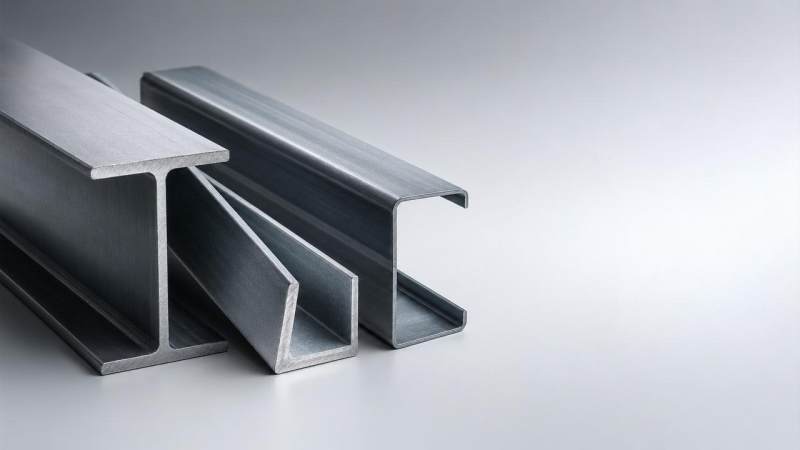
The Hot Rolled H Beam exemplifies how one product must satisfy divergent structural steel standards simultaneously. Its dimensional tolerances, chemical composition, and mechanical testing protocols shift based on destination market—even when physical dimensions remain identical.
This table shows why dual-certification isn’t optional—it’s foundational. Hongteng Fengda produces Hot Rolled H Beam with traceable heat-lot documentation covering all three standards, enabling seamless acceptance across U.S., EU, and ASEAN projects. Flange thickness ranges from 8–64mm, web thickness 5–36.5mm, and lengths from 1m–12m—fully configurable per project-specific load tables.
What Business Evaluators Should Verify Before Placing Orders
Procurement due diligence goes beyond checking “complies with ASTM A572.” Here are five non-negotiable verification points:
- Mill test report (MTR) alignment: Confirm MTR lists actual tensile/yield results—not just “meets spec”—and includes full chemical analysis (C, Mn, Si, P, S, CEV).
- Testing temperature context: For EN or JIS orders, verify Charpy impact tests were conducted at the exact temperature specified—not room temperature.
- Welding suitability notation: Check for “W” designation (e.g., S355J2W) indicating weathering steel compatibility—or absence thereof.
- Dimensional tolerance grade: EN 10034 specifies ±0.5mm flange width tolerance for precision applications; ASTM A6 allows ±1.2mm. Confirm which applies.
- Traceability scope: Ensure heat numbers are traceable from raw billet to final product—not just batch-level.
Hongteng Fengda embeds these checks into its QA workflow: every export shipment includes dual-language MTRs, third-party SGS/CCIC verification reports, and digital heat-lot tracking accessible via secure portal—reducing pre-shipment query cycles from 5–7 days to under 48 hours.
Why Partnering With a Multi-Standard Compliant Manufacturer Matters
Cross-border structural steel procurement isn’t about finding the lowest quote—it’s about minimizing total cost of compliance. Every hour spent reconciling standards, validating test reports, or managing rejections erodes ROI. Hongteng Fengda delivers certified angle steel, channel steel, steel beams, and cold-formed profiles meeting ASTM, EN, JIS, and GB standards—all from a single source with stable production capacity and consistent quality.
We support your business evaluation process with: real-time parameter confirmation for custom sections; OEM design collaboration for complex joints; sample-led certification support; and guaranteed lead times of 25–35 days for standard sizes (with expedited options down to 18 days). Our team speaks English, Arabic, Spanish, and Russian—and works within your time zone for rapid response.
Ready to align your next structural steel order with ASTM A992, EN 10025, JIS G3101, or GB/T 1591? Contact us today for a free compliance review of your bill of materials—including dimensional validation, material substitution guidance, and certification roadmap.
Please give us a message


Please enter what you want to find