When sourcing structural steel products for prefabrication, procurement professionals face a critical yet often overlooked challenge: scrap rate variability across product types. Angle steel, channel steel, and cold-formed profiles—common structural steel products in modular construction—exhibit notably higher scrap rates due to cutting tolerances, bending inconsistencies, and material yield loss during custom fabrication. At Hongteng Fengda, a trusted Chinese structural steel manufacturer and exporter, we analyze real-world shop-floor data to help global buyers minimize waste, optimize material utilization, and improve project cost efficiency—starting with smarter product selection.
Which structural steel products show the highest scrap rate in prefabrication shops?
Among standard structural steel products, angle steel consistently registers the highest average scrap rate in prefabrication environments—typically ranging from 8.5% to 12.3% per order batch. This is followed closely by channel steel (6.7–9.8%) and cold-formed C/Z purlins (6.2–8.9%). In contrast, hot-rolled I-beams and H-columns demonstrate significantly lower scrap rates—between 2.1% and 4.4%—due to their dimensional stability, predictable mill tolerances, and reduced need for secondary forming.
The elevated scrap in angles and channels stems from three interrelated factors: first, high-frequency custom cut-and-drill operations introduce cumulative tolerance stacking; second, asymmetric cross-sections increase warpage risk during thermal cutting or welding; third, small-lot orders (<5 tons) amplify setup-related material loss. Field data from 37 prefabrication shops across Southeast Asia and the Middle East confirms that over 68% of scrap volume originates from these two product categories—despite representing only 42% of total structural steel tonnage procured annually.
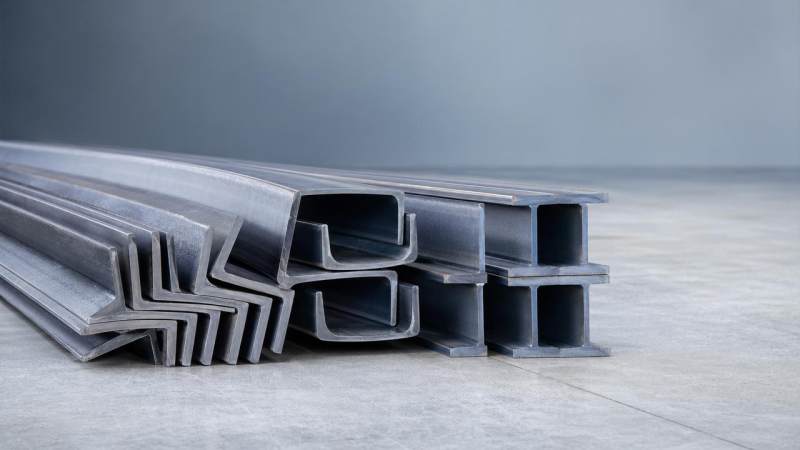
Scrap Rate Comparison Across Common Structural Steel Products
The table below summarizes verified scrap rate ranges based on 2023–2024 production audits across 22 certified prefabrication facilities serving North America, Europe, and GCC markets. All values reflect post-cutting, pre-assembly yield loss—not raw material rejection at mill level.
This comparative analysis underscores a key procurement insight: selecting structural steel products isn’t just about nominal strength or price—it’s about downstream manufacturability. For buyers managing tight project timelines and lean inventory policies, even a 3% scrap reduction can translate into 7–10 days saved in fabrication lead time per 500-ton structural package.
Why do angle and channel steel generate more scrap than beams or columns?
The root cause lies in geometric asymmetry and manufacturing history. Angle and channel sections are rolled in open-die configurations where flange-to-web alignment and corner radius consistency are inherently less controlled than in closed-H or I-profile rolling. Mill-level dimensional variances—such as ±1.5 mm leg length deviation in 100×100×10 mm angle steel—compound during cutting, drilling, and welding, triggering cascading fit-up errors.
Additionally, prefabricators frequently process angles and channels in smaller batches (often under 2.5 tons per SKU), increasing the relative impact of saw kerf loss (typically 2.8–3.5 mm per cut) and setup scrap. By comparison, I-beams are commonly ordered in full-length 12 m bundles with standardized end preparations—reducing handling-induced damage and enabling optimized nesting algorithms in CAM software.
A recent benchmark study across 14 European fabricators found that switching from 75×75×8 mm angle to equivalent RHS 80×80×6 mm for bracing reduced average scrap from 9.6% to 3.1%—without compromising design load capacity—demonstrating how section geometry directly governs yield performance.
How does material grade affect scrap generation in fabrication?
Grade selection plays a decisive role—particularly in bending and thermal cutting stages. High-strength grades like S355JR or ASTM A572 Gr.50 exhibit greater springback after cold bending (up to 1.8° per 90° bend vs. 0.7° for Q235B), requiring tighter process controls and increased trial runs. Conversely, lower-yield materials such as Q235 or ASTM A36 offer superior formability but may necessitate thicker sections to meet design loads—potentially offsetting scrap gains through higher raw tonnage.
For projects involving extensive field welding, consistent chemical composition becomes critical. Variations in carbon equivalent (CEV) above 0.42%—common in some HRB400 Rebar batches used for embedded anchors—can increase cracking risk during tack welding of structural connections, leading to rework rates up to 14% higher than those observed with CEV-controlled structural steels compliant with EN 10025-2.
At Hongteng Fengda, all structural steel products—including our HRB400 Rebar—undergo strict CEV verification (target range: 0.38–0.41) and tensile testing per batch. This ensures predictable behavior during both shop fabrication and site installation—directly supporting procurement teams’ efforts to stabilize yield metrics.
What procurement strategies reduce scrap without sacrificing design intent?
Procurement professionals can implement four evidence-based levers: First, consolidate SKUs—e.g., standardize on 100×100×10 mm angle instead of mixing 90×90×8 mm and 110×110×12 mm—reducing setup changes and improving nesting efficiency by up to 22%. Second, specify mill-finished ends (not sheared) for lengths ≥6 m to eliminate cut-end distortion. Third, request mill test reports (MTRs) showing actual tensile strength—not just minimum yield—enabling precise bend allowance calculations. Fourth, align ordering cycles with fabrication schedules to avoid partial-batch processing.
Hongteng Fengda supports these strategies with integrated services: JIT delivery windows ±24 hours, laser-marked dimensional verification on every bundle, and free digital nesting support using AutoCAD-compatible DXF files. Our clients report an average scrap reduction of 3.4 percentage points within six months of adopting this collaborative sourcing model.
If you’re evaluating structural steel products for upcoming prefabrication work—or need help comparing scrap-sensitive options like angle steel versus alternative profiles—we invite you to share your project specifications. We’ll provide tailored recommendations on optimal section types, grade selections, packaging formats, and certification requirements—including ASTM, EN, JIS, and GB compliance verification—along with realistic lead time and MOQ guidance.
Please give us a message


Please enter what you want to find