For project managers and engineering leads, choosing the right conduit affects safety, durability, and long-term maintenance. In many demanding environments, galvanised electrical conduit pipe is still preferred for its mechanical strength, corrosion resistance, and compliance with strict project standards. Understanding where it performs best helps reduce sourcing risks, control lifecycle costs, and support reliable installation outcomes.
Why is galvanised electrical conduit pipe still specified in many projects?
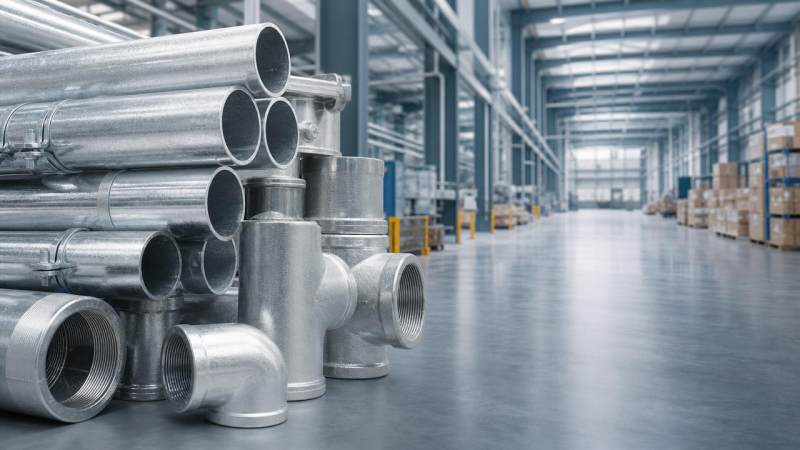
Despite the wider use of PVC, EMT, and flexible conduit systems, galvanised electrical conduit pipe remains a practical choice in projects where impact resistance, code compliance, and service life matter more than the lowest upfront cost.
For industrial buildings, utility zones, transport infrastructure, and heavy-duty commercial sites, conduit is not only a routing component. It is part of the project’s safety strategy. When cable protection failure can stop operations or trigger expensive repairs, steel conduit often becomes the preferred option.
In steel-intensive construction, project leaders usually look for materials that align with the structural philosophy of the whole build: durable, standardized, and easy to integrate into long-life asset management plans. That is one reason galvanised electrical conduit pipe continues to hold its position.
What makes it different from lighter conduit options?
- Its zinc-coated steel body provides better resistance to mechanical damage during transport, installation, and operation.
- It performs well in exposed areas where accidental impact from tools, vehicles, pallets, or maintenance activity is common.
- It is widely recognized in specifications that require metallic raceways for grounding continuity or higher fire performance.
- It suits projects that need compatibility with international standards such as ASTM, EN, JIS, or GB-based procurement frameworks.
Which application scenarios still favor galvanised electrical conduit pipe?
Project managers often ask a practical question first: where is galvanised electrical conduit pipe still preferred over non-metallic or thin-wall alternatives? The answer depends on risk exposure, installation method, and expected maintenance conditions.
The table below helps connect typical project environments with the reasons steel conduit remains the safer or more economical long-term decision.
The common pattern is clear. Galvanised electrical conduit pipe is still preferred when damage prevention, exposure tolerance, and long service expectations carry more weight than installation speed alone.
High-risk environments where steel conduit makes sense
- Outdoor or semi-outdoor service areas where moisture and mechanical wear happen together.
- Facilities with strict maintenance access rules, where replacing failed conduit would interrupt operations.
- Projects with exposed cable management in visible or traffic-prone utility spaces.
- Large steel buildings where buyers prefer metallic systems across structure and services for consistency.
How does it compare with EMT, PVC, and other alternatives?
Not every project needs the same conduit. A cost-sensitive interior fit-out may choose lighter materials, while a factory extension may require stronger protection. Comparison is more useful than general claims.
The following table compares common selection paths used by engineering teams during procurement and specification review.
For many project teams, the real issue is not which conduit is universally better. It is which option best matches exposure class, code requirements, budget control, and maintenance strategy. In that framework, galvanised electrical conduit pipe keeps its value in high-consequence zones.
What performance factors should project managers evaluate?
When evaluating galvanised electrical conduit pipe, technical review should go beyond nominal size and unit price. Several factors influence field performance and procurement risk.
Key checks before approval
- Confirm the base steel quality and the consistency of galvanizing coverage, especially if the conduit will be used in humid, industrial, or semi-exposed areas.
- Review wall thickness and dimensional tolerance to avoid threading, coupling, or installation problems on site.
- Check the intended installation method, including supports, bends, fittings, grounding path, and compatibility with project drawings.
- Match the conduit specification to the project standard set, such as ASTM, EN, JIS, or GB, if required by consultants or end users.
- Evaluate supplier production stability, export packing, and lead time reliability, especially for phased international projects.
For buyers managing steel packages across structural and electrical interfaces, sourcing discipline matters. Dimensional consistency and coating quality can affect more than installation speed. They can also affect inspection outcomes and long-term asset performance.
A related material consideration for envelope and industrial steel packages
Many projects that specify galvanised electrical conduit pipe also need corrosion-resistant steel for roofing, cladding, and secondary industrial applications. In these packages, it is useful to review materials that combine durability with fabrication flexibility, such as AZ50 Galvalume Steel Coil.
This product uses an Al-Zn-Si coating composition of Al 55%, Zn 43.5%, and Si 1.5%, with thickness from 0.12mm to 6.00mm, width from 600mm to 1500mm, and customizable lengths from 1m to 12m. Common grades include DX51D, DX52D, S250GD, S350GD, and S550GD, while reference standards include ASTM, DIN, JIS, GB, and EN.
For project managers handling building exteriors, structural support items, and industrial steel components in parallel, such materials can support corrosion resistance, weldability, and impact performance in surrounding systems, even though conduit selection should still follow electrical design and code requirements separately.
How should buyers assess cost versus lifecycle value?
A common mistake is to compare conduit only by purchase price per meter. That approach can distort decision-making, especially in projects where downtime, repair access, or approval delay carries a higher cost than the material itself.
The table below shows a practical way to evaluate galvanised electrical conduit pipe from a project lifecycle perspective rather than a material-only perspective.
This is why many experienced engineering teams still choose galvanised electrical conduit pipe in selective zones rather than everywhere. They optimize cost by using it where failure would be expensive, disruptive, or hard to fix.
What standards and compliance points should be reviewed?
International projects rarely succeed with generic specifications alone. Buyers need to align product details with local codes, consultant expectations, and the approved material submittal process.
Typical compliance checkpoints
- Applicable material and dimensional standards requested in the contract documents.
- Coating quality and appearance requirements for the intended exposure conditions.
- Compatibility of conduit, fittings, couplings, and supports as a complete installation system.
- Mill documentation, inspection records, and export packaging suitable for international handling.
Hongteng Fengda supports global buyers in steel-based project supply with modern manufacturing, strict quality control, and familiarity with standards such as ASTM, EN, JIS, and GB. For project managers, this matters because standard alignment reduces sourcing ambiguity and helps avoid mismatches between specification, procurement, and site execution.
What procurement mistakes should engineering teams avoid?
The most expensive conduit issues usually come from early-stage assumptions, not from final installation. When project schedules are tight, teams may approve a product family before confirming the details that determine field fit.
Common mistakes
- Assuming all galvanised electrical conduit pipe has the same wall thickness, coating consistency, or fit-up quality.
- Choosing based on unit price without considering maintenance access and replacement consequences.
- Overlooking shipping protection, which can affect surface condition and site acceptance after long-distance export.
- Failing to coordinate conduit procurement with structural openings, supports, and service routing in steel buildings.
A capable steel supply partner can help reduce these risks by supporting clearer technical confirmation before production, not just by offering a quotation. This is especially valuable when conduit routing interacts with fabricated steel members, supports, or custom accessories.
FAQ: practical questions about galvanised electrical conduit pipe
Is galvanised electrical conduit pipe always the best choice for outdoor use?
Not always. It is often a strong choice for exposed and mechanically demanding outdoor or semi-outdoor areas, but the final decision should consider local corrosion conditions, code requirements, and whether additional protective measures are needed in aggressive environments.
When is it worth paying more for steel conduit instead of PVC?
It is usually worth the higher initial cost when conduit is exposed to impact, visible traffic, maintenance activity, or stricter fire and grounding requirements. If failure would interrupt operations or require difficult access work, the lifecycle value of steel conduit improves significantly.
What should buyers confirm before placing an export order?
Confirm standard reference, dimensions, wall thickness, surface finish, fitting compatibility, packing method, quantity split by size, and required documents. For international projects, also confirm lead time by production batch and whether partial shipment planning is needed.
Can one supplier support conduit-related steel coordination in larger projects?
Yes, especially when the supplier has broad experience in structural steel, cold formed profiles, and custom steel components. This helps when electrical support systems, framing interfaces, and fabricated accessories need coordination rather than isolated purchasing.
Why choose us for steel-based project sourcing?
Hongteng Fengda is a professional structural steel manufacturer and exporter from China, serving global construction, industrial, and manufacturing projects. Our strengths are especially relevant for project managers who need stable supply, consistent quality, and controlled delivery risk across steel-related packages.
- We support standard and customized steel products, including angle steel, channel steel, steel beams, cold formed profiles, and custom structural components.
- We work with internationally recognized standards such as ASTM, EN, JIS, and GB, helping buyers align supply with project documentation.
- We understand export execution for North America, Europe, the Middle East, and Southeast Asia, where documentation, packaging, and lead time discipline are essential.
- We focus on reducing sourcing risk through stable production planning, practical technical communication, and dependable delivery coordination.
If you are evaluating galvanised electrical conduit pipe alongside structural steel or industrial steel procurement, contact us with your drawing set, size list, standard requirements, and delivery schedule. We can support parameter confirmation, product selection, custom steel solutions, certification alignment, sample discussion, packing details, lead time review, and quotation planning based on your project stage.
Please give us a message


Please enter what you want to find