Prefab structural steel makes sense when projects demand faster installation, predictable quality, and better cost control. From structural steel for construction to practical comparisons like I beam weight per foot, buyers need solutions that balance performance and efficiency. For warehouses, factories, and modular builds, choosing the right steel partner can reduce risk, simplify sourcing, and support long-term project success.
For engineers, procurement teams, project managers, distributors, and business decision-makers, the question is rarely whether steel is needed. The real question is when prefabrication delivers measurable value over conventional fabrication on site. In many projects, the answer depends on schedule pressure, labor availability, quality consistency, logistics planning, and the ability to control hidden costs before installation begins.
As a structural steel manufacturer and exporter from China, Hongteng Fengda supports global buyers with angle steel, channel steel, steel beams, cold formed steel profiles, and customized structural steel components made to ASTM, EN, JIS, and GB requirements. When buyers compare supply options across North America, Europe, the Middle East, and Southeast Asia, they often look for 3 things first: stable production capacity, dependable lead times, and compliance with the right standards for the project.
Why Prefab Structural Steel Fits Modern Construction Projects
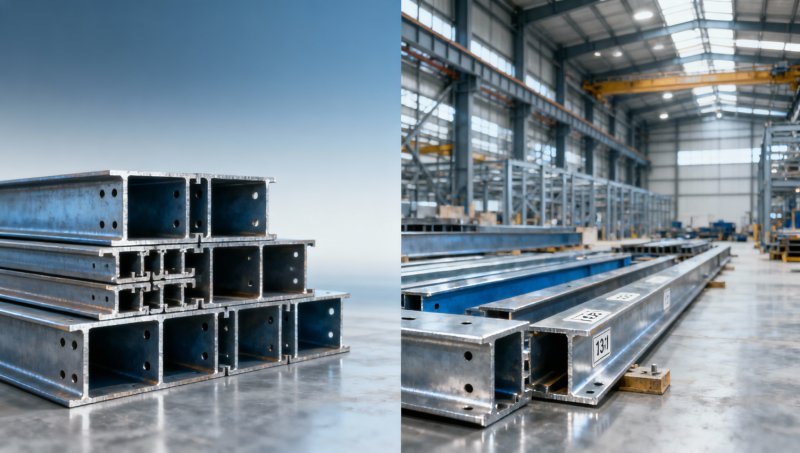
Prefab structural steel is manufactured, cut, drilled, welded, and prepared in a controlled factory environment before reaching the jobsite. That approach is especially useful when installation windows are short, site conditions are congested, or labor costs are high. In practical terms, reducing on-site processing can shorten erection schedules by 15% to 35% in many common industrial and commercial builds, depending on project complexity and sequencing.
This matters because project overruns often come from avoidable variability. On-site cutting, repeated measurements, weather delays, and inconsistent welding quality can all add cost. Prefabrication shifts much of that work into a manufacturing setting where tolerances, material identification, and inspection points can be controlled more effectively. For buyers evaluating total project cost, a lower installation risk profile is often as important as the ex-works steel price.
The strongest use cases include warehouses, workshops, factories, mezzanines, equipment platforms, modular units, and export projects where materials travel long distances. In these scenarios, steel members need to arrive organized, documented, and ready for efficient assembly. That is why project teams often review not only section size and weight but also numbering systems, packing methods, and installation logic.
Key value drivers behind prefabrication
Prefab steel makes the most sense when the project has at least 1 of the following conditions: a tight deadline of 4 to 12 weeks, limited skilled labor on site, repeated structural modules, or strict dimensional coordination with cladding, machinery, or MEP systems. The more interfaces a structure has, the more valuable factory-controlled preparation becomes.
- Faster assembly because cutting, hole making, and fit-up are completed before shipment.
- Better quality consistency through repeatable production and inspection checkpoints.
- More predictable material planning because sections, plates, and accessories are documented in advance.
- Lower rework risk when members are marked clearly and fabricated to approved drawings.
Another practical consideration is weight planning. Buyers often search for terms such as I beam weight per foot because transport cost, lifting capacity, and foundation design all depend on accurate section data. Prefabrication encourages early coordination of beam sizes, connection details, and shipment planning, which reduces the chance of late-stage changes that affect both engineering and procurement.
The following comparison shows where prefab structural steel usually creates the strongest commercial and technical advantage.
In short, prefab structural steel is not only about speed. It is about reducing variables. When project teams can define design, quantities, and logistics early, prefabrication improves both technical control and financial predictability.
How Buyers Evaluate Cost, Weight, and Specification Risk
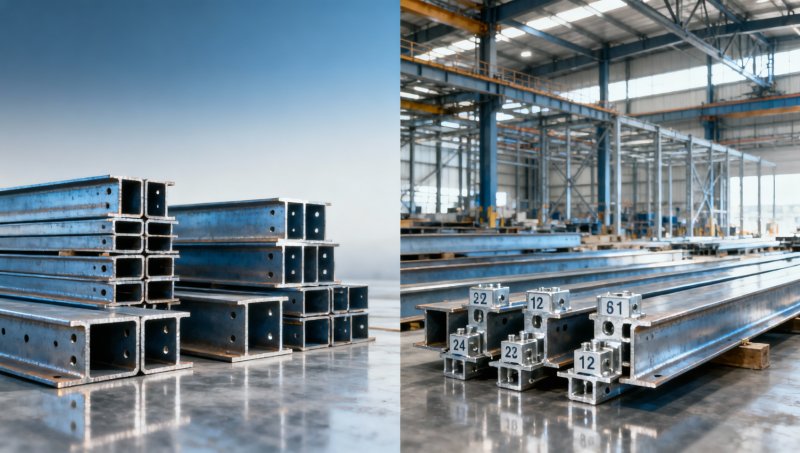
Many buyers first compare suppliers by ton price, but experienced procurement teams know that this is only 1 layer of the decision. A lower price can quickly lose its advantage if section substitutions are unclear, tolerances are inconsistent, or delivery documentation is incomplete. For structural steel for construction, evaluation should combine material grade, section accuracy, weld quality, coating requirements, packing method, and shipment readiness.
Weight is another critical issue. The I beam weight per foot or per meter directly affects shipping volume, lifting plans, and installation equipment. Even small differences in section selection can change total tonnage by several percent across a large warehouse or plant structure. That is why engineering and sourcing teams should review not only nominal sizes but also the exact standard, length tolerance, and connection design that influence final fabrication weight.
For export procurement, specification alignment is also essential. Projects may require ASTM, EN, JIS, or GB compliance, and the steel supplier must understand how these standards connect to fabrication requirements. In many cases, buyers reduce approval delays by preparing a 4-part technical file in advance: material grade list, drawing set, inspection request, and packing or marking instructions.
A practical decision framework for procurement teams
Before placing an order, it helps to score suppliers across commercial and technical criteria. This avoids a narrow decision based only on unit price and supports stronger internal approval for engineering, finance, and project management stakeholders.
- Confirm standard and grade compatibility with the project specification.
- Check fabrication scope, including cutting, drilling, welding, and marking.
- Review lead time by production stage, not only by shipping date.
- Verify inspection coverage for dimensions, welds, and material traceability.
- Compare packing and shipment plans for loading efficiency and damage control.
In the middle of many steel projects, buyers also need supporting materials for downstream processing. For example, Wire Rod can be relevant where carbon steel bar material is used in building material supply chains or further manufacturing applications. Available models include GB1499.2 HRB400, HRB500, HRB400E, HRB500E, ASTM A615 Grade 60, BS4449 460B, 500B, 500C, and AS/NZS 4671 500N. Produced in round shape lengths of 1–12m from carbon steel, it offers excellent formability and weldability, with compliance options across ASTM, GB, EN, DIN, and JIS standards.
Such insert products are useful when buyers want to consolidate sourcing through one steel partner instead of managing multiple vendors. That can reduce coordination time, simplify quality reviews, and support better planning for projects involving both structural members and related steel bar or manufacturing inputs.
The table below outlines common procurement checkpoints that help control specification and cost risk before order confirmation.
A disciplined procurement review often prevents far greater downstream cost. One missing detail in standards, marking, or member sequencing can delay installation crews, crane bookings, and handover milestones.
When Prefab Structural Steel Delivers the Best Return
Not every project benefits equally from prefabrication, so the decision should match the building type and execution model. The strongest returns usually appear in projects with repetitive bays, clear structural grids, or multi-phase expansion plans. Warehouses, distribution centers, manufacturing plants, agricultural buildings, and modular structures are common examples because they combine standardized members with schedule-sensitive installation.
For project managers, prefabrication helps when crane time is limited and site congestion is high. If 20 to 40 major members can be erected in planned sequence per day instead of being adjusted one by one in the field, both safety control and labor productivity typically improve. Quality and safety teams also benefit because fewer on-site hot works and cutting operations mean fewer uncontrolled variables.
For finance reviewers and business evaluators, prefab structural steel works best when they assess total installed cost instead of purchase price alone. A project that saves 5% on steel but loses 10% through delays, extra labor, and corrections is not truly cost-efficient. The right comparison includes fabrication readiness, shipping efficiency, erection time, and post-installation rectification risk.
Typical applications where prefabrication adds value
- Warehouse frames with repeated spans and roof beam patterns.
- Factory buildings where structural steel must align with machinery foundations and utility routing.
- Multi-level mezzanine systems requiring accurate hole positions and connection details.
- Exported modular buildings assembled under tight local labor and time constraints.
Scenarios where caution is needed
Prefab steel may be less efficient when drawings are still changing frequently, site dimensions are uncertain, or the structure includes many late-stage custom interfaces that cannot be frozen in time. In those cases, a hybrid approach can work better, with 70% to 85% of the steel prefabricated and the remaining elements finalized after site verification.
The key is to define freeze points. If the project team can lock structural drawings, connection details, and base dimensions early, prefabrication becomes a strong tool for speed and cost control. If not, uncontrolled revisions can weaken its advantages.
Implementation, Quality Control, and Delivery Planning
Successful prefab structural steel projects depend on process discipline from quotation to installation. A reliable supplier should be able to support the buyer through multiple stages, not just raw material supply. In export projects, the usual process includes 5 key stages: drawing review, material confirmation, fabrication planning, inspection and packing, then shipment and document handover. Each stage affects the next, so delays often come from missing information rather than manufacturing capacity alone.
Quality control should cover material certificates, dimensional inspection, weld checks where applicable, member marking, and packing verification. Even simple issues such as unreadable tags or mixed bundles can create serious site delays. A well-prepared shipment should allow the receiving team to identify members by drawing reference and erection sequence within hours, not days.
For international buyers, delivery reliability also depends on practical packaging and documentation. Members should be bundled to match unloading and erection logic rather than only loading convenience. If a structure will be installed zone by zone, the shipment plan should reflect that. Good planning at this stage can save several days of searching, re-sorting, and secondary handling at site.
Recommended project control checklist
The following process table helps buyers and project teams align manufacturing, QA, and site execution before shipment.
A supplier with modern facilities and strict quality control can support this process more consistently, especially when buyers need standard sections and OEM structural steel components under one sourcing program. That is where a long-term partner relationship becomes useful: fewer communication gaps, clearer accountability, and better repeat-order efficiency.
Common mistakes that increase project risk
- Approving fabrication before all connection details are finalized.
- Comparing quotations without confirming whether drilling, marking, or coatings are included.
- Ignoring weight and loading implications during transport planning.
- Receiving steel without a clear identification system linked to drawings.
Avoiding these mistakes can protect both schedule and cash flow. In large projects, even a 3 to 7 day installation disruption can affect labor utilization, rental equipment, and milestone billing.
FAQ: Practical Questions Buyers Often Ask
How do I know if prefab structural steel is right for my project?
Start with 4 checks: project schedule, site labor availability, drawing stability, and structural repetition. If the project has a compressed timeline of less than 12 weeks for installation, limited field labor, and a clear steel layout, prefabrication is usually a strong option. If drawings are still changing weekly, wait until key dimensions and connection details are frozen.
What should I review besides ton price?
Review the full scope: steel grade, section standard, fabrication content, tolerance control, inspection documents, packing method, and shipping sequence. Also confirm whether the quote includes accessories, marking, and any corrosion protection. These details often decide whether the delivered steel is truly ready for installation.
How long does delivery usually take?
For many standard structural steel orders, fabrication may take around 2 to 6 weeks after final drawing approval, while shipping time depends on destination and logistics route. Customized components, mixed-section packages, or projects with multiple inspection hold points may require longer. Buyers should always plan around the full chain, not factory time alone.
What standards should international buyers pay attention to?
The answer depends on the project market and engineering basis, but ASTM, EN, JIS, and GB are commonly referenced. What matters most is that the standard listed in the purchase documents matches the design requirement and that the supplier can provide the associated mill certificates and fabrication records. Consistency across drawings, material lists, and inspection documents is essential.
Prefab structural steel makes the most sense when a project needs speed, predictable quality, and fewer surprises during installation. The best results come from early coordination of standards, member weights, fabrication scope, and delivery sequence. For buyers sourcing structural steel for construction, the right partner should help reduce sourcing risk, support technical review, and keep the project moving from manufacturing through site assembly.
Hongteng Fengda supports global customers with structural steel products, custom solutions, reliable production, and export-oriented service across major international standards. If you are planning a warehouse, factory, modular building, or industrial steel project, contact us to get a customized solution, discuss product details, or explore the most efficient steel supply plan for your next project.
Please give us a message


Please enter what you want to find