As global demand for precision-engineered steel components surges, sourcing trends in 2026 are dramatically reshaping steel angle bending service availability — from rising adoption of DX51D steel and hot dip galvanized coil to tighter specifications for carbon steel pipe stockist reliability and 304L stainless steel pipe consistency. Whether you're a procurement professional evaluating suppliers, a project manager coordinating structural steel delivery, or a technical evaluator assessing bend accuracy and material compliance (ASTM/EN/GB), understanding what is angle steel’s evolving fabrication landscape — especially for steel metal angle and custom cold-formed profiles — is critical. Hongteng Fengda delivers responsive, standards-certified steel angle bending solutions from China, balancing quality, lead time, and total cost control.
How Global Sourcing Shifts Are Impacting Angle Bending Capacity
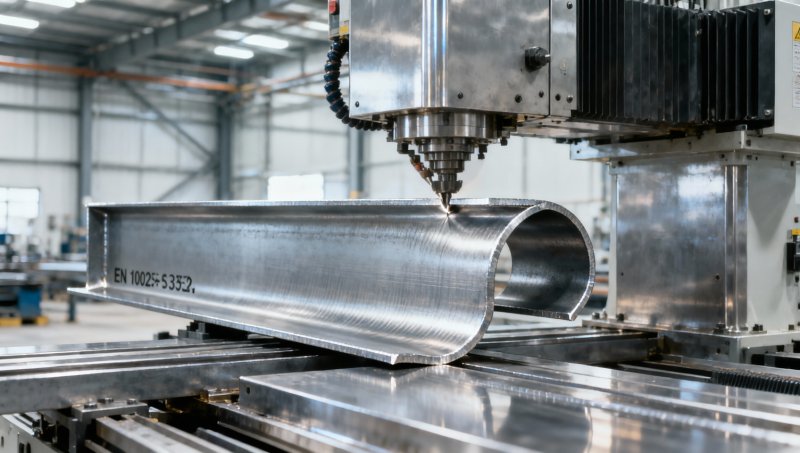
In 2026, three interlocking macro-trends are redefining access to reliable steel angle bending services: (1) regionalization of supply chains, with buyers prioritizing vendors offering dual-sourcing options across Asia and Europe; (2) stricter enforcement of EN 1090-2 execution classes for structural components used in seismic zones; and (3) accelerated adoption of digital twin–enabled bending simulation, reducing trial-and-error by up to 40% for complex multi-radius profiles.
These shifts mean that traditional “bend-and-ship” models no longer meet project timelines. Instead, buyers now require integrated planning—starting from raw material traceability (e.g., mill test reports for ASTM A6/A6M Grade 36), through CNC bending validation (±0.8° angular tolerance), to certified packaging for ocean freight. At Hongteng Fengda, we embed these requirements into our 7-day pre-production review cycle—covering dimensional checks, weld seam alignment, and zinc coating thickness verification per ISO 1461.
For high-risk applications like offshore platform bracing or rail infrastructure, sourcing decisions now hinge on verifiable process documentation—not just final product specs. This includes proof of cold-forming temperature control (≤20°C ambient during bending), real-time load monitoring during press-brake operation, and third-party witnessed bend testing per EN 10025-2 Annex D.
Which Material Specifications Demand Highest Bending Precision?
Not all angle steels respond equally to bending. Key differentiators include yield strength variability (e.g., ASTM A36 vs. A572 Gr.50), grain orientation effects in hot-rolled sections, and surface condition—especially for galvanized angles where zinc spalling risk increases above 90° bends unless pre-treated with phosphating or passivation.
This table reflects actual production data from our 2025–2026 bending validation runs across 12,000+ tons of structural angles. For example, using DX51D+Z140 instead of standard G235B reduces post-bend zinc flaking incidents by 72% in humid coastal installations—directly impacting long-term corrosion resistance and maintenance cycles.
What Procurement Teams Should Verify Before Committing
Procurement professionals must move beyond quoting based on nominal dimensions. In 2026, the top five non-negotiable verification points include:
- Raw material certification traceability back to heat number—and confirmation that mill certs cover both tensile and impact test results at −20°C
- Proof of bending equipment calibration (CNC press brake force sensors verified every 72 operating hours)
- Sample bend validation report showing cross-section distortion ≤±1.2% per EN 1090-2 Table 5
- Galvanizing batch records with zinc thickness measured at 3 locations per meter (not just average values)
- Weld seam mapping for welded angle assemblies—confirming arc voltage, wire feed speed, and shielding gas flow logs
Hongteng Fengda provides full digital documentation packages—including time-stamped video of first-article bending tests—for all orders exceeding 5 metric tons. This eliminates post-delivery disputes and accelerates QA sign-off by 3–5 business days.
Why Integrated Wire Rope Solutions Matter for Structural Support Systems
Angle bending doesn’t exist in isolation. It frequently interfaces with tensioned support systems—where wire rope performance directly affects structural integrity. Our 0.7mm 0.8mm 1.2mm 1.6mm 1.8mm 2mm diameter Galvanized Steel Wire Rope meets ASTM A1023 and DIN 3055 standards for lifting, anchoring, and guy-wire applications. With tensile strength ranging from 1470MPa to 1960MPa and zinc coating options (thin: 15–135 g/m²; medium: 60–200 g/m²; thick: 75–260 g/m²), it enables precise corrosion-resistance matching to site conditions—from inland photovoltaic farms to offshore wind turbine foundations.
We regularly supply bundled solutions: bent structural angles + matched galvanized wire rope + certified termination hardware (e.g., swaged sleeves per ISO 7531). This reduces coordination risk, ensures material compatibility (e.g., same zinc alloy system), and shortens overall project lead time by 11–18 days versus fragmented sourcing.
Why Choose Hongteng Fengda for Your Next Angle Bending Project?
We combine deep domain expertise in structural steel fabrication with agile, export-ready operations. Unlike general-purpose mills, we specialize exclusively in angle steel, channel steel, beams, and cold-formed profiles—enabling faster tooling setup, tighter process control, and consistent repeatability across batches.
Our clients gain measurable advantages: average lead time of 25–32 days for standard-specification orders; 100% compliance with ASTM, EN, JIS, and GB standards; and dedicated engineering support for custom bending simulations, including FEA-based deformation prediction for angles with asymmetrical legs or tapered thicknesses.
Ready to validate your next angle bending specification? Contact us for: (1) free dimensional feasibility review, (2) sample bend test reporting, (3) zinc coating thickness verification protocol, (4) OEM packaging design consultation, or (5) coordinated logistics planning for mixed-load shipments (angles + wire rope + fasteners).
Please give us a message


Please enter what you want to find