For construction, industrial, and manufacturing projects, understanding what drives 316 stainless steel pipe price is essential to controlling budgets and reducing sourcing risk.
The final quotation can change with nickel costs, molybdenum content, pipe size, wall thickness, standards, finishing, inspection, order volume, and delivery terms.
A clear checklist helps compare quotations accurately, avoid hidden charges, and secure reliable stainless steel pipe solutions before schedules become tight.
Why 316 Stainless Steel Pipe Price Needs Checklist-Based Review
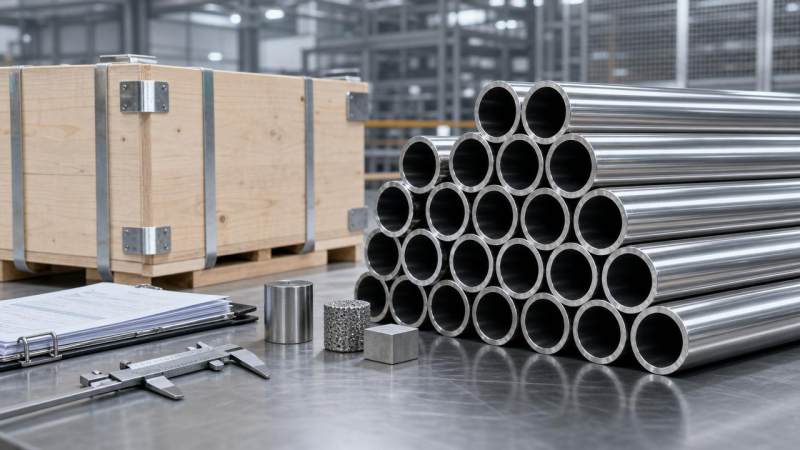
316 stainless steel contains molybdenum, improving resistance to chlorides, acids, salt spray, and many aggressive industrial fluids.
That performance advantage makes 316 stainless steel pipe price higher than many 304 stainless or carbon steel alternatives.
However, the lowest unit price is rarely the lowest installed cost.
Incorrect grade, loose tolerances, weak traceability, or delayed delivery can create rework, downtime, and replacement costs.
A structured review makes 316 stainless steel pipe price easier to judge across different mills, traders, exporters, and fabrication routes.
Core Checklist for Evaluating 316 Stainless Steel Pipe Price
Use the following checklist before confirming any quotation. Each item can directly affect 316 stainless steel pipe price and long-term project reliability.
- Confirm the exact grade, including 316, 316L, or dual-certified material, because carbon level and certification scope influence corrosion performance and pricing.
- Verify outer diameter, wall thickness, schedule, and length tolerance before comparing offers, since small dimensional differences can change weight and cost.
- Check whether the pipe is seamless or welded, as production route affects pressure capacity, inspection requirements, lead time, and final quotation.
- Request the applicable standard, such as ASTM A312, ASTM A269, EN 10216, EN 10217, JIS, or GB, before price evaluation.
- Review surface finish requirements, including pickled, annealed, polished, brushed, or bright finish, because finishing work adds processing cost.
- Compare quotations by actual theoretical weight, not only by meter, because wall thickness tolerance changes total steel consumption.
- Ask for mill test certificates with heat number traceability to ensure the quoted 316 stainless steel pipe price matches certified material.
- Clarify inspection items such as hydrostatic testing, eddy current testing, PMI, flattening, flaring, or third-party inspection before ordering.
- Check packing details for seaworthy bundles, end caps, waterproof wrapping, and marking, especially for export shipments and long storage periods.
- Confirm trade terms, destination port, inland freight, customs documents, and insurance, because logistics can reshape the delivered price.
Material Costs Behind 316 Stainless Steel Pipe Price
Raw material is the first major driver of 316 stainless steel pipe price.
Nickel supports austenitic structure, while molybdenum improves pitting resistance in chloride-rich environments.
When nickel or molybdenum markets rise, 316 stainless steel pipe price usually moves faster than common carbon steel prices.
Surcharges may also change monthly, especially for contracts linked to stainless steel alloy adjustment formulas.
Scrap ratio, energy costs, rolling capacity, and regional inventory levels can further influence the pipe price trend.
Grade Selection and Lifecycle Cost
Selecting 304 to reduce upfront cost can be risky in coastal, chemical, marine, and wastewater environments.
In those conditions, a higher 316 stainless steel pipe price may be justified by longer service life and fewer failures.
For welded systems, 316L may be preferred because lower carbon content helps reduce carbide precipitation near weld zones.
Specification Factors That Change the Quotation
Pipe specification defines how much steel is consumed and how difficult production will be.
Large diameters, thick walls, tight tolerances, and special lengths usually increase 316 stainless steel pipe price.
Seamless pipe often carries a premium because it requires piercing, hot rolling, cold drawing, heat treatment, and stricter dimensional control.
Welded pipe can be more economical for many structural, low-pressure, architectural, and general fluid applications.
- Match pressure rating to actual service conditions instead of over-specifying heavy schedules without engineering justification.
- Use standard lengths where possible to reduce cutting loss, handling complexity, packing cost, and production delay.
- Separate critical process lines from non-critical supports when requesting quotations, so pricing reflects real application risk.
Standards, Certification, and Inspection Costs
Standards control chemical composition, mechanical properties, heat treatment, tolerance, testing, and marking requirements.
A pipe quoted to ASTM A312 may not be directly comparable with a pipe quoted under another standard.
Certification scope can raise 316 stainless steel pipe price, but it reduces technical uncertainty and acceptance disputes.
Third-party inspection from SGS, BV, TUV, or similar agencies should be quoted separately if required by the contract.
PMI testing is especially useful when mixed stainless grades are stored or fabricated in the same workshop.
Order Volume, Production Planning, and Lead Time
Volume affects 316 stainless steel pipe price through mill scheduling, raw material purchasing, yield, and packing efficiency.
Small orders may carry higher unit costs because setup, testing, and export documentation are spread across fewer meters.
Large orders may receive better pricing, but delivery must be checked against realistic production capacity.
Rush orders can increase cost because they require priority rolling, faster inspection, air documentation, or special freight arrangements.
A phased delivery plan often balances cash flow, warehouse space, and schedule certainty better than one urgent bulk shipment.
Application Scenarios and Price Evaluation Priorities
Chemical and Process Piping
Chemical lines require close attention to chloride concentration, temperature, pressure, welding procedure, and cleaning method.
In this scenario, 316 stainless steel pipe price should be reviewed together with corrosion allowance and inspection records.
Coastal Construction and Marine Exposure
Salt spray increases pitting risk, especially on exposed handrails, supports, drainage lines, and outdoor pipework.
A polished or properly passivated surface can improve durability, although it may increase 316 stainless steel pipe price.
Food, Beverage, and Sanitary Systems
Sanitary applications may require internal polishing, strict cleanliness, smooth welds, and documented material traceability.
The price comparison should include roughness requirements, packaging protection, and contamination control during transport.
Supporting Steel Procurement
Many projects source stainless pipe together with structural steel, galvanized sheets, beams, channels, and fabricated components.
For corrosion-resistant sheet applications, Steel Coil Galvanized can support roofing, panels, ducts, and general protective fabrication.
Available grades include DX51D+Z, SGCC, S350GD+Z, and S550GD+Z, with 0.12mm-3.5mm thickness and 600mm-1500mm width options.
Commonly Overlooked Risks in 316 Stainless Steel Pipe Price
Ignoring total landed cost. A low factory quotation can become expensive after inland trucking, port charges, customs clearance, insurance, and storage costs are added.
Accepting unclear material origin. Without heat numbers and certificates, it becomes difficult to confirm whether the supplied pipe matches the paid grade.
Overlooking tolerance impact. A pipe near the lower wall tolerance may reduce weight, but it may not suit demanding pressure or machining requirements.
Forgetting packaging quality. Poor packing can cause scratches, moisture staining, end damage, or contamination before installation begins.
Comparing different finishes. Pickled, polished, annealed, and mechanically brushed pipes have different labor inputs and different visual acceptance levels.
Missing currency exposure. International quotations may shift with exchange rates, especially when payment terms extend across several weeks.
Practical Steps to Control 316 Stainless Steel Pipe Price
- Prepare a specification sheet covering grade, size, wall thickness, standard, finish, testing, packing, quantity, and required delivery date.
- Request quotations in the same format, including unit price, weight basis, delivery term, validity, lead time, and certificate scope.
- Compare 316 stainless steel pipe price by delivered cost, not only by ex-works or FOB unit price.
- Ask suppliers to state whether the quotation includes inspection, marking, end protection, pallets, fumigation, and export documents.
- Review past quality records, production capacity, standard compliance, and shipment experience before selecting the final source.
- Lock pricing only after confirming alloy surcharge validity, payment terms, production slot, and shipping schedule.
Hongteng Fengda supports global projects with structural steel products and customized steel supply solutions from China.
Its product range includes angle steel, channel steel, steel beams, cold formed profiles, and OEM structural steel components.
Standards such as ASTM, EN, JIS, and GB help align supplied materials with international project requirements.
Summary and Next Action
316 stainless steel pipe price is shaped by alloy markets, pipe route, dimensions, standards, finishing, testing, quantity, and logistics.
A useful quotation should show more than a number. It should explain material grade, specification basis, inspection level, and delivery responsibility.
Before placing an order, prepare a complete requirement sheet and compare all offers under the same commercial and technical assumptions.
This approach makes 316 stainless steel pipe price transparent, protects project budgets, and supports stable execution from sourcing to installation.
Please give us a message


Please enter what you want to find