Today’s oil and gas buyers expect more than basic inventory from a carbon steel pipe supplier for oil and gas industry.
Technical review now centers on compliance, consistency, documentation, lead time control, and practical support for demanding project conditions.
These expectations affect sourcing decisions across pipelines, process systems, structural packages, and maintenance-driven replacement programs.
For steel exporters, understanding this shift helps reduce supply risk and align production with real industrial performance needs.
Market expectations shaping supplier selection
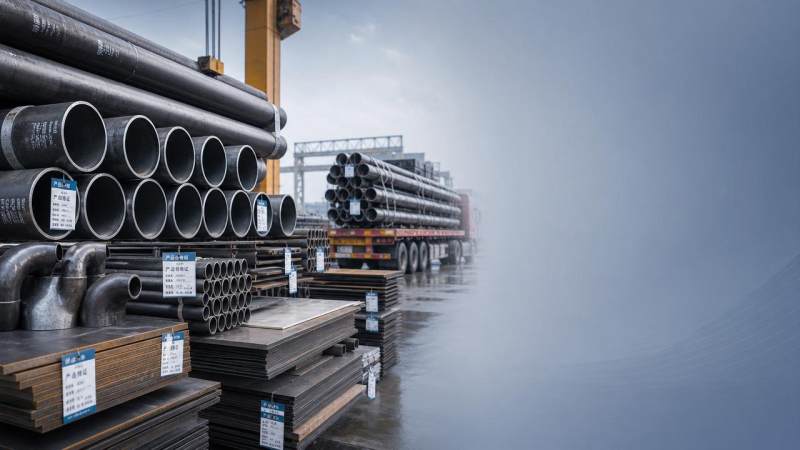
A carbon steel pipe supplier for oil and gas industry is no longer judged only by price or stock availability.
Selection is increasingly based on total supply capability, from raw material control to final shipment coordination.
Projects often involve strict engineering codes, third-party inspection, and tight shutdown windows.
That means the supplier must support both commercial speed and technical accuracy.
- Verified material grades and standard compliance
- Stable dimensional tolerances across batches
- Clear mill test certificates and traceability records
- Reliable production scheduling and shipping updates
- Support for coating, cutting, testing, or custom packaging
In this environment, the most trusted carbon steel pipe supplier for oil and gas industry behaves like a controlled project partner.
Core technical requirements behind current demand
Technical acceptance starts with chemistry, mechanical properties, and dimensional conformity.
However, buyers also look deeper into production discipline and repeatability.
A qualified carbon steel pipe supplier for oil and gas industry should demonstrate control at every stage.
Material compliance
Pipes must match required ASTM, ASME, EN, JIS, or project-specific standards.
Substitution without approval creates rejection risk and installation delays.
Traceability and documentation
Heat numbers, inspection reports, and test records must remain consistent from mill to delivery.
Incomplete documents can stop customs clearance or site approval.
Dimensional accuracy
Wall thickness, straightness, ovality, and end finish affect welding quality and field fit-up.
Even small variation can raise fabrication cost.
Delivery reliability
Lead time now matters as much as product price.
Shutdown maintenance, line expansion, and offshore schedules cannot tolerate uncertain shipment windows.
Supply capability beyond pipe inventory
Many projects require related steel products alongside pipe packages.
These may include support frames, mounting elements, platform components, and reinforcement steel.
This is where broader steel manufacturing capacity becomes valuable.
A supplier with structural steel expertise can simplify procurement coordination and reduce interface risk.
For example, projects involving skids, towers, or equipment bases may also require Mild Steel Plate Supplier support.
Available grades such as A572 and S355JR are suitable for construction, bridges, heavy machinery, and support plates.
These plates offer low-carbon or low-alloy high-strength performance with good welding and forming properties.
Typical dimensions include widths from 100mm to 3000mm and thickness from 0.1mm to 400mm.
Certification coverage can include ASTM, EN, ISO, JIS, DIN, and related international requirements.
For oil and gas packages, this integrated supply model improves consistency across pipe, plate, and fabricated steel items.
Business value of a dependable carbon steel source
The right carbon steel pipe supplier for oil and gas industry contributes measurable operational value.
That value appears in fewer claims, lower rework, smoother inspection, and better schedule confidence.
- Lower sourcing risk through controlled quality systems
- Reduced site delays through accurate packing and marking
- Better budget control through stable specification matching
- Simplified vendor management through multi-product capability
In global trade, dependable export execution also matters.
Packing, document accuracy, container planning, and customs readiness can influence total project performance.
A strong carbon steel pipe supplier for oil and gas industry understands these details early.
Typical application scenarios and purchasing focus
Different oil and gas applications emphasize different supplier capabilities.
The table below shows common sourcing priorities.
This is why many buyers compare suppliers by process control rather than unit price alone.
Practical evaluation points before placing orders
A practical review helps identify whether a carbon steel pipe supplier for oil and gas industry can deliver with low risk.
- Check production scope, not just trading capability.
- Confirm standards, testing methods, and third-party inspection options.
- Review sample documents for MTC, marking, and packing lists.
- Ask about lead time by size, grade, and finishing requirement.
- Evaluate communication speed during technical clarification.
- Verify export experience for destination markets.
These checks often reveal more than a quotation sheet.
They show whether the supplier can support actual project execution under pressure.
A realistic direction for long-term sourcing
The role of a carbon steel pipe supplier for oil and gas industry continues to expand.
Buyers increasingly expect dependable quality, transparent documentation, predictable logistics, and flexible steel support.
For companies serving global industrial projects, this means aligning pipe supply with wider structural steel capability.
Hongteng Fengda supports this approach through controlled manufacturing, international standard compliance, and export-focused execution.
When evaluating future supply options, focus on measurable delivery performance, technical discipline, and integrated steel solutions.
That approach helps reduce uncertainty and build a more resilient sourcing base for oil and gas applications.
Please give us a message


Please enter what you want to find