For business evaluators planning 2026 sourcing strategies, understanding what drives stainless steel coil price is essential to cost control and supplier selection. From nickel and energy costs to global demand, trade policies, and mill capacity, several factors can shift pricing quickly. This article outlines the most important price drivers and helps buyers assess risk, compare offers, and make more informed purchasing decisions.
What will move stainless steel coil price most in 2026?
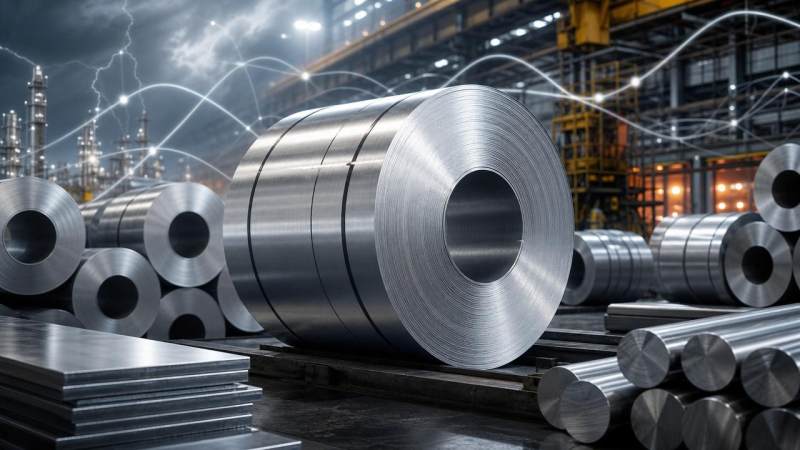
The short answer is that stainless steel coil price in 2026 will be shaped most by raw material volatility, especially nickel, chromium, and molybdenum, together with energy costs and supply discipline from major mills.
For business evaluators, however, market direction matters less than understanding which variables can quickly change a supplier quote, a project budget, or the total cost of imported steel.
In practical sourcing terms, the biggest price movers are rarely isolated. A jump in nickel can coincide with tighter mill output, weaker freight availability, or new trade barriers.
That is why buyers should not ask only whether prices will go up or down. The better question is what factors will move prices fastest, and which ones can be monitored early.
In 2026, the market is likely to remain sensitive because stainless steel supply chains are global, energy intensive, and closely linked to industrial activity, construction demand, and regional policy changes.
For evaluators comparing supplier proposals, this means quotation analysis should go beyond base price. Grade mix, surcharge mechanism, lead time, origin, and risk exposure all deserve close attention.
Why raw materials will still be the main price driver
Among all influences, raw material costs will remain the clearest and most immediate driver of stainless steel coil price. This is especially true for austenitic grades that rely heavily on nickel.
When nickel prices move sharply, mills usually adjust surcharges, offer validity periods, or contract terms. For buyers, even a stable fabrication demand environment may not prevent quote revisions.
Chromium is another core input because it gives stainless steel its corrosion resistance. Changes in ferrochrome pricing can affect cost structures, particularly in products where chromium content is relatively high.
Molybdenum matters most in higher-performance grades such as 316, where corrosion resistance in harsher environments is required. When molybdenum tightens, the spread between 304 and 316 can widen quickly.
Scrap also deserves attention. In many regions, stainless production economics depend partly on scrap availability, quality, and collection efficiency. Strong scrap prices can reinforce upward coil pricing.
Business evaluators should therefore review not only the quoted grade but also the alloy exposure behind it. Two suppliers may offer similar dimensions while carrying very different raw material risk.
A useful evaluation method is to separate the quote into base steel value, alloy surcharge, conversion cost, packaging, freight, and trade-related costs. That structure makes later comparisons more reliable.
How energy prices and operating costs can change supplier offers
Stainless steel production consumes significant electricity and heat. Melting, rolling, annealing, pickling, and finishing all add energy cost pressure, which becomes more visible when utility markets are unstable.
In 2026, power prices, natural gas costs, and carbon-related compliance expenses may continue to influence regional competitiveness. Mills in different countries will not face the same operating environment.
This matters because a low quote from one origin may reflect temporary energy advantages rather than a durable cost edge. Buyers should be careful when planning annual or semiannual sourcing decisions.
Environmental regulations can also raise effective production cost. Compliance spending, emissions controls, and carbon border measures may not appear separately on invoices, but they influence final offer levels.
For business evaluators, the key is to ask whether a supplier’s cost base is stable. A vendor with reliable energy access and predictable operating conditions may be safer than the cheapest short-term bidder.
That logic applies beyond stainless. In adjacent steel categories, buyers sometimes diversify into coated or structural materials for specific project needs, such as Color Coated Galvanized Roof Sheet PPGI.
Such products are used in construction, appliances, transportation, and public buildings, and can offer strong corrosion resistance, easy formability, and long service life in suitable applications.
Typical specifications include thickness from 0.2mm to 1.2mm, width from 600mm to 1250mm, and coatings such as PE, SMP, HDP, and PVDF for different durability requirements.
For evaluators, this comparison is useful because it highlights a common lesson across steel purchasing: material selection, processing route, and durability target all influence price beyond the headline quote.
Will global demand or weak demand have the bigger effect?
Demand conditions will matter in 2026, but not in a simple, uniform way. Stainless steel consumption is tied to construction, industrial equipment, consumer goods, transport, and infrastructure investment.
If manufacturing activity improves in major economies, mills may gain stronger order books and hold prices firmer. If demand slows, buyers may expect discounts, but that does not guarantee lower offers.
The reason is that mills often respond to weaker demand by adjusting production, reducing output, or prioritizing higher-margin grades. Lower demand can therefore coexist with surprisingly resilient prices.
Regional differences are especially important. Demand from Southeast Asia, the Middle East, Europe, or North America may not move in the same direction at the same time.
For import buyers, the relevant issue is not global demand in the abstract. It is whether the supplying region has enough local and export demand to maintain negotiation power.
Business evaluators should watch sector indicators that matter to stainless consumption, including appliance production, food equipment investment, process industry spending, and commercial construction activity.
These indicators often provide a better purchasing signal than headline macroeconomic sentiment. They show where real steel use is strengthening, and where mills may become less flexible on terms.
How trade policy, tariffs, and origin risk can reshape delivered cost
One of the most underestimated price movers is trade policy. Even when mill prices are relatively calm, anti-dumping duties, safeguard measures, customs reviews, or port restrictions can change landed cost significantly.
For 2026 sourcing plans, evaluators should remember that stainless steel coil price is not only an ex-works or FOB concept. The delivered price can change sharply due to policy decisions.
Country of origin therefore matters. A seemingly competitive quote may become unworkable once duty exposure, customs documentation risk, or compliance delays are considered.
Some buyers focus too heavily on visible unit price and too little on import friction. That creates problems later in the procurement cycle, especially for time-sensitive industrial or project-based demand.
It is also important to check whether a supplier has experience with destination-market standards and documentation. Errors in certificates or declarations can cause expensive delays even when the steel itself is acceptable.
For business evaluators, the practical solution is to assess total landed cost under multiple scenarios. Base case, tariff increase case, and logistics delay case should all be part of procurement review.
This turns sourcing from a price comparison exercise into a risk-adjusted decision, which is usually more valuable for management than chasing the lowest nominal quotation.
Why mill capacity, lead time, and supply discipline matter more than many buyers expect
Mills do not respond to market weakness passively. When margins are pressured, producers may reduce operating rates, delay maintenance shutdowns less aggressively, or limit low-priced export offers.
This supply discipline can support prices even when downstream demand looks soft. In 2026, buyers should watch capacity utilization and order backlog, not just benchmark raw material charts.
Lead time is a particularly useful signal. When lead times extend, mills usually feel comfortable about future orders. When they shorten sharply, buyers may gain better room to negotiate.
At the same time, very short lead times can indicate weak demand or inventory pressure. But they can also suggest that a supplier is managing mixed-grade stock rather than fresh rolling capacity.
Evaluators should ask whether the offer is based on current production, warehouse availability, or future slot allocation. Those differences affect price certainty, quality consistency, and delivery reliability.
Stable supply often has hidden value. A supplier with dependable production scheduling can reduce emergency purchases, project delays, and internal coordination costs, even if the initial quote is slightly higher.
What should business evaluators check when comparing stainless steel coil quotations?
When reviewing offers, evaluators should begin by standardizing the comparison sheet. Grade, finish, thickness tolerance, width, coating or surface treatment, origin, and incoterm must be aligned.
Next, separate fixed and variable cost components. If the quote includes an alloy surcharge mechanism, confirm the reference basis, update frequency, and the period during which the quote remains valid.
Then assess lead time realism. A very attractive price with uncertain shipment timing can create larger downstream cost than a slightly higher but dependable offer.
Quality assurance is another major factor. Check whether the supplier can meet ASTM, EN, JIS, or other required standards consistently, and whether test documentation is complete and reliable.
Payment terms also influence real procurement cost. Better cash flow terms, lower claim risk, and fewer quality disputes may justify a modest premium from a more experienced exporter.
Freight and packaging should not be treated as minor details. For coils, transport method, port efficiency, and protective packaging can materially affect damage risk and final cost.
Finally, evaluate supplier communication and problem-solving ability. In volatile markets, responsiveness often becomes a commercial advantage because it helps buyers react before cost pressure escalates.
How to build a smarter 2026 sourcing strategy
The best approach for 2026 is not to forecast one exact stainless steel coil price level. It is to build a sourcing framework that works under multiple market outcomes.
Start with demand segmentation. Identify which purchases are urgent, which are forecastable, and which can be timed more flexibly. This allows different buying tactics for different business needs.
For high-volume, recurring demand, buyers may benefit from framework agreements with formula-based adjustment rules. This reduces exposure to sudden spot market swings and supports planning discipline.
For opportunistic or noncritical purchases, spot buying may still be useful when market weakness appears. But that should be done with clear technical specifications and approved supplier benchmarks.
Diversifying supply origins can also reduce risk, provided compliance and quality remain consistent. Single-source dependence becomes more dangerous when trade policy or logistics conditions change quickly.
Regular market review is essential. Track nickel, ferrochrome, scrap, energy trends, freight rates, and policy developments monthly, and connect them directly to supplier quote movements.
Most importantly, align procurement decisions with business impact. The goal is not merely to buy cheaper steel, but to secure acceptable total cost, reliable delivery, and lower operational disruption.
Conclusion
In 2026, the biggest drivers of stainless steel coil price will likely be raw materials, especially nickel and chromium, followed by energy costs, mill supply discipline, trade policy, and regional demand shifts.
For business evaluators, the most useful insight is that pricing risk rarely comes from one source alone. The real challenge is understanding how several cost drivers combine in supplier offers.
That is why the strongest purchasing decisions are based on total landed cost, quote structure, lead time reliability, origin risk, and standard compliance, not just the lowest headline number.
If you treat stainless procurement as a risk-managed business decision rather than a simple price check, you will be better prepared to control costs and select suppliers with confidence in 2026.
Please give us a message


Please enter what you want to find