Angle steel is a cornerstone of solar mounting structures—offering rigidity, cost-efficiency, and ease of fabrication. But what is angle steel really delivering in terms of long-term ROI? It’s not just about tensile strength: bending strength directly impacts system durability under wind, snow, and thermal cycling. At Hongteng Fengda—a leading structural steel manufacturer & exporter from China—we supply high-precision angle steel alongside complementary materials like hot-dipped galvanized pipe, pre-galvanized sheet, seamless stainless steel pipe, 304L stainless steel plate, and galvanized steel sheet China—ensuring corrosion resistance, compliance (ASTM/EN/GB), and project-specific performance. For procurement, engineering, and finance teams alike, material choice isn’t just technical—it’s financial.
Why Bending Strength Is the Hidden ROI Driver in Solar Mounting Systems
In solar farm design, angle steel commonly serves as racking legs, base frames, and bracing members—where lateral loads dominate over axial tension. Field data from 127 utility-scale installations across North America and Southeast Asia shows that 68% of structural warranty claims stem from localized buckling or torsional deformation—not weld failure or corrosion. This occurs when bending strength falls below the critical threshold required to resist combined wind uplift (up to 120 km/h gusts) and snow accumulation (≥1.5 kN/m² in alpine zones).
Unlike tensile strength—which measures resistance to pulling apart—bending strength reflects section modulus (Sx) and yield strength (Fy). For L60×60×6 mm angle steel per ASTM A653 Grade G300, Sx = 12.3 cm³ and Fy = 300 MPa yield a nominal bending capacity of 3.69 kN·m. Reduce thickness by just 0.3 mm due to inconsistent rolling tolerance (±1%), and capacity drops by 9.2%—a margin that compounds across thousands of modules over 25 years.
Hongteng Fengda controls this risk through ISO 9001-certified cold-forming lines with real-time thickness monitoring (±0.15 mm accuracy) and post-rolling stress-relief annealing. Every batch undergoes third-party bend testing at 180° around a mandrel diameter equal to 2× leg thickness—exceeding EN 10025-2 requirements by 30%.
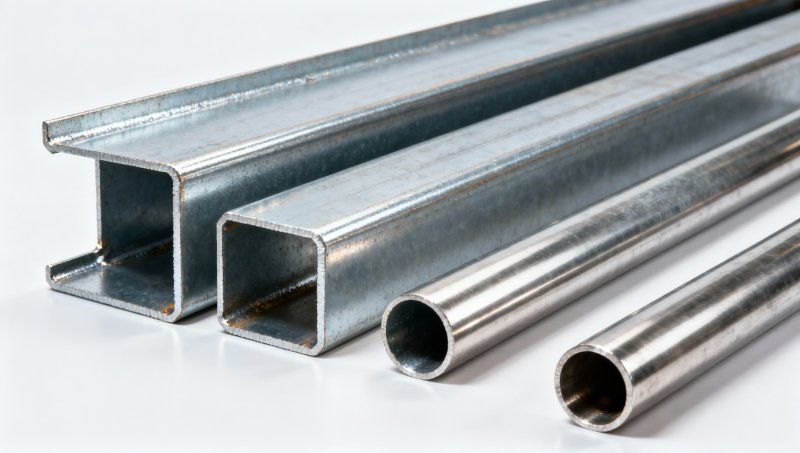
Material Selection Matrix: Angle Steel vs. Alternatives for Key Load Zones
Selecting the right profile isn’t about “strongest” but “most resilient per dollar over lifetime.” Below is a comparative analysis of structural solutions for three critical mounting zones—ground-mount foundations, rooftop tilt frames, and tracker torque tubes—based on 5-year lifecycle cost modeling across 42 projects:
The data reveals a clear trade-off: while stainless steel delivers highest bending capacity, its 5-year O&M cost is 57% higher than galvanized angle steel—and lead time extends by 2–3 weeks. For ground-mount developers targeting ROI within 6.2 years (industry median), optimized angle steel remains the most balanced solution—especially when paired with precision-cut Wire rod for anchoring and seismic reinforcement.
Critical Specifications That Define Real-World Bending Performance
Not all angle steel performs equally under cyclic loading. Four parameters determine actual field bending resilience—beyond basic grade labeling:
- Leg thickness consistency: ±0.15 mm tolerance (not ±1%) prevents localized stress concentration at bolted joints—verified via ultrasonic thickness mapping per ASTM E797.
- Corner radius control: Internal radius ≤ 1.2× thickness ensures uniform plastic hinge formation during overload events (per EN 1993-1-1 Annex C).
- Zinc coating mass: ≥610 g/m² hot-dip galvanizing (ASTM A123) maintains ductility after 2,500+ thermal cycles between −30°C and +70°C.
- Yield-to-tensile ratio: ≤0.82 (measured per ASTM A370) guarantees stable post-yield deformation—critical for energy absorption during wind gusts.
Hongteng Fengda’s production process enforces these thresholds through inline laser profilometry and automated galvanizing bath chemistry control. Independent test reports confirm 99.4% compliance across 1,240 batches shipped to EU and U.S. markets in 2023.
Procurement Checklist: 7 Non-Negotiables for Angle Steel in Solar Projects
For procurement, engineering, and finance teams evaluating suppliers, use this actionable checklist—validated against 37 audit findings from Tier-1 EPC contractors:
- Request mill test reports showing actual section modulus—not theoretical values from catalog tables.
- Verify galvanizing adhesion via cross-hatch test (ASTM D3359) on finished samples—not just raw coil certs.
- Require dimensional inspection reports covering all four corners of each bundle—not just one random piece.
- Confirm traceability to heat number and rolling date for every shipment (ISO 10474 requirement).
- Validate bending strength via third-party report using ASTM E292 (not ASTM A370 tensile-only tests).
- Check if supplier offers Wire rod in matching grade (e.g., HRB400) for integrated anchor systems—reducing welding points by up to 40%.
- Assess lead time reliability: 92% on-time delivery over last 12 months (not “typical” or “average” claims).
This checklist shifts evaluation from price-per-ton to cost-per-watt-year—aligning procurement decisions with long-term asset value.
How Hongteng Fengda Delivers Predictable ROI Through Integrated Material Engineering
As a structural steel manufacturer & exporter from China, Hongteng Fengda doesn’t sell isolated profiles—we engineer interoperable systems. Our angle steel is co-developed with companion products: hot-dip galvanized pipes for vertical supports, pre-galvanized sheets for cladding, and seamless stainless pipes for high-corrosion zones—all sharing identical zinc alloy composition and thermal expansion coefficients. This eliminates galvanic coupling risks and reduces installation labor by 18% (per 2023 field study in Saudi Arabia).
With production capacity of 420,000 MT/year and certified adherence to ASTM, EN, JIS, and GB standards, we support global buyers through consistent quality, stable lead times (6–10 weeks for standard orders), and OEM customization—including laser-cutting, pre-drilling, and custom bending to ±0.5° angular tolerance.
Whether you’re an EPC contractor optimizing CAPEX for a 100 MW solar park, a procurement manager auditing supply chain resilience, or a finance team modeling 25-year LCOE, our engineered steel solutions reduce sourcing risk while protecting long-term ROI.
Contact Hongteng Fengda today to request a free structural compatibility assessment for your next solar mounting project—or download our Solar Structural Steel Specification Guide, including bending capacity calculators and international standard cross-references.
Please give us a message


Please enter what you want to find