For finance decision-makers, stainless tube price often appears to be a simple line-item cost, but the real drivers go far beyond spot metal rates. Factors such as grade selection, wall thickness, processing requirements, compliance standards, and supplier reliability can significantly affect total procurement value. Understanding what shapes pricing helps buyers control budgets, reduce sourcing risk, and make more confident purchasing decisions.
In steel procurement, price review is rarely just about comparing two unit quotes. A lower offer can become the more expensive option once machining loss, inspection cost, delayed shipment, or quality claims are included. For budget owners, the key question is not only what the stainless tube price is today, but what total delivered value looks like over the full purchase cycle.
This is especially important when sourcing from cross-border suppliers. Lead times of 3–8 weeks, tolerance requirements within ±0.2 mm to ±1.0 mm, and compliance with ASTM, EN, JIS, or GB standards can all shift the final cost structure. A disciplined buying approach helps finance teams avoid hidden cost escalation and strengthen supplier decisions with measurable logic.
Why stainless tube price moves beyond raw material costs
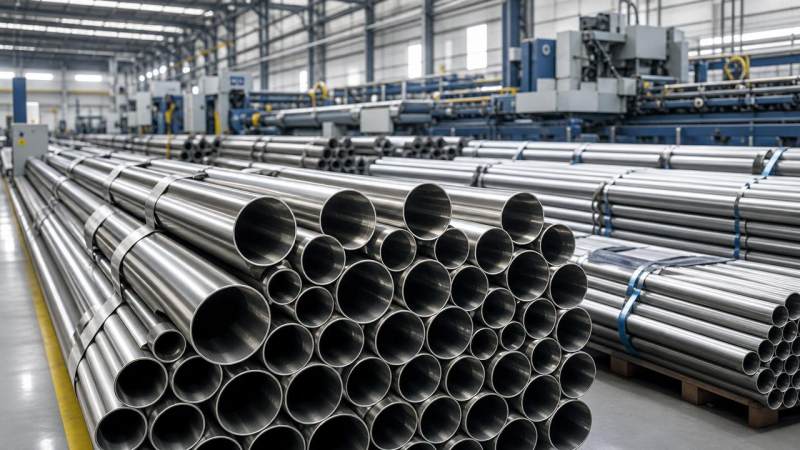
The most visible part of stainless tube price is usually the stainless steel input itself. Buyers often track nickel, chromium, and molybdenum trends, especially for common grades such as 201, 304, 316, or duplex variants. However, in many B2B orders, raw material may account for only 55%–75% of the finished quote, leaving a significant share driven by processing, compliance, and execution risk.
Grade selection changes the budget faster than many approvals assume
A shift from 304 to 316 stainless tube can increase the purchase price materially because of added molybdenum content and corrosion performance. In aggressive environments such as coastal construction, food processing lines, or chemical handling systems, choosing the wrong grade can save 8% upfront yet trigger replacement or maintenance expense within 12–24 months.
For finance approvers, this means the lowest stainless tube price does not automatically equal the lowest lifecycle cost. A higher-grade tube may reduce failure risk, rework exposure, and site downtime, all of which affect budget predictability more than unit cost alone.
Wall thickness, OD, and tolerance have direct pricing impact
Two tubes with the same outer diameter can have very different prices when wall thickness changes from 1.5 mm to 3.0 mm or 6.0 mm. Material weight rises quickly, but so do forming difficulty, straightness control, welding stability, and inspection workload. Tight tolerances can also increase scrap risk during production.
If a project specification asks for unusually strict dimensional control, buyers should expect premium pricing. In practical terms, tolerance tightening from a standard mill range to a custom precision range can add cost in the form of slower line speed, additional calibration, and more frequent QA checks.
Key cost drivers at specification level
Before approving a quote, finance teams should confirm whether the specification is standard, semi-custom, or fully custom. That distinction often determines whether the stainless tube price benefits from production efficiency or absorbs setup premiums.
- Standard grade and size: usually the shortest lead time and strongest price competitiveness
- Custom wall thickness or length: often adds setup time and higher MOQ requirements
- Special surface finish: may require polishing, pickling, passivation, or protective packaging
- NDT or third-party inspection: increases documentation and testing cost per batch
The table below helps isolate where a quote changes most when technical requirements become more demanding.
The main takeaway is that stainless tube price rises not only with metal markets but with every requirement that reduces manufacturing flexibility. Finance reviewers should therefore compare quotations line by line, not just ton by ton.
Hidden cost layers that affect total procurement value
When a quotation reaches the approval stage, the visible unit price often excludes several downstream costs. These can include cutting loss, sample approval, third-party inspection, export packing, inland trucking, port handling, and claim management. In many projects, those layers add 6%–18% to the original purchasing budget.
Processing and fabrication requirements
Laser cutting, beveling, slotting, bending, or end-forming can push stainless tube price higher than expected, especially in mixed-size or small-batch orders. If the supplier must run 4–6 separate setups for one purchase order, efficiency falls and the cost per piece rises.
This principle is not limited to stainless tube products. In broader steel sourcing, the same logic applies to structural items with custom dimensions or application-specific profiles. For example, buyers evaluating Rail for railway or railing applications often see price differences tied not only to steel grade, but also to size range, coating choice, length from 12 m to 30 m, tolerance at ±1%, and finishing options such as oil, black, galvanized, or painted surfaces.
For finance teams, that comparison is useful because it shows a wider truth in the steel industry: a technically simple-looking item may carry a more complex cost structure once standards, dimensions, and downstream use are considered. The result is that quote evaluation should focus on delivered suitability, not on headline price alone.
Compliance, traceability, and testing obligations
A supplier offering mill test certificates, PMI, hydrostatic testing, eddy current testing, or third-party verification is not quoting the same product condition as a supplier offering basic production only. Each added document or test step can be justified, especially for pressure service, food-grade use, or regulated export contracts.
Typical approval questions should include whether the project truly needs every inspection item, or whether standard mill documentation is enough. Over-specifying tests can inflate stainless tube price without creating proportional operating value.
Three practical risk checks before approval
- Confirm if the quoted standard matches the end-use requirement, such as ASTM, EN, JIS, or GB.
- Check whether testing is per heat, per lot, or per piece, because frequency changes cost.
- Review claim terms, replacement terms, and document delivery timing before PO release.
The next table summarizes common cost layers that make a low quote less competitive after full evaluation.
For many finance decision-makers, these factors are where procurement performance is truly won or lost. A quote that is 3% lower but causes a 2-week delay may be more expensive than a stable offer with stronger execution discipline.
How finance teams should evaluate stainless tube price strategically
A more effective review model is to treat stainless tube price as one part of a total-cost framework. This means comparing not only base metal and conversion cost, but also approval complexity, operational risk, cash-flow timing, and supplier reliability. In practice, 4 evaluation dimensions usually create a better approval outcome than unit cost alone.
1. Compare on a landed and usable basis
Ask whether the quotation is EXW, FOB, CFR, or CIF. Then add inland charges, insurance, import duty where applicable, and expected handling loss. A tube with a lower mill price but poor packing may carry a higher usable cost per meter after arrival.
2. Check the price validity period
In volatile alloy markets, a quote may be valid for only 3–7 days. If approval takes 2 weeks, the supplier may revise the stainless tube price. Finance teams should understand whether the quote includes a fixed surcharge window or a formula-based adjustment tied to alloy movement.
3. Balance MOQ against inventory cost
Larger volumes may reduce the unit price, but they also increase stockholding cost and exposure to specification changes. If a project requires phased delivery over 60–90 days, it may be more efficient to negotiate staged shipments rather than a single full-volume dispatch.
4. Measure supplier stability, not just quote competitiveness
A reliable steel manufacturer with modern production facilities, defined QC routines, and export experience can help reduce sourcing risk in ways that are difficult to see on a quotation sheet. For global buyers, consistency in standard compliance, documentation, and lead-time performance often protects budgets better than aggressive pricing alone.
This is where experienced Chinese steel exporters can add value. Companies with broad structural steel capabilities, disciplined quality control, and familiarity with ASTM, EN, JIS, and GB standards are often better positioned to support repeat orders, OEM requirements, and custom project schedules with fewer disruptions.
A practical approval checklist
- Confirm grade, size, wall thickness, length, and tolerance on the same comparison sheet
- Review testing scope and documentation requirements before approving premium charges
- Calculate landed cost, not only ex-factory cost
- Check lead time commitment in weeks and any penalty or replacement terms
- Assess whether the supplier can maintain quality over multiple batches, not only one order
Common buying mistakes that distort price judgment
Many approval errors happen not because the quote is unclear, but because the comparison method is incomplete. Finance teams can reduce these mistakes by identifying a few repeat patterns during sourcing reviews.
Mistake 1: comparing non-equivalent specifications
A quote for welded tube should not be judged directly against seamless tube pricing unless the application allows substitution. The same applies to annealed versus non-annealed condition, polished versus mill finish, or standard versus custom cut lengths.
Mistake 2: ignoring schedule risk
If a cheaper supplier ships 10 days later and the project must pay labor standby or buy emergency stock locally, the real stainless tube price becomes much higher. Schedule reliability should be treated as a cost factor, not only as a logistics topic.
Mistake 3: underestimating the cost of disputes
Quality claims consume management time, inspection expense, and working capital. A supplier with weak traceability or unclear replacement terms can turn a minor dimensional issue into a prolonged financial problem. This is why purchase orders should define acceptance criteria before shipment, not after arrival.
Mistake 4: treating all steel suppliers as interchangeable
In international sourcing, manufacturing depth matters. Suppliers focused on structural steel, fabricated profiles, and project-based export support often understand how to control tolerances, packaging, and documentation across different product types. That experience can lower total procurement friction even when the base quote is not the lowest on the spreadsheet.
For finance decision-makers, the most useful view is simple: stainless tube price should be approved as a business case, not as a number in isolation. Grade, geometry, tolerance, processing, testing, lead time, packing, and supplier reliability all influence whether a quote protects the budget or creates downstream exposure.
Hongteng Fengda supports global buyers with stable production capacity, strict quality control, and experience across standard and customized steel supply. For teams reviewing steel procurement from a cost-and-risk perspective, the right supplier can help reduce sourcing uncertainty while keeping delivery and compliance on track.
If you want a clearer breakdown of stainless tube price factors, or need support comparing steel quotations on a landed-cost basis, contact us to get a tailored sourcing solution, discuss product details, or explore more steel supply options for your project.
Please give us a message


Please enter what you want to find