What drives hot rolled steel coil price in 2026?
Understanding what drives hot rolled steel coil price in 2026 is essential for planning procurement budgets and long-term project costs.
Steel markets remain sensitive to demand cycles, raw material volatility, energy costs, trade rules, and logistics availability.
A practical pricing view helps compare offers, reduce sourcing risk, and build more stable supply strategies.
Basic understanding of hot rolled steel coil price
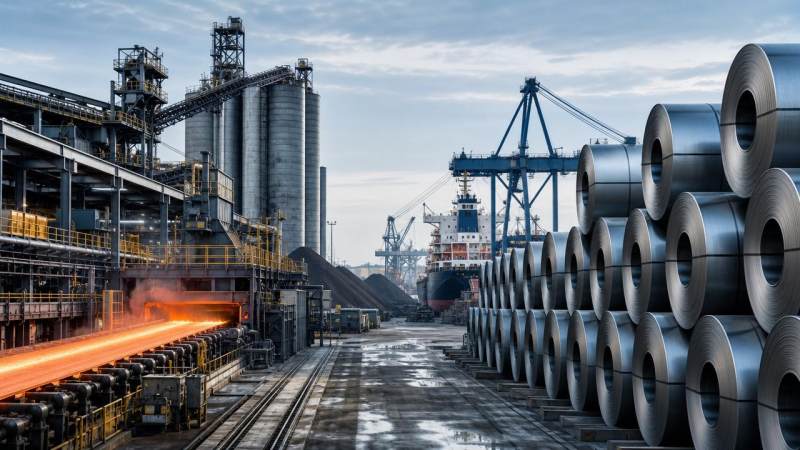
Hot rolled steel coil is produced by rolling steel slabs at high temperature, then coiling the finished strip.
It is widely used in construction, machinery, welded pipe, automotive parts, shipbuilding, storage tanks, and fabricated steel structures.
Hot rolled steel coil price usually reflects base steel cost, grade, thickness, width, surface requirement, quantity, and delivery terms.
Common references include FOB, CFR, CIF, and delivered warehouse pricing, each carrying different logistics and risk assumptions.
In 2026, hot rolled steel coil price will likely remain highly regional, not a single global number.
Local demand, currency movements, mill capacity, and import restrictions can create large gaps between markets.
Core cost components behind the market
- Iron ore and coking coal define the main raw material base.
- Scrap supply affects electric arc furnace production economics.
- Energy expenses influence reheating, rolling, and finishing costs.
- Freight and port charges reshape landed steel cost.
- Duties, quotas, and trade remedies alter import competitiveness.
These elements rarely move together, which is why hot rolled steel coil price can change quickly during uncertain periods.
Industry background and 2026 market signals
The steel industry is entering 2026 with mixed signals from infrastructure, manufacturing, energy transition, and inventory cycles.
Some regions continue investing in roads, bridges, factories, power facilities, and industrial parks.
Other regions remain cautious because financing costs, property slowdowns, and geopolitical uncertainty limit steel consumption.
This uneven recovery makes hot rolled steel coil price more dependent on regional supply-demand balance.
The most reliable view combines mill offers, raw material trends, shipment schedules, and downstream order activity.
Using only one index may miss important differences in grade, lead time, and delivery location.
Raw materials and energy as primary drivers
Iron ore remains a major driver of blast furnace steelmaking costs.
When ore supply tightens, mills often protect margins by raising offers for finished coil products.
Coking coal also matters because coke is essential for many integrated steel plants.
Unexpected mine disruptions, weather events, or export controls can pressure hot rolled steel coil price within weeks.
Scrap prices influence electric arc furnace production and affect competition between different production routes.
When scrap becomes expensive, EAF mills may reduce price flexibility in finished steel offers.
Energy is another decisive factor, especially in regions exposed to natural gas or electricity price volatility.
Rolling, reheating, descaling, and finishing lines all require stable energy supply and predictable operating costs.
Carbon costs may also become more visible in 2026, particularly for exports entering regulated markets.
Lower-emission production can carry a premium, while high-emission routes may face additional compliance expenses.
Demand patterns across main steel applications
Hot rolled coil demand is broad, so price changes often reflect multiple industry cycles at once.
Construction activity influences plate, beam, pipe, and fabricated component consumption.
Manufacturing output supports coils used for machinery frames, brackets, equipment housings, and structural assemblies.
Automotive and transport sectors also affect demand through wheels, chassis parts, trailers, and related components.
When several sectors recover together, hot rolled steel coil price may rise faster than raw material costs alone suggest.
When demand weakens, mills may offer discounts, but only if inventories and cash flow pressure increase.
Trade policy, currency, and logistics influence
Trade policy can separate local markets from international price movements.
Anti-dumping duties, safeguard measures, quotas, and certification rules change the real landed cost of imported steel.
Currency fluctuations can also shift hot rolled steel coil price without changing mill production cost.
A stronger export currency can raise quotations, while a weaker currency may improve international competitiveness.
Freight remains important for heavy cargo because coils require careful handling, vessel space, and port coordination.
Container shortages, bulk vessel delays, port congestion, and higher bunker fuel costs can widen delivered price gaps.
For international comparison, the same hot rolled steel coil price should be checked under identical Incoterms.
Payment terms, insurance, inspection, packaging, and bank charges should be included before selecting an offer.
Quality requirements and specification effects
Not every coil with the same thickness has the same commercial value.
Grade chemistry, mechanical properties, surface condition, edge type, tolerances, and testing requirements all affect quotation levels.
Coils produced to ASTM, EN, JIS, or GB standards may need different documentation and production control.
Strict tolerances or project-specific specifications can increase hot rolled steel coil price through lower production flexibility.
Hongteng Fengda supports structural steel supply with angle steel, channel steel, steel beams, cold formed profiles, and custom components.
Its production approach emphasizes stable capacity, international standards, quality control, and dependable delivery for global projects.
For related stainless bar applications, 310 Stainless Square steel rod is available for customized industrial uses.
This product covers 201 stainless steel material options, square bar sizes, flat steel, and customized lengths from 1 to 6 meters.
Typical applications include construction, automotive parts, medical instruments, shipbuilding, decoration engineering, manufacturing, cement, textiles, and heavy equipment.
Practical value for cost planning
Tracking hot rolled steel coil price is not only about finding the lowest number.
It helps estimate project budgets, evaluate supplier stability, plan inventory, and reduce exposure to sudden market swings.
A reliable cost model should separate material base price from extras, freight, duties, finance cost, and service requirements.
This method makes quotation comparison clearer and reduces hidden differences between suppliers.
- Compare offers using the same grade, size, tolerance, and delivery basis.
- Check validity periods because coil offers can expire quickly.
- Ask whether price includes packaging, marking, inspection, and documents.
- Confirm lead time before assuming spot availability.
- Review payment terms because financing can change total cost.
When hot rolled steel coil price moves rapidly, flexible purchasing windows can be more valuable than aggressive negotiation alone.
Typical procurement scenarios and pricing focus
Different steel use cases require different pricing priorities.
A short-term repair order may value immediate availability more than the lowest hot rolled steel coil price.
A long-term construction project may require stable supply, batch consistency, and predictable monthly delivery schedules.
These distinctions prevent price comparisons from becoming misleading.
The cheapest offer may become expensive if it causes delays, rework, documentation gaps, or material rejection.
Practice recommendations for 2026 steel sourcing
A disciplined sourcing process should combine market monitoring with technical clarity.
Before requesting quotations, define grade, standard, thickness, width, coil weight, edge condition, surface requirement, and destination.
This reduces ambiguity and improves the accuracy of hot rolled steel coil price comparisons.
- Track iron ore, coal, scrap, and freight movements weekly.
- Request quotations from qualified mills or exporters with documented standards.
- Compare total landed cost, not only mill base price.
- Keep alternative specifications ready when engineering approval allows substitution.
- Use phased purchasing when market direction is uncertain.
- Confirm inspection, certificates, marking, and packaging before payment.
For larger projects, fixed-price agreements may reduce risk when market indicators show upward pressure.
For flexible schedules, index-linked pricing can improve transparency and reduce disputes.
Key conclusion and next step
Hot rolled steel coil price in 2026 will be shaped by raw materials, energy, demand, logistics, currency, and trade policy.
Specification requirements, delivery terms, and supplier reliability will also strongly affect the real purchase cost.
A useful pricing decision should compare total landed cost, technical compliance, delivery security, and after-sales coordination.
Hongteng Fengda provides structural steel products and customized solutions for construction, industrial, and manufacturing projects worldwide.
To evaluate current hot rolled steel coil price or related structural steel requirements, prepare specifications and request a clear quotation basis.
Please give us a message


Please enter what you want to find