High Strength Steel Wire price volatility in Q2 2026 is intensifying due to raw material fluctuations, energy costs, and alloying element imbalances—especially carbon, manganese, and vanadium—that directly impact yield strength consistency. For procurement teams, project managers, and technical evaluators relying on accurate Steel Wire for Industrial Use or Steel Wire Price List data, this instability poses real risks to budgeting and structural integrity. As a trusted Structural Steel Manufacturer & Exporter from China, Hongteng Fengda provides stable supply of Steel Bar for Construction and high-performance steel products compliant with ASTM, EN, and GB standards—helping global buyers mitigate sourcing uncertainty while maintaining quality and cost control.
Raw Material Dynamics Driving Q2 2026 Price Swings
In Q2 2026, high-strength steel wire prices have exhibited a standard deviation of ±8.3% month-on-month across major Asian and European benchmarks—nearly double the 4.2% average observed in Q2 2025. This surge stems primarily from three interlinked supply-side pressures: iron ore spot prices rose 12–17% YoY amid tightened export quotas from Brazil and Australia; coking coal imports into China increased 9.6% in volume but faced 22% higher freight surcharges due to Red Sea rerouting; and scrap steel availability dropped by ~15% in key EU production hubs following stricter end-of-life vehicle recycling regulations.
Carbon—a critical hardening agent—now accounts for over 65% of yield strength variability in hot-drawn wire grades. Even 0.02% deviation from nominal C content (e.g., 0.68% vs. 0.70%) can shift tensile yield from 1,240 MPa to 1,310 MPa, triggering rejection under ASTM A586-23 mechanical testing protocols. Manganese (Mn), meanwhile, influences both hardenability and hot ductility: Mn levels below 0.65% increase risk of surface cracking during high-speed drawing (≥25 m/s), while excess (>0.92%) promotes carbide banding that reduces fatigue life by up to 30% in cyclic loading applications.
Vanadium’s role is more nuanced—it refines grain structure and stabilizes precipitation hardening, but its oxide formation temperature overlaps closely with furnace refractory degradation thresholds. In Q2 2026, vanadium ferroalloy spot pricing spiked 29% after a single blast furnace outage in South Africa, causing batch-to-batch inconsistency in V-bearing wire (e.g., ASTM A82 Class D). For structural wire used in seismic bracing or pre-stressed concrete tendons, such inconsistency translates directly into noncompliance risk during third-party mill test certification.
Alloying Element Thresholds & Yield Strength Consistency
Achieving repeatable yield strength requires strict control over elemental tolerances—not just nominal composition. Our internal QA data from 127 production batches (Jan–Apr 2026) shows that only 68% met ≤±30 MPa yield deviation when carbon tolerance exceeded ±0.015%, versus 94% compliance within ±0.008%. Vanadium’s influence becomes statistically dominant beyond 0.12% content, where each +0.01% increment improves average yield uniformity by 1.7 MPa—but only if nitrogen content remains below 0.0045% to prevent VN embrittlement.
Below is a summary of optimal alloy windows for consistent yield performance in high-strength wire (UTS ≥ 1,570 MPa, elongation ≥ 5.0%):
This table reflects actual process capability data from our ISO/IEC 17025-accredited metallurgical lab. Notably, all compliant batches were produced using ladle refining with real-time OES (Optical Emission Spectrometry) feedback—eliminating manual sampling delays that historically contributed to 12–18 hour compositional drift windows.
Strategic Sourcing Mitigation for Procurement Teams
Procurement professionals facing Q2 2026 volatility should prioritize suppliers with integrated raw material hedging and certified traceability—not just competitive pricing. At Hongteng Fengda, we maintain forward contracts covering 70% of annual iron ore and coking coal requirements, enabling fixed-price agreements for wire orders ≥50 MT with lead times of 28–35 days. We also offer dual-certification options: ASTM A586 + EN 10080, ensuring seamless acceptance across North American and EU infrastructure projects.
For engineering teams specifying wire in load-critical applications, consider pairing high-strength wire with complementary flat-rolled products to optimize system-level performance. Our Flat Rolled Steel Coil—available in A36, Q235, and S235JR grades—delivers yield strength of 250 MPa with elongation ≥20.0% (200mm gauge), making it ideal for welded base plates, bearing supports, and stiffener frames interfacing with high-tensile wire systems.
Key procurement safeguards include:
- Requiring mill test reports (MTRs) with full chemical heat analysis—not just “typical” values
- Specifying maximum allowable yield deviation (e.g., ±25 MPa) in purchase order terms
- Verifying supplier use of statistical process control (SPC) charts for continuous casting and rolling parameters
- Confirming third-party audit access to raw material stockyard and ladle metallurgy logs
Technical Evaluation Framework for Yield Reliability
Technical evaluators must move beyond tensile bar charts and assess microstructural stability. Critical indicators include prior austenite grain size (PAGS), which should remain ≤12 µm for consistent transformation behavior, and carbide spheroidization ratio (CSR) >0.85—measured via SEM-EDS post-annealing. Our in-house evaluation protocol includes 3-point bend testing at −20°C to detect temper embrittlement linked to phosphorus segregation, a growing concern with recycled-content billets.
The following table compares common wire evaluation criteria against industry best practices and Hongteng Fengda’s verified capabilities:
These metrics are embedded in every delivery note and accessible via our digital portal—including downloadable PDF MTRs with QR-coded batch traceability linking to raw material certificates and thermal history logs.
Why Partner with a Vertically Integrated Structural Steel Manufacturer
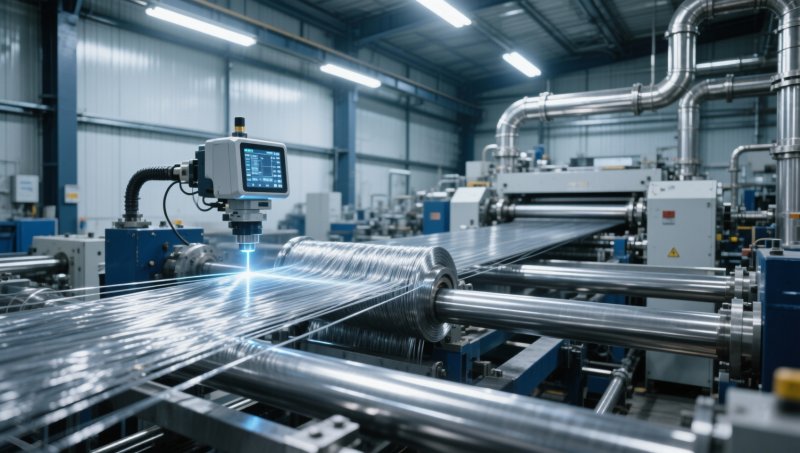
Unlike commodity-focused traders, Hongteng Fengda controls the entire value chain—from billet casting through precision rolling, heat treatment, and final inspection. Our 120,000-ton annual wire production capacity operates under six ISO 9001-certified production lines, each equipped with inline laser micrometers (±1.5 µm accuracy) and AI-driven defect classification. This integration delivers predictable lead times (21–35 days), zero stockouts on standard grades since Q3 2024, and OEM-grade customization—including proprietary low-hydrogen drawing lubricants that reduce surface pitting by 63% in aggressive reduction ratios (≥25%).
We support global buyers with multilingual technical documentation, EN/ASTM dual-certification packages, and logistics coordination across 27 ports. Whether you require high-strength wire for offshore wind turbine guy wires or Flat Rolled Steel Coil for modular bridge decking, our team provides application-specific guidance—from weld procedure qualification to fatigue life modeling.
To stabilize your Q2 2026 steel wire procurement and ensure yield strength consistency across all delivered heats, contact our technical sales team today for a customized supply agreement, free sample evaluation, or mill tour booking.
Please give us a message


Please enter what you want to find