For procurement and evaluation teams, understanding what moves the ss pipe 304 price in 2026 is essential for budgeting, supplier comparison, and risk control. From nickel costs and global demand to production standards, logistics, and sourcing strategy, several factors can push prices up or down. This article outlines the key market drivers to help buyers make more informed and cost-effective decisions.
What is the main cost base behind ss pipe 304 price in 2026?
The ss pipe 304 price starts with raw material economics. Stainless steel 304 depends heavily on nickel, chromium, and iron inputs.
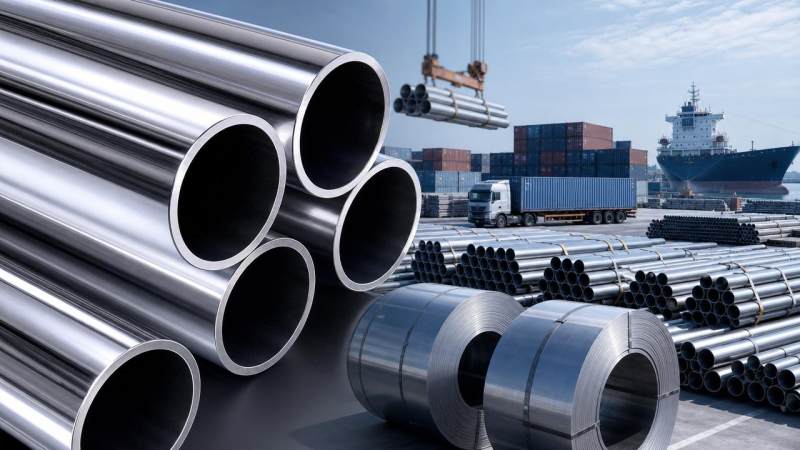
Among them, nickel often creates the sharpest movement. When nickel futures rise, mills usually adjust stainless quotations quickly.
Chromium matters too, but its influence is often steadier. Energy, scrap, and ferroalloy availability also shape total melt cost.
In 2026, the ss pipe 304 price may react faster to commodity volatility because mills update offers more frequently than before.
Exchange rates can add another layer. A weaker local currency against the US dollar can lift import-linked stainless costs.
This is especially relevant when raw materials, freight, or export contracts are settled in dollars.
- Nickel price swings can quickly move the ss pipe 304 price.
- Energy and alloy costs affect mill conversion expenses.
- Currency changes can reshape landed cost calculations.
How do supply, demand, and regional trade affect ss pipe 304 price?
Market demand is the second major driver. Construction, food processing, water systems, energy, and fabrication all consume 304 stainless pipe.
If industrial projects recover strongly in 2026, the ss pipe 304 price can firm up even without a dramatic nickel rally.
The opposite is also true. Weak manufacturing output or delayed infrastructure spending can soften order books and reduce pricing power.
Regional supply balance matters as much as global demand. Oversupply in one export region can pressure offers in another market.
Trade measures can amplify this effect. Anti-dumping rules, tariffs, quota systems, and customs reviews can increase landed stainless pipe costs.
Lead time is a useful signal. When mills extend delivery schedules, the ss pipe 304 price often rises or at least becomes less negotiable.
Short lead times may indicate softer demand or healthy inventory, which can create better buying opportunities.
What should be monitored each month?
- Nickel and stainless coil trends
- Mill operating rates and maintenance plans
- Import duties and customs policy changes
- Project demand in target industries
- Shipping availability and transit time
Why do specifications and standards change ss pipe 304 price so much?
Many buyers compare only by ton price. That can be misleading, because specification details strongly influence the ss pipe 304 price.
Wall thickness, outer diameter, manufacturing method, and required tolerances all affect processing complexity and yield.
Seamless 304 pipe often costs more than welded pipe. It typically requires more intensive production and testing.
Certification adds cost as well. ASTM, EN, JIS, and project-specific documentation can increase inspection, testing, and traceability work.
Surface finish also matters. Pickled, polished, or special-use finishes may require extra handling and quality control.
Smaller quantity orders can push the ss pipe 304 price upward due to setup cost and lower production efficiency.
At the same time, mixed-dimension orders may generate waste or extra splitting charges, especially for non-standard lengths.
In many industrial projects, stainless pipe is only one part of a wider steel package.
For structural applications, combining stainless procurement insight with carbon steel planning can improve budget discipline.
For example, I Shaped Beams are widely used in industrial structure support.
These carbon steel sections are available in grades such as Q195-Q235, Q345, SS400, A36, ST37-2, and St52.
Typical dimensions include thickness from 4.5mm to 15.8mm and length from 6m to 12m per piece.
They can be produced through hot rolled molding, bending, welding, punching, and cutting, with tolerance around ±1%.
Compliance with JIS, ATSM, DIN, GB, and EN standards supports export projects requiring dependable structural steel coordination.
How do freight, inventory, and sourcing strategy push ss pipe 304 price up or down?
Freight remains a practical pricing factor in 2026. Ocean shipping costs, port congestion, and inland delivery rates can change fast.
Even when mill prices stay stable, the final ss pipe 304 price can rise because landed cost includes logistics, insurance, and handling.
Inventory cycles also influence negotiations. High warehouse stock usually creates flexibility, while low stock strengthens seller positions.
Buying strategy matters more than many expect. Spot purchases during a rising market often produce a higher average cost.
A phased buying plan can reduce timing risk. Splitting orders by month or project milestone may smooth the ss pipe 304 price impact.
Supplier selection is not only about the lowest quote. Stable quality and predictable lead times protect total project cost better.
A reliable structural steel manufacturer and exporter from China can support wider procurement efficiency across multiple steel categories.
Hongteng Fengda provides angle steel, channel steel, steel beams, cold formed profiles, and customized structural steel components.
With modern facilities and strict quality control, products comply with ASTM, EN, JIS, and GB standards.
Stable production capacity and dependable lead times help reduce sourcing risk and improve cost visibility.
What mistakes cause poor judgment when comparing ss pipe 304 price?
One common mistake is comparing offers without matching specifications. A lower quote may reflect thinner walls or different testing scope.
Another mistake is ignoring processing extras. Cutting, polishing, passivation, end protection, and packaging can change final cost noticeably.
Some evaluations miss delivery risk. A cheap offer loses value if shipment delay disrupts installation or contract completion.
There is also confusion between temporary market dips and true trend changes. One-week softness does not always mean sustained decline.
The best approach is to assess total value, not only the visible ss pipe 304 price on the quotation line.
Quick checklist before approval
- Confirm grade, dimensions, and pipe type
- Check testing, certificates, and standard references
- Review incoterms and freight responsibility
- Verify production and shipment lead time
- Estimate total landed and processed cost
How can buyers evaluate ss pipe 304 price changes more clearly in 2026?
A simple comparison framework helps turn scattered market signals into clearer decisions.
This table helps separate market-driven changes from specification-driven changes. That distinction is essential for fair supplier evaluation.
When the ss pipe 304 price moves, the cause is rarely single. It is usually a combination of alloy cost, demand, freight, and technical requirements.
In 2026, better decisions will come from monitoring these factors together rather than reacting to one headline or one quote.
Build a comparison sheet, confirm standards early, and review landed cost instead of ex-works price alone.
For projects involving both stainless pipe and structural steel, coordinated sourcing can improve delivery control and budget stability.
If current quotations are under review, compare them against raw material trends, lead time signals, and full specification matching before committing.
Please give us a message


Please enter what you want to find