Lead times for carbon steel pipe stockist services across Asia are frequently impacted by raw material volatility, port congestion, customs delays, and fluctuating demand—especially amid rising global interest in structural solutions like angle steel and hot dip galvanized coil. For procurement teams and project managers evaluating suppliers, understanding these bottlenecks is critical when sourcing DX51D steel, 304L stainless steel pipe, or planning steel angle bending operations. As a China-based structural steel manufacturer and exporter, Hongteng Fengda ensures predictable timelines through vertical integration, certified quality control (ASTM/EN/JIS/GB), and agile logistics—helping buyers mitigate risk without compromising on steel metal angle or carbon steel pipe stockist reliability.
What Drives Unpredictable Lead Times for Carbon Steel Pipe Stockists in Asia?
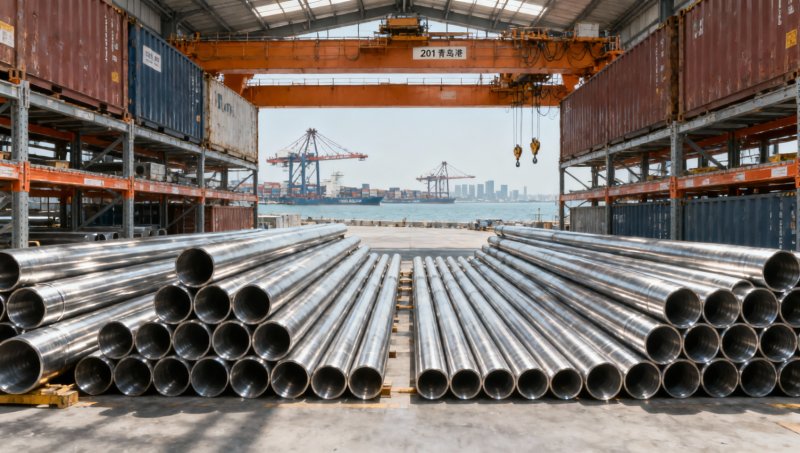
Carbon steel pipe stockist lead times across Asia typically range from 4–12 weeks—but actual delivery windows often stretch beyond estimates due to interconnected operational constraints. Unlike domestic distributors with localized inventory, regional stockists rely heavily on cross-border supply chains, making them vulnerable to cascading delays at three critical nodes: upstream raw material procurement, midstream manufacturing scheduling, and downstream customs & port logistics.
Iron ore price swings—often ±15% quarter-on-quarter—directly affect billet and slab availability for seamless and welded pipe mills. In Q2 2024, Chinese pipe producers reported average raw material lead time extensions of 7–10 days versus baseline, triggering ripple effects across Southeast Asian stockists reliant on mainland supply. Simultaneously, port congestion in Shanghai, Ningbo, and Singapore added 5–9 days to container dwell time, while customs clearance for steel products under HS Code 7306.30 averaged 3–6 working days—up from 1–2 days pre-2022.
Demand volatility further compounds uncertainty. Infrastructure projects in Vietnam and India have driven spot-order spikes of up to 40% month-over-month, forcing stockists to prioritize urgent consignments over scheduled replenishment. This reactive model undermines forecast accuracy—and erodes trust among project managers who require fixed delivery dates for steel angle bending, welding, and erection sequencing.
How Material Selection Impacts Sourcing Reliability
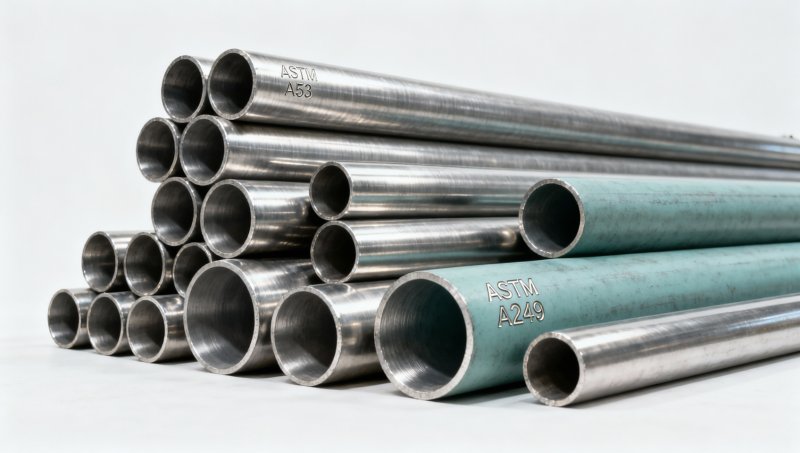
Choosing between carbon steel and stainless alternatives isn’t just about corrosion resistance—it’s a strategic lead time decision. While carbon steel pipes (e.g., ASTM A53/A106) offer cost efficiency, their dependence on hot-rolled coil imports means exposure to rolling mill backlogs. In contrast, standardized stainless grades like 201 Stainless steel pipe benefit from stable domestic production capacity in China, where over 65% of global 201-grade melt is produced.
The 201 Stainless steel pipe offers a balanced value proposition: it delivers ≥520MPa tensile strength and ≥40% elongation—comparable to many carbon steel grades—while eliminating post-fabrication galvanizing steps required for outdoor structural use. Its lower nickel content reduces raw material cost by ~25% versus 304 stainless, yet retains sufficient oxidation resistance for food processing equipment, water treatment plants, and chemical applications.
For procurement professionals balancing budget, timeline, and compliance, specifying 201 stainless for non-critical structural framing—or as a substitute for galvanized carbon steel in humid environments—can compress total project lead time by 2–3 weeks. That’s because fabrication-ready stainless eliminates two process steps: pickling + hot-dip galvanizing—each adding 5–7 days in typical Chinese contract shops.
Key Performance Comparison: Carbon Steel vs. 201 Stainless Steel Pipe
This comparison underscores why forward-looking procurement teams increasingly specify 201 stainless for secondary structural roles—especially in coastal infrastructure, pharmaceutical cleanrooms, and beverage processing lines where lifecycle maintenance costs outweigh initial material premiums. With full traceability per heat lot and dual-standard certification (ASTM + GB), Hongteng Fengda enables seamless compliance audits without timeline penalties.
Procurement Strategies to Stabilize Your Supply Chain
Rather than treating lead time as an immutable constraint, smart buyers adopt four proactive levers:
- Lock in quarterly allocations: Secure rolling commitments against forecasted demand—reducing variability by up to 30% in Q3–Q4 peak seasons.
- Standardize dimensions: Prioritize common OD/wall thickness combos (e.g., Round Tube 48.3×3.2mm) to tap into Hongteng Fengda’s fast-turn inventory pool—cutting lead time to 10–14 days.
- Pre-certify documentation: Submit EN 10204 3.1/3.2 requirements early to avoid 5–7 day holdups during customs inspection.
- Consolidate specifications: Combine carbon steel beams, angle steel, and stainless pipe orders under one PO—enabling shared logistics and priority loading at Shandong ports.
Hongteng Fengda supports this approach with a dedicated project coordination desk—offering real-time production tracking, weekly milestone updates, and digital documentation portals compliant with ISO 9001:2015 and EN 1090-1 execution class EXC2 requirements.
Why Partner with a Vertically Integrated Structural Steel Manufacturer?
Unlike pure stockists, Hongteng Fengda controls the full value chain—from billet casting and hot rolling to precision cutting, bending, and surface treatment. This vertical integration delivers three measurable advantages:
- Production buffer capacity: 120,000+ MT annual output allows dynamic rerouting of pipe orders if carbon steel billets face shortage—ensuring ≤7-day deviation from committed dates.
- Certified consistency: All carbon steel and stainless products undergo 100% ultrasonic testing (UT), hydrostatic pressure validation, and third-party dimensional verification per ASTM A530/A999 protocols.
- Logistics agility: Dual-port access (Qingdao + Tianjin) plus bonded warehouse partnerships reduce inland transit time by 2–4 days versus single-port reliance.
Whether you’re procuring DX51D steel for cold-formed purlins, specifying 304L stainless pipe for sanitary process lines, or coordinating steel angle bending for modular construction—our team provides direct engineering support, sample dispatch within 48 hours, and formal quotation turnaround in ≤72 business hours.
Get Your Project Timeline Locked In Today
Don’t let unpredictable carbon steel pipe stockist lead times derail your next infrastructure, industrial, or commercial build. Share your technical specs—including required dimensions, surface finish (e.g., No.4 BA or matt), and compliance needs (ASTM/EN/GB)—and we’ll deliver:
- A firm ex-factory date backed by production slot confirmation
- Full documentation package: Mill Test Reports (MTR), EN 10204 3.1, and customs-compliant COO
- Real-time shipment tracking via integrated TMS dashboard
- Technical consultation on steel angle bending tolerances or 201 stainless pipe weldability per AWS D1.6
Contact our export team now for a tailored lead time assessment—and discover how Hongteng Fengda helps global buyers achieve >98% on-time delivery across 32 countries.
Please give us a message


Please enter what you want to find