What Changes Steel Structure Construction Cost Most?
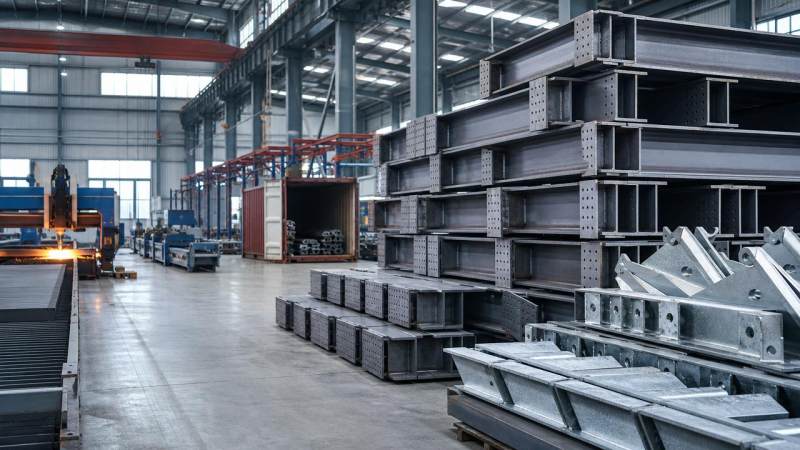
Steel structure construction cost can shift significantly depending on material prices, design complexity, fabrication standards, logistics, and project execution.
For business decision makers, understanding these cost drivers is essential to avoid budget overruns and choose the right structural steel partner.
This article explains the key factors that influence total cost and how reliable sourcing, quality control, and customized steel solutions improve project value.
The Biggest Cost Driver Is Usually Not One Item
Many buyers first ask for a price per ton, but steel structure construction cost is rarely controlled by steel weight alone.
The final budget is shaped by design efficiency, material specification, fabrication workload, connection details, coating requirements, freight, installation, and project management.
For decision makers, the important question is not simply which supplier offers the lowest unit price today.
The better question is which supplier can reduce total landed cost while keeping the project safe, compliant, and predictable.
A low steel price can become expensive if drawings are unclear, tolerances are poor, or delayed shipments interrupt site work.
Conversely, a slightly higher fabrication quote may save money when it reduces welding time, rework, installation delays, and inspection risks.
Material Price Volatility Directly Affects the Base Budget
Raw steel price is the most visible factor because beams, columns, plates, angles, channels, and profiles form the project’s physical basis.
Steel prices move with iron ore, energy costs, exchange rates, regional demand, trade policies, and mill production capacity.
For large projects, even a small change per ton can create a substantial difference in the procurement budget.
Business buyers should watch quotation validity, price adjustment clauses, and whether the supplier can secure material early.
If the project has a long approval cycle, budgeting with outdated steel prices can lead to funding gaps before fabrication begins.
A reliable structural steel manufacturer helps buyers manage this risk through transparent pricing, stable sourcing channels, and realistic delivery commitments.
Design Efficiency Can Save More Than Aggressive Purchasing
The structural design often determines whether the project uses steel efficiently or wastes money through unnecessary weight.
Overdesigned members increase tonnage, freight cost, coating area, erection equipment needs, and foundation load requirements.
Underdesigned structures create safety risks, redesign work, approval delays, and possible legal or operational consequences.
Good engineering balances load capacity, span requirements, building function, local codes, wind loads, seismic conditions, and future expansion needs.
For enterprise projects, early coordination between owner, engineer, fabricator, and installer can prevent expensive late-stage design changes.
Standardized sections can lower cost, but customized components may reduce installation time when the building has special requirements.
Fabrication Complexity Changes Labor, Time, and Risk
Two structures with the same steel weight can have very different costs because fabrication difficulty may vary greatly.
Simple beams with standard cuts and common hole patterns are usually faster and cheaper to produce.
Complex trusses, curved members, heavy welded assemblies, stiffeners, end plates, and tight tolerance connections require more skilled labor.
Each additional cutting, drilling, welding, straightening, assembly, inspection, and trial fitting step adds cost and production time.
Business decision makers should ask whether the quotation clearly separates raw material, fabrication, surface treatment, packing, and documentation.
This makes it easier to compare suppliers fairly instead of choosing a quote that hides important cost elements.
Quality Standards Influence Upfront Cost and Long-Term Value
Compliance with ASTM, EN, JIS, GB, ISO, or project-specific standards affects testing, documentation, tolerances, and inspection requirements.
Higher quality control may increase initial cost, but it reduces failure risk, rejection risk, and expensive rectification at site.
For international projects, documentation can be as important as the steel itself, especially when customs or owner inspections are strict.
Mill test certificates, dimensional reports, welding records, coating reports, and traceability documents help buyers prove compliance confidently.
Hongteng Fengda supports global buyers with structural steel products manufactured under major international standards and controlled production procedures.
This is valuable for projects where schedule certainty, audit readiness, and repeatable quality matter more than short-term price savings.
Connection Details Often Decide Installation Efficiency
Connection design affects not only fabrication cost, but also the speed and difficulty of on-site assembly.
Bolted connections may increase shop preparation, yet they often reduce field welding, weather dependency, and installation uncertainty.
Field welding can be suitable in some projects, but it may require skilled labor, inspection, equipment, and additional safety control.
Misaligned holes, inaccurate cuts, or poorly controlled tolerances create immediate installation delays and may stop crane operations.
The cost of one delayed crane day can exceed the savings gained from choosing a cheaper but less accurate supplier.
Decision makers should evaluate whether the manufacturer has experience producing components that fit correctly during real project execution.
Surface Treatment and Corrosion Protection Affect Lifecycle Cost
Painting, galvanizing, shot blasting, primer selection, and coating thickness all influence steel structure construction cost.
Indoor warehouses, coastal facilities, chemical plants, bridges, and industrial buildings face different corrosion environments and durability expectations.
Choosing insufficient protection can lower procurement cost, but it may increase maintenance, shutdown risk, and premature replacement expense.
Choosing excessive coating may waste budget when the operating environment does not require such high protection.
A practical specification should match the building’s exposure, service life target, maintenance plan, and owner’s risk tolerance.
This is where experienced suppliers help buyers avoid both under-specification and unnecessary overspending.
Material Selection Should Match the Application, Not Just the Price
Different steel products serve different structural and manufacturing purposes, so product selection directly affects performance and cost.
For example, beams and channels may suit main structures, while plates and formed profiles support secondary components.
In applications requiring formability, smooth surface, and reliable strength, buyers may evaluate Carbon Steel Plate for suitable components.
Available specifications can include SPCC, SPCCT, SPCD, SPCE, SPCF, and SPCG, depending on forming and surface requirements.
Widths from 100mm to 3000mm, lengths from 1m to 12m, and customized sizes support diverse project needs.
When material properties match the application, buyers reduce waste, reprocessing, deformation risk, and unexpected quality problems.
Logistics Can Change the Real Landed Cost Dramatically
International buyers often underestimate how much packing, inland transport, port charges, ocean freight, insurance, and customs can change total cost.
Long steel beams, oversized components, and heavy bundles require careful loading plans and sometimes special transport arrangements.
Poor packing may cause deformation, rust, surface damage, missing parts, or disputes after arrival at the destination port.
For global construction and industrial projects, the real comparison should be landed cost, not factory price alone.
Buyers should confirm Incoterms, container loading method, bundle weight, marking system, documentation, and delivery schedule before placing orders.
A manufacturer with export experience can reduce avoidable logistics risks and help the project team plan receiving and installation efficiently.
Project Schedule Has a Cost That Is Easy to Ignore
Delayed structural steel delivery can affect foundations, cranes, labor teams, subcontractors, equipment installation, and the overall project handover date.
When a business facility opens late, the cost may include lost production, delayed rental income, or contractual penalties.
Therefore, lead time reliability should be treated as a financial issue, not merely an operational detail.
Stable production capacity, realistic scheduling, and proactive communication help buyers avoid emergency purchasing and expensive corrective measures.
Hongteng Fengda serves customers across North America, Europe, the Middle East, and Southeast Asia with dependable production support.
For decision makers, this reliability can protect both capital expenditure planning and downstream business revenue.
Customization Can Reduce Total Cost When Used Correctly
Some buyers assume standard products are always cheaper, but customized steel solutions can lower total project cost in specific cases.
Custom cutting, drilling, forming, or fabrication can reduce site labor, material waste, and installation uncertainty.
OEM structural components may also help manufacturers integrate steel parts directly into equipment, frames, racks, platforms, or modular systems.
The key is to distinguish useful customization from unnecessary complexity that only increases fabrication time.
A qualified supplier should review drawings, understand the application, and suggest practical adjustments before production begins.
This collaborative approach is especially valuable for buyers managing repeated projects, standardized facilities, or export-oriented manufacturing programs.
Supplier Capability Influences Cost More Than Many Buyers Expect
A supplier’s capability affects quotation accuracy, production consistency, quality stability, delivery performance, and after-sales problem solving.
Weak suppliers may offer attractive initial prices, but they often create hidden costs through rework, delays, and inconsistent batches.
Important evaluation points include production equipment, quality control system, export experience, engineering support, and responsiveness.
Buyers should also examine whether the supplier can provide angle steel, channel steel, steel beams, profiles, and customized components.
A broader product range simplifies procurement and reduces coordination cost when one project needs multiple structural steel categories.
For enterprise decision makers, supplier stability is part of risk management and should be included in procurement strategy.
How to Compare Quotations Without Being Misled
Comparing steel structure quotations only by unit price can lead to poor decisions because scope differences are often hidden.
One quote may include fabrication drawings, blasting, primer, packing, certificates, and export documentation, while another may exclude them.
Buyers should request a clear breakdown of material grade, weight calculation method, fabrication scope, coating specification, packing, freight, and payment terms.
It is also useful to ask how design changes, quantity changes, inspection requirements, and shipment delays will be handled.
A transparent quotation reduces misunderstanding and helps financial teams evaluate cash flow, contingency, and project return more accurately.
This process turns procurement from simple price bargaining into a structured business decision.
Where Decision Makers Can Control Cost Most Effectively
The best cost control usually happens before mass production begins, not after problems appear at the construction site.
Early design review, clear specifications, realistic schedules, and accurate quantity confirmation prevent many avoidable expenses.
Buyers should identify critical components, long-lead materials, inspection hold points, and logistics constraints as early as possible.
They should also define acceptable alternatives for grades, dimensions, coatings, and packing if market conditions change.
Working with a capable structural steel manufacturer allows decision makers to balance price, delivery, compliance, and practical constructability.
This creates a stronger foundation for predictable budgets and smoother project execution.
Conclusion: Total Value Matters More Than the Lowest Steel Price
Steel structure construction cost changes most when material price, design efficiency, fabrication complexity, logistics, and execution risk interact.
For business decision makers, the goal is not to buy the cheapest steel, but to control total project cost.
A reliable partner helps reduce sourcing risk, maintain consistent quality, meet international standards, and support dependable delivery schedules.
Hongteng Fengda provides structural steel products and customized solutions for global construction, industrial, and manufacturing projects.
By evaluating suppliers through total value, buyers can protect budgets, avoid delays, and improve long-term project performance.
Please give us a message


Please enter what you want to find