As EN 10346 undergoes key updates set to take effect in 2026, DX51D steel buyers — from procurement managers and project engineers to distributors and quality controllers — must reassess specifications, compliance, and supply chain readiness. This revision impacts critical attributes of hot dip galvanized coil, influencing performance in steel angle bending, carbon steel pipe stockist reliability, and structural applications like angle steel and steel metal angle. For manufacturers like Hongteng Fengda — an EN-compliant structural steel exporter supplying DX51D, 304L stainless steel pipe, and cold-formed profiles globally — staying ahead means aligning production, testing, and documentation with the new standard. Here’s what you need to know — and do — before 2026.
What Exactly Changes in EN 10346:2026 for DX51D?
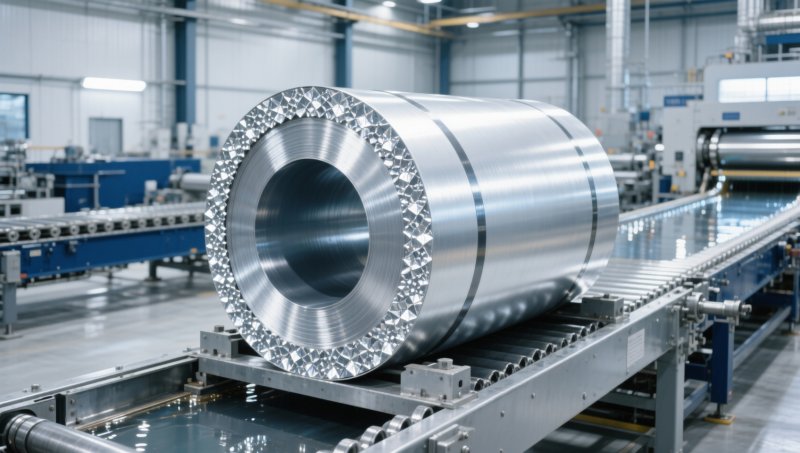
EN 10346:2026 introduces three core technical revisions directly affecting DX51D — the most widely used hot-dip galvanized cold-rolled steel grade for structural components. First, zinc coating mass tolerances tighten from ±15 g/m² to ±10 g/m² for coatings ≥180 g/m², demanding stricter process control during galvanizing. Second, tensile strength requirements now include mandatory testing at both transverse and longitudinal orientations — a shift from previous single-axis verification. Third, the standard expands chemical composition limits for aluminum (Al), magnesium (Mg), and copper (Cu) in zinc-aluminum-copper-magnesium alloy coatings, especially relevant for corrosion resistance in coastal or industrial atmospheres.
These changes aren’t incremental — they impact real-world performance. For example, tighter zinc mass tolerance reduces risk of premature white rust formation in humid storage conditions (common across Southeast Asia and Middle East projects). Dual-axis tensile testing ensures consistent ductility during cold forming — critical when fabricating Galvanized Steel Sheet into custom channel steel or steel beams. And refined alloy limits improve adhesion and spangle uniformity, directly supporting high-yield applications like agricultural machinery frames or telecom tower brackets.
Hongteng Fengda has already updated its internal QA protocols to meet these requirements, including recalibrated bath chemistry monitoring, dual-axis tensile test certification per EN ISO 6892-1:2019, and third-party lab validation for all DX51D batches shipped after Q1 2025. Lead time for pre-certified material remains stable at 4–6 weeks — no delay for compliant orders placed before December 2025.
Key Parameter Shifts vs. EN 10346:2019
This table highlights how EN 10346:2026 moves beyond basic conformity toward predictive performance assurance. The tightened Al content range, for instance, targets optimal intermetallic phase formation — proven in accelerated salt-spray tests (ISO 9227) to extend service life by 30–40% in chloride-rich environments. Buyers sourcing DX51D for infrastructure projects in Europe or GCC countries should verify supplier lab reports include full alloy composition, not just “complies with EN 10346”.
How These Changes Affect Your Procurement & Project Timeline
For procurement teams and project managers, the 2026 revision triggers five concrete action points — none optional. First, update RFQ templates to require dual-axis tensile reports and certified zinc mass measurement (not just nominal values). Second, revise incoming inspection checklists to include Al/Mg/Cu spectrographic analysis — achievable via handheld XRF in under 90 seconds per coil. Third, revalidate your approved supplier list: only those with ISO/IEC 17025-accredited labs or audited third-party partnerships can reliably certify compliance.
Fourth, assess lead time buffers. While Hongteng Fengda maintains 4–6 week delivery for standard DX51D coils (0.4–2.0 mm × 1000–1250 mm), custom widths or thicknesses requiring re-roll and re-test may add 7–10 days. Fifth, review warranty clauses: non-compliant material delivered post-July 2026 may void structural warranties on fabricated components like cold-formed steel profiles or angle steel assemblies.
- Procurement teams: Request full compliance dossiers (not just certificates) for all DX51D orders placed after Q3 2025.
- Project engineers: Confirm that your BIM modeling libraries reflect updated yield strength ranges (240–380 MPa) and elongation minima (≥22%) for accurate load calculations.
- Quality controllers: Calibrate coating thickness gauges to ±0.5 g/m² resolution — standard handheld units often lack this precision.
Why DX51D Remains the Smart Choice — Even With Tighter Standards
Despite heightened requirements, DX51D retains decisive advantages over alternatives like SGCC or S250GD — especially for global structural steel buyers. Its balanced yield-to-tensile ratio (typically 0.72–0.81) enables deep drawing without edge cracking — vital for manufacturing HVAC ductwork or appliance housings. Its zinc layer range (60–275 g/m²) offers unmatched flexibility: 60 g/m² suits indoor dry applications (e.g., light industrial shelving), while 275 g/m² meets EN ISO 1461 Class C for marine-grade exposure.
Compared to higher-strength grades like S550GD, DX51D delivers 15–20% lower fabrication costs due to superior weldability and bendability — critical when producing complex cold-formed profiles or steel metal angles with tight radii. And unlike stainless options (e.g., 304L stainless steel pipe), DX51D requires no special tooling or post-weld passivation, cutting shop floor cycle time by up to 35%.
DX51D vs. Key Alternatives in Structural Applications
The data confirms DX51D’s enduring value: it delivers the widest operational window between formability and strength. For contractors fabricating angle steel or channel steel on-site, this translates to fewer tool changes, less scrap, and faster assembly — directly supporting project timelines across North America and EU markets where labor costs exceed $45/hour.
Your Next Steps: From Compliance Check to Confident Sourcing
Don’t wait until Q2 2026 to act. Start now with these four time-bound actions: (1) Audit current DX51D inventory against EN 10346:2019 — materials certified before January 2025 may still be used for non-critical applications but require re-testing if repurposed for structural use after July 2026; (2) Request sample compliance reports from your top three suppliers — Hongteng Fengda provides full EN 10346:2026 dossiers within 48 hours of inquiry; (3) Schedule a free technical consultation with our engineering team to validate your specific application parameters (e.g., bending radius, exposure class, welding method); (4) Lock in Q4 2025 pricing and allocate buffer stock — raw zinc prices remain volatile, and early-bird orders secure priority galvanizing line access.
As a structural steel manufacturer and exporter from China, Hongteng Fengda supports global buyers with more than compliance — we deliver certainty. Our DX51D coils are produced in dedicated EN-certified lines, tested per EN ISO 6892-1:2019 and EN ISO 1461:2009, and traceable to batch-level chemistry logs. We offer OEM labeling, custom slitting (600–1500 mm widths), and coordinated logistics to 47 countries — with documented on-time delivery exceeding 98.7% over the past 24 months.
Ready to secure EN 10346:2026-compliant DX51D for your next project? Contact us today for: (1) Full compliance documentation review, (2) Custom thickness/width configuration support, (3) Zinc coating mass validation report, (4) Lead time confirmation for your destination port, or (5) Sample coil shipment (lead time: 7–10 business days).
Please give us a message


Please enter what you want to find