The price of Rebar for construction today is influenced by a mix of raw material costs, market demand, global supply conditions, and quality standards. For buyers, contractors, and project planners, understanding these factors is essential to control budgets and reduce sourcing risks. This article explains the key drivers behind rebar pricing and what to watch when comparing suppliers.
Why Rebar for construction prices are moving more often
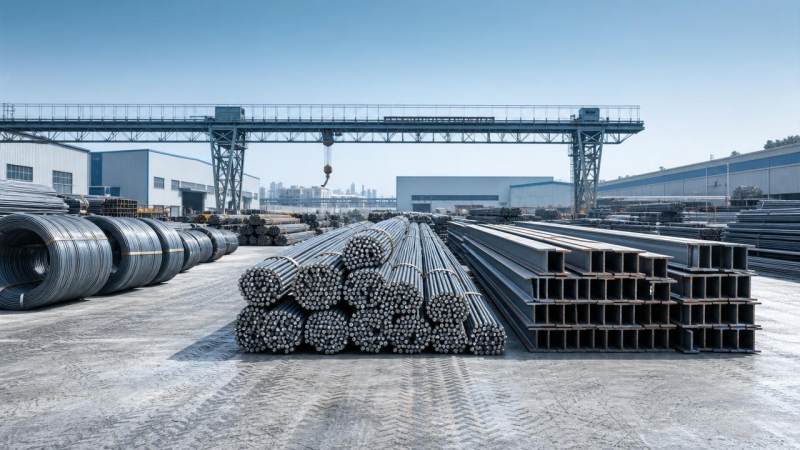
Rebar for construction has become more price-sensitive than many buyers expect. Daily quotations can shift because steel markets react quickly to cost pressure and supply changes.
In recent years, volatility has increased across raw materials, energy, freight, and currency exchange. These changes affect both domestic transactions and export offers.
At the same time, construction cycles remain uneven. Some regions see infrastructure expansion, while others slow due to financing pressure or delayed approvals.
That means the price of Rebar for construction today is no longer driven by one local market alone. It reflects interconnected steel industry signals.
The clearest market signals behind today’s pricing
Several indicators usually explain why Rebar for construction moves up or down. Watching them together gives a more accurate pricing picture.
When several signals rise together, Rebar for construction usually becomes more expensive within a short buying window.
Raw materials still set the pricing floor
Rebar depends heavily on billet, scrap, iron ore, and energy. Mills cannot absorb cost increases forever, especially during tight production periods.
If billet prices climb, base rebar quotations tend to follow. Even when demand is soft, mills may reduce output instead of selling below cost.
Demand cycles change negotiation power
Seasonal construction activity strongly affects Rebar for construction. Warmer months often support stronger orders, while weather disruptions can weaken spot demand.
Public infrastructure spending also matters. Roads, bridges, industrial plants, and large foundations can quickly tighten regional steel supply.
Why supply conditions and quality standards matter more now
Supply is not only about available tonnage. It also includes lead time, rolling schedule, export policy, and the ability to meet project standards.
Low-priced offers may exclude key testing, traceability, or dimensional consistency. In steel sourcing, cheaper does not always mean lower total cost.
- Production cuts can tighten supply and support higher prices.
- Export restrictions can redirect material and change regional availability.
- Higher compliance requirements can lift processing and inspection costs.
- Longer delivery times can increase financing and project coordination pressure.
This is why many steel buyers compare not only the rebar rate, but also reliability across the full structural package.
For industrial structure projects, related sections can affect budget planning too. A stable supplier may support both rebar and profile steel coordination.
One example is I Shaped Beams, used for industrial structure support.
Available in Carbon Steel grades such as Q195-Q235, Q345, SS400, A36, and St52, these sections can be supplied to ASTM, JIS, DIN, GB, and EN references.
Typical dimensions include thickness 4.5mm-15.8mm, length 6-12m, flange width 100mm-400mm, and web width 100mm-900mm, with ±1% tolerance.
When projects combine Rebar for construction with beam sections, integrated sourcing can improve scheduling and reduce coordination risk.
How price changes affect project budgets and sourcing decisions
Even small moves in Rebar for construction can create noticeable budget changes on large-volume projects. The effect grows when procurement is staged over months.
Price volatility also affects planning accuracy. If quotes expire quickly, cost estimates may be outdated before contract approval is complete.
Main business impacts to watch
- Budget overruns when raw material prices rise after estimation.
- Schedule delays when low-price suppliers cannot deliver on time.
- Quality disputes when standards are unclear in the quotation stage.
- Higher total landed cost from freight, duties, or repeated testing.
A reliable supplier base matters as much as a competitive rate. Consistent quality and dependable lead times often protect project margins better.
Hongteng Fengda, a structural steel manufacturer and exporter from China, supports global projects with stable production, international standards compliance, and customized supply solutions.
Its experience across North America, Europe, the Middle East, and Southeast Asia reflects a practical approach to controlling sourcing risk.
What to evaluate before accepting a rebar quotation
Comparing Rebar for construction offers should go beyond the headline price. A structured review often reveals hidden cost differences.
This approach helps buyers understand whether a lower Rebar for construction price is truly competitive or simply incomplete.
Practical signals to follow in the next buying cycle
Short-term price direction usually becomes clearer when several indicators move together. Watching them weekly can improve timing decisions.
- Track billet, scrap, and iron ore trends.
- Monitor freight costs on major shipping routes.
- Check mill inventories and lead time changes.
- Review infrastructure announcements and project starts.
- Confirm whether standards or testing requirements are changing.
If multiple cost drivers rise at once, delaying purchase can increase exposure. If inventories build and demand softens, negotiation conditions may improve.
The best response is usually balanced rather than speculative. Secure critical tonnage early, then review later phases based on fresh market signals.
A smarter way to respond to Rebar for construction price changes
Rebar for construction pricing today reflects more than steel weight. It reflects energy, logistics, supply discipline, quality control, and project timing.
Better results come from comparing full-value offers, not only low numbers. That means checking standards, delivery reliability, and technical consistency.
When planning upcoming steel demand, gather updated rebar quotations, review compliance needs, and align sourcing with realistic delivery schedules.
For projects needing dependable structural steel support from China, working with an experienced exporter can help reduce uncertainty and improve cost control.
Please give us a message


Please enter what you want to find