For distributors, agents, and stockists, understanding what influences delivery schedules is essential when sourcing from a Q235B hot rolled carbon steel coil factory China buyers rely on. From raw material availability and rolling capacity to quality inspection, export logistics, and order customization, several factors can affect lead times. Knowing these variables helps buyers plan inventory better, reduce delays, and choose a more dependable steel supply partner.
What Buyers Really Want to Know About Lead Times
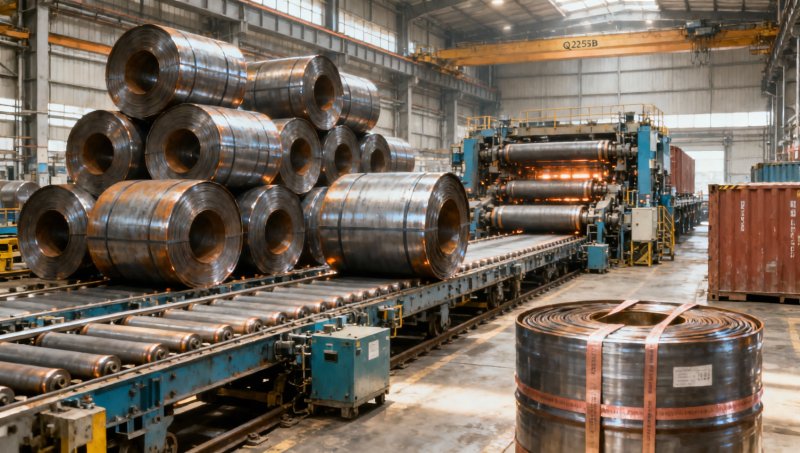
When buyers search for a Q235B hot rolled carbon steel coil factory China market suppliers operate, they usually want one practical answer: how long will production and shipment really take?
They are not only comparing prices. They are trying to protect stock turnover, project schedules, and customer commitments in their own local markets.
For most distributors and agents, lead time is affected less by one single issue and more by how well the factory controls production, sourcing, inspection, and export coordination.
In general, stable factories with reliable systems can offer more predictable delivery. Unstable suppliers may quote fast schedules but fail when raw materials, rolling slots, or shipping space become tight.
Raw Material Availability Is the First Lead Time Driver
Q235B hot rolled carbon steel coil production starts with billet or slab supply, and this upstream factor has a direct impact on delivery speed.
If a factory has steady procurement channels or long-term supply arrangements with steel mills, production planning becomes much easier. If materials must be purchased order by order, delays become more likely.
Market volatility also matters. When steel prices move sharply, some mills adjust output plans, which can affect material release schedules for downstream factories.
Distributors should ask whether the supplier keeps common base materials in stock or depends entirely on external mill allocations. This question often reveals how realistic the promised lead time is.
Another important point is specification sensitivity. Standard thicknesses and widths are usually easier to source quickly, while less common dimensions may require extra waiting time.
Rolling Capacity and Production Scheduling Often Decide the Actual Delivery Date
Even when raw materials are ready, the next constraint is factory capacity. A busy production line can extend delivery even if the supplier confirms the order quickly.
Many buyers assume factory size alone guarantees short lead times. In reality, what matters more is available rolling capacity during the required period.
Factories serving both domestic and export customers may face peak scheduling pressure. If export orders enter a full production queue, the delivery window can shift by several days or weeks.
Order batching is another factor. Mills often group similar thicknesses, grades, or widths to improve efficiency. A small mixed-specification order may wait longer than a standard bulk order.
For distributors, it is useful to ask not only for the lead time quote, but also whether the order has an actual production slot reserved.
This helps separate rough sales estimates from a more reliable manufacturing commitment, especially during high-demand seasons.
Customization Can Extend Lead Times More Than Buyers Expect
Standard Q235B hot rolled carbon steel coil is usually faster to produce than customized material. Any special processing requirement can add time at multiple stages.
Examples include non-standard width, tighter tolerance expectations, slitting, cut-to-length processing, special packaging, edge requirements, or customer-specific labeling.
These details may seem minor during quotation, but they often affect machine setup, inspection procedures, and packing arrangements before shipment.
Factories that handle both structural steel and customized fabricated products usually manage such changes better because they already operate with more flexible internal coordination.
For example, buyers working across multiple steel categories may also source products such as a106 gr b Seamless Pipe for industrial or engineering supply programs.
Where a supplier supports customized dimensions, surface conditions, and testing across product lines, buyers may gain sourcing convenience, but they should still confirm separate lead times for each item.
Combining many customized products into one procurement cycle can improve supplier consolidation, yet it may also extend the longest delivery point in the order set.
Quality Control and Testing Affect Speed, but They Also Protect the Buyer
Distributors sometimes view inspection time as a delay. In practice, proper quality control reduces a much bigger risk: receiving material that causes claims, returns, or downstream rejection.
A dependable Q235B hot rolled carbon steel coil factory China buyers can trust will usually follow clear inspection procedures before release.
This may include dimensional checks, surface inspection, weight verification, mechanical property review, and document confirmation against the applicable contract terms.
If the order includes third-party inspection, additional testing, or customer witness requirements, the lead time can increase. However, this added time often improves transaction security.
Buyers should also clarify whether mill test certificates are issued immediately after production or only after final packing. Documentation timing can affect shipment release.
Factories with strong internal quality systems typically manage these steps more efficiently, which helps them keep delivery dates without sacrificing compliance.
Export Packing and Documentation Are Common Hidden Delay Points
Many delivery problems do not come from rolling itself. They happen after production is finished, especially during export packing and document preparation.
Coils for domestic sale and coils for export may require different packaging standards. Moisture protection, steel strapping, marking, wooden supports, or container loading plans can all add handling time.
For distributors and agents, correct documentation is just as important as physical delivery. Errors in packing lists, invoices, HS codes, certificates, or shipping marks can slow customs clearance.
Some buyers also require legalization, embassy documents, certificate of origin processing, or special compliance paperwork for local import rules.
These tasks are manageable when the supplier has export experience, but they should never be treated as automatic. A factory with weak documentation control can lose days after production is already complete.
This is one reason experienced exporters tend to offer more dependable schedules than factories focused mainly on local spot business.
Shipping Conditions in China Can Shift Lead Times After Production
Even a finished order is not truly on schedule until it secures inland transport, port handling, and vessel space. Export logistics remain a major variable.
Truck availability, container shortages, port congestion, customs inspection frequency, and shipping line schedule changes can all affect final departure timing.
Seasonal disruption is common. Before major holidays, during peak export months, or when freight markets tighten, outbound logistics may become slower and more expensive.
For this reason, buyers should evaluate lead time in two parts: factory completion time and actual shipment readiness time. These are related but not identical.
A supplier may truthfully say production is done while the cargo still waits for container booking or terminal release. For inventory planning, that distinction matters a great deal.
Distributors serving time-sensitive customers should ask for realistic ETD ranges rather than relying only on ex-works completion dates.
Order Size and Specification Mix Influence Priority
Not all orders move through a factory at the same speed. Order volume and product mix often affect internal priority and operational efficiency.
Large repeat orders for common specifications are usually easier to plan. Small trial orders with multiple sizes often require more coordination relative to their value.
This does not mean smaller buyers are unimportant. It means their orders may need more precise communication to avoid scheduling gaps or unnecessary waiting time.
For agents and stockists, consolidating demand into clearer, more standardized order lots can sometimes reduce lead times more effectively than negotiating price alone.
It also helps the factory align production runs and material preparation with less interruption. Efficiency on the supplier side often turns into delivery reliability on the buyer side.
How to Evaluate Whether a Quoted Lead Time Is Reliable
Experienced buyers do not judge delivery promises by speed alone. They test whether the quote is supported by operational facts.
Useful questions include: Are raw materials already secured? Is the specification standard or special? Has production capacity been reserved? What inspection steps are required? What is the current port situation?
It is also smart to ask the supplier for a simple milestone breakdown, such as material preparation, rolling, inspection, packing, and booking.
This structure gives buyers a better view of where delays are most likely. It also makes follow-up communication much clearer once the order is placed.
Another good sign is consistency. A dependable supplier usually gives lead times that align with current workload, not optimistic numbers designed only to win the order.
Factories with mature export management are often more transparent about timing trade-offs, and that honesty is valuable for distributors managing downstream commitments.
Why Supplier Type Matters for Distributors and Agents
For channel buyers, choosing the right supplier is not simply about buying steel. It is about building a supply system that supports margin, customer trust, and repeat business.
A professional structural steel manufacturer and exporter with stable production control can reduce uncertainty across ordering, compliance, and shipment execution.
Companies such as Hongteng Fengda serve international buyers by combining manufacturing capacity, quality control, and export coordination across structural steel categories.
This matters because distributors often need more than a product. They need predictable supply, responsive communication, international standard compliance, and the ability to handle customized requirements when needed.
Whether the order is for Q235B hot rolled carbon steel coil or another engineered steel item, supplier discipline has a direct impact on inventory planning and customer service performance.
In competitive distribution markets, dependable lead times are often worth more than a slightly lower initial quote from a less organized source.
Final Takeaway for Buyers Sourcing from China
Lead times at a Q235B hot rolled carbon steel coil factory China buyers source from are shaped by a chain of connected factors, not by production alone.
Raw material supply, rolling capacity, customization, inspection, export packing, documentation, and shipping conditions all influence when cargo actually leaves China.
For distributors, agents, and stockists, the best approach is to evaluate delivery promises through operational detail, not sales language.
A reliable supplier should be able to explain what drives the schedule, where risks may appear, and how each stage is being managed.
That level of clarity helps buyers reduce uncertainty, improve inventory planning, and choose partners that support long-term business growth instead of short-term transactions.
In the end, dependable lead time is a supply chain capability. Buyers who understand what affects it are in a much stronger position to source successfully.
Please give us a message


Please enter what you want to find