Hot Rolled Steel Coil prices today are shaped by raw materials, mill output, energy, freight, and regional demand. These factors move quickly and often interact.
For steel sourcing decisions, understanding what affects Hot Rolled Steel Coil prices most today helps reduce buying risk, compare offers accurately, and plan budgets with greater confidence.
What Hot Rolled Steel Coil means in today’s steel market
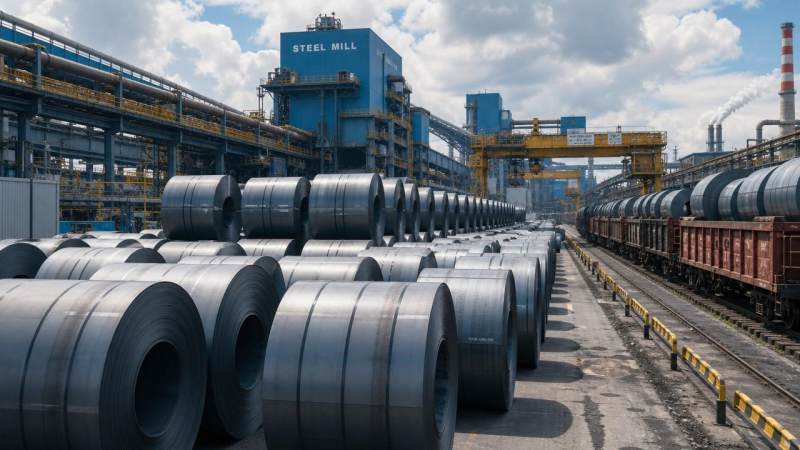
Hot Rolled Steel Coil is a flat steel product made by rolling heated slabs at high temperature. It is widely used in construction, machinery, automotive, pipe, and fabrication industries.
Because it sits near the center of industrial supply chains, Hot Rolled Steel Coil often reflects broader steel market conditions. Price changes usually signal shifts in cost pressure or demand strength.
In practical terms, buyers watch coil prices as a benchmark. They influence plate, tube, formed profiles, and many downstream steel component costs across international markets.
Primary cost drivers behind Hot Rolled Steel Coil prices
The most direct influence is raw material cost. Iron ore, coking coal, scrap, and alloy inputs affect mill conversion economics and set the floor for offer levels.
When ore rises sharply, integrated mills usually lift coil quotations. When scrap rises, electric arc furnace producers also face margin pressure and may follow with higher pricing.
Energy is another major factor. Electricity, natural gas, and fuel oil costs affect reheating, rolling, and finishing operations. Higher power tariffs can change export competitiveness within weeks.
Mill capacity utilization matters too. If maintenance shutdowns, production cuts, or environmental restrictions reduce supply, available Hot Rolled Steel Coil volumes tighten and prices often firm.
Labor, financing, and compliance costs also play a role. While smaller than ore or coal, these overheads influence how aggressively mills can price in uncertain markets.
Key direct inputs to monitor
- Iron ore and coking coal benchmarks
- Ferrous scrap trends
- Electricity and gas prices
- Mill operating rates
- Maintenance outages and policy limits
Supply, freight, and regional demand signals
Hot Rolled Steel Coil prices today are not driven by production costs alone. Freight rates, port congestion, and inland logistics can widen the gap between domestic and import offers.
Ocean freight increases can make low-cost foreign coil less attractive. At the same time, rail delays or truck shortages may tighten local availability and support higher spot prices.
Regional demand is equally important. Construction activity, machinery output, appliance production, and infrastructure schedules directly influence order volumes for flat steel.
When end-use sectors restock together, mills gain leverage. When service centers destock and project starts slow, buyers often resist price increases even if costs are rising.
Trade policy and currency effects on price movement
Trade measures can shift Hot Rolled Steel Coil prices quickly. Anti-dumping duties, quotas, and safeguard policies change supply access and alter competitive pricing in target markets.
Currency movement is another overlooked factor. A stronger exporting currency can raise overseas offer levels, while a weaker currency may support more competitive quotations.
Interest rates and credit conditions also affect inventory behavior. When financing becomes expensive, traders hold less stock, which can reduce immediate buying and increase short-term volatility.
For cross-border procurement, total landed cost should include duties, exchange risk, insurance, and timing. A low headline price may not remain low after these adjustments.
Why these price factors matter across steel applications
The impact of Hot Rolled Steel Coil pricing extends beyond flat products. It influences fabricated structures, welded components, tube processing, and project cost estimates across many steel categories.
In many industrial systems, buyers compare coil-based materials with alternative products that offer different processing and performance advantages. This is common in energy, mechanical, and construction projects.
For example, Carbon Seamless Pipe serves petroleum, chemical, mechanical, and construction applications where pressure resistance, material consistency, and standard compliance are critical.
Common grades include API A106 GR.B, ASTM A106 Gr.B, ASTM A53 Gr.B, DIN2448, and JISG3452-54. Outer diameter ranges from 17mm to 914mm, with multiple wall thickness schedules.
Available finishes may include bare, black painting, galvanized, varnished, transparent oil, epoxy coating, or anti-corrosion 3PE, PP/EP, and FBE systems for varied service conditions.
This matters because steel buyers rarely evaluate one item in isolation. They compare performance, fabrication route, logistics, and lifecycle cost across structural and industrial material options.
Typical situations that change Hot Rolled Steel Coil prices fast
Some market events move prices faster than normal. These situations deserve close attention when reviewing quotations or planning order timing.
- Sudden iron ore or coal rallies after supply disruption
- Large-scale mill maintenance or production cuts
- Strong infrastructure stimulus in major consuming regions
- Import restrictions or new anti-dumping cases
- Shipping bottlenecks or rapid freight inflation
- Short-term restocking after prolonged inventory depletion
Not every event creates a lasting trend. Some only affect sentiment. The more durable price moves usually combine higher costs with visible supply tightness or stronger real demand.
Practical evaluation points for supplier comparison
When comparing Hot Rolled Steel Coil offers, price should be linked to specification, lead time, and reliability. A lower quote may hide thinner margins for delivery stability.
A disciplined review can focus on several checkpoints instead of headline price alone.
- Check base material grade, thickness tolerance, and standard.
- Compare incoterms and total freight exposure.
- Confirm production slot, shipment window, and documentation.
- Review mill origin, quality consistency, and claim handling.
- Assess currency risk and payment structure.
For structural steel procurement, reliable supply often matters as much as the lowest number. Stable production capacity and international standard compliance can reduce project uncertainty.
Hongteng Fengda, a structural steel manufacturer and exporter from China, supports global projects with angle steel, channel steel, steel beams, cold formed profiles, and customized steel components.
Its manufacturing and quality control systems support ASTM, EN, JIS, and GB requirements, helping overseas buyers control sourcing risk and maintain dependable lead times.
Action steps for tracking Hot Rolled Steel Coil prices today
The best approach is to track several indicators together. Watching only one signal can lead to late decisions or inaccurate supplier comparisons.
- Monitor raw material benchmarks weekly
- Check mill lead times and regional inventory trends
- Review freight and exchange movement before booking
- Request comparable quotations from reliable sources
- Match buying timing with real project demand
Hot Rolled Steel Coil prices most today are affected by the combined force of cost, supply, logistics, policy, and demand. Better outcomes come from evaluating the whole market picture.
If current projects involve structural steel or related industrial materials, align specification review, supplier qualification, and price tracking early to improve cost control and delivery confidence.
Please give us a message


Please enter what you want to find