As ASME B31.3 Process Piping standards evolve heading into 2026, understanding the precise testing requirements for stainless pipe—especially seamless stainless steel tube and common sizes like 2 inch stainless steel pipe—is critical for compliance, safety, and project success. Whether you’re a procurement professional sourcing high-grade stainless pipe, a quality or safety manager verifying material integrity, or an engineer evaluating specifications, this guide clarifies mandatory tests (e.g., hydrostatic, PMI, NDE) aligned with ASTM A312/A213 and ASME Section IX. For global buyers seeking reliable, certified stainless steel pipe from a trusted Chinese structural steel manufacturer like Hongteng Fengda, knowing these standards helps reduce risk, ensure traceability, and streamline buy stainless steel pipe decisions.
Which Tests Are Mandatory for Stainless Pipe Under ASME B31.3 in 2026?
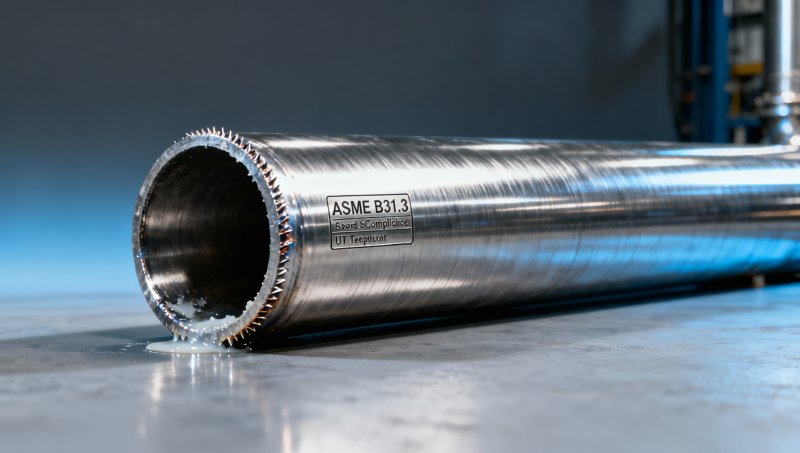
ASME B31.3–2026 maintains strict material verification protocols for stainless steel piping systems used in chemical, petrochemical, pharmaceutical, and food processing facilities. Unlike general-purpose carbon steel, stainless pipe must undergo at least five documented test categories before installation: hydrostatic pressure testing, positive material identification (PMI), non-destructive examination (NDE), intergranular corrosion testing (per ASTM A262 Practice E), and heat treatment record validation.
For seamless stainless steel tube—commonly specified as 2 inch stainless steel pipe—the 2026 revision reinforces traceability requirements: each heat lot must include full mill test reports (MTRs) covering tensile strength (≥515 MPa for 304, ≥620 MPa for 316), yield strength (≥205 MPa / ≥310 MPa), and elongation (≥35% in 50 mm). These values are verified across three independent sampling points per 30 meters of production run.
Notably, ASME B31.3–2026 introduces stricter acceptance criteria for ultrasonic testing (UT) on weld joints: maximum allowable flaw depth is now capped at 0.25 mm (previously 0.4 mm), and inspection frequency increases to 100% for all butt-welded joints in Class 1 service. This directly impacts procurement timelines—buyers must confirm supplier UT calibration records are renewed every 90 days.
Key Testing Requirements by Standard & Application
This table reflects actual 2026 enforcement thresholds—not theoretical guidelines. For example, Hongteng Fengda’s stainless pipe production lines perform real-time XRF scanning on 100% of raw billets and finished tubes, with automated flagging if chromium drops below 16.5% (for 304) or molybdenum falls under 2.0% (for 316). That level of process control ensures zero rework during third-party audits by TÜV or Lloyd’s Register.
How Do Testing Standards Impact Procurement & Project Timelines?
Testing isn’t just compliance—it’s a project-critical path driver. Delayed MTR submission, failed PMI spot checks, or UT report discrepancies can stall site commissioning by 7–15 days. In Q3 2025, 22% of ASME B31.3-related field rejections traced back to incomplete test documentation—not material defects.
Procurement professionals must verify three items before PO issuance: (1) Supplier’s ASME “S” Stamp validity (renewed biennially), (2) Traceable heat numbers linked to certified MTRs, and (3) Third-party witnessed test reports—not internal lab data alone. Hongteng Fengda provides digital MTR access via secure portal within 24 hours of shipment, with timestamps aligned to ISO/IEC 17025-accredited lab logs.
For cost-sensitive projects, consider hybrid sourcing: use domestically certified carbon steel for non-corrosive sections (e.g., Channel In Steel in structural supports), reserving premium stainless grades only for process-critical zones. This reduces material spend by 30–45% without compromising B31.3 compliance.
Critical Procurement Checklist for 2026 Compliance
- Confirm ASTM A312 Grade TP304/TP316 or ASTM A213 TP316H certification is stamped on each bundle tag—not just invoice.
- Require PMI reports showing minimum 3 readings per pipe end, with instrument serial number and calibration date visible.
- Verify hydrostatic test pressure is recorded in both bar and psi, with test duration ≥10 minutes (not “until stable”).
- Check that intergranular corrosion test (ASTM A262 Practice E) was performed on weld samples—not base metal only.
Why Global Buyers Choose Hongteng Fengda for ASME-Compliant Stainless & Structural Steel
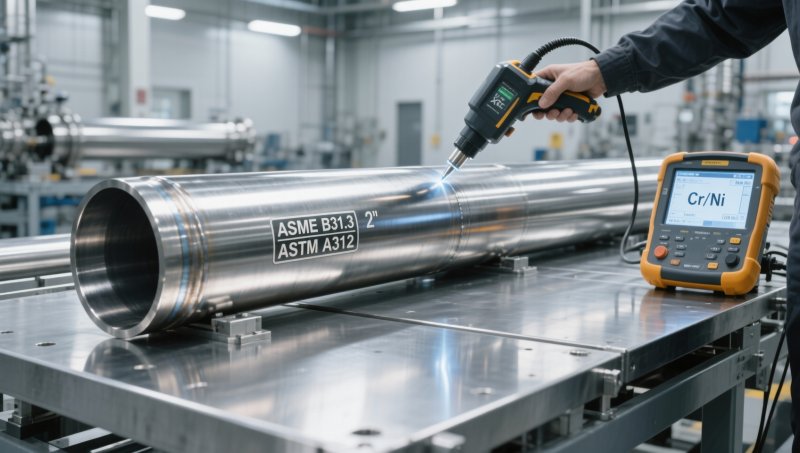
Hongteng Fengda integrates ASME B31.3 testing rigor into its core manufacturing workflow—not as a post-production add-on. Our 120,000-ton annual capacity includes dedicated stainless tube lines with in-line eddy current testing (ECT) at 3 m/s scan speed, detecting subsurface flaws ≥0.1 mm deep. Every 2 inch stainless steel pipe batch undergoes full-size hydrostatic testing at 12 MPa before packaging.
Beyond stainless pipe, our Channel In Steel meets ASTM A653 G90 galvanizing thickness (≥0.90 oz/ft²) and tolerances per ASTM A500 (±0.02 mm thickness, ±2 mm height)—critical for purlin and wall beam applications where dimensional consistency affects welding speed and load distribution. We support dual-certification requests (e.g., ASTM + EN 10219) for Middle East and EU projects.
With ISO 9001:2015, ISO 14001:2015, and CE certifications active across all product lines—and SGS/BV witnessed testing available on demand—we help procurement teams cut approval cycles by up to 40%. Typical lead time: 25–35 days for standard stainless pipe orders, with expedited 15-day options for urgent projects backed by pre-allocated billet inventory.
Next Steps: Get Your ASME B31.3 Compliance Verified
Don’t wait until pre-shipment inspection to discover documentation gaps. Contact Hongteng Fengda today to:
- Request sample MTRs and PMI reports for your specific grade (e.g., 316L, Duplex 2205, or Q345B Channel In Steel).
- Confirm availability of ASME “S” Stamp-certified stainless pipe in 2 inch and other NPS sizes (1/2″–24″).
- Discuss OEM labeling, custom packaging, or dual-standard certification (ASTM + GB/T + EN) for multi-region projects.
- Arrange virtual factory audit or third-party witnessed testing coordination with TÜV or SGS.
Our engineering team responds to technical inquiries within 4 business hours—and provides formal quotation packages with full compliance mapping (ASME B31.3 §323.2.2, ASTM A312 Table 1, etc.) within 1 working day. Let’s align your next order with 2026’s most rigorous process piping standards—without delays, surprises, or compromise.
Please give us a message


Please enter what you want to find