Understanding what reduces structural steel lifespan is now more important than ever. Service conditions are becoming harsher, inspection cycles are tighter, and downtime costs are rising across construction and industrial assets.
That is why structural steel lifespan and maintenance has moved from a basic upkeep topic to a long-term risk control priority. Small failures in coating, drainage, loading, or inspection timing can grow into expensive structural damage.
For steel-intensive facilities, lifespan is not controlled by one factor alone. It is shaped by environment, design details, fabrication quality, protective systems, and the discipline of ongoing maintenance decisions.
Service conditions are changing faster than many steel maintenance plans
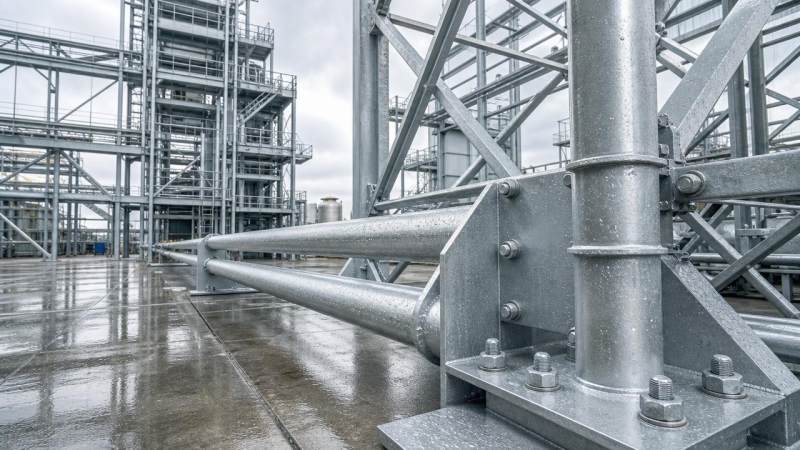
Many structures now operate in more aggressive environments than originally expected. Higher humidity, airborne chlorides, industrial pollutants, and temperature cycling can shorten steel durability far earlier than planned.
At the same time, projects increasingly demand lighter sections, faster installation, and lower lifecycle costs. These pressures make structural steel lifespan and maintenance more dependent on early prevention than on late repairs.
Another shift is the growing use of mixed-use sites. Warehouses, plants, transport corridors, and utility structures often face moisture, vibration, impact, and chemical exposure at the same time.
As a result, steel deterioration rarely follows a simple pattern. Corrosion may start at joints, coating breakdown may begin at edges, and fatigue may develop where loads fluctuate daily.
The main signals behind reduced structural steel lifespan are easy to identify early
Most failures do not begin with dramatic visible damage. They begin with small warning signs that are often ignored during routine checks.
Common drivers that shorten service life
These signals show why structural steel lifespan and maintenance should be treated as a condition-based strategy, not only a calendar-based task.
Why corrosion remains the biggest long-term threat in steel structures
Corrosion is still the most common reason for reduced structural life. It attacks exposed steel gradually, but its impact on safety and cost becomes severe once section loss accelerates.
Marine air, deicing salts, industrial fumes, and poor ventilation all increase corrosion speed. Even indoor structures can suffer when condensation forms repeatedly on untreated or damaged surfaces.
Design details matter as much as environment. Crevices, contact points, sharp edges, and water traps often corrode first because coatings are thinner there and drying is slower.
This is where protective material selection becomes practical, not optional. In many exposed applications, Galvanized Round Steel supports longer service life through hot dip galvanized anti-corrosion protection.
For components used in electric power towers, highway protection, marine parts, or building steel structures, zinc coating can reduce maintenance frequency and slow early surface deterioration.
Products with controlled surface quality, ultrasonic control, spectrotest verification, and compliance with ASTM, EN, JIS, GB, and related standards also help reduce hidden variability.
Maintenance expectations are rising because steel failures now affect more business stages
A shorter lifespan does not only affect the structure itself. It affects planning, shutdown timing, repair budgets, safety margins, and asset availability.
When deterioration is discovered late, responses are usually more disruptive. Spot repairs may turn into reinforcement work, replacement orders, or temporary operating restrictions.
Where the impact becomes visible
- Inspection teams must expand checks beyond visible rust.
- Maintenance schedules become more frequent in wet or polluted areas.
- Repair costs rise when coating failure reaches substrate damage.
- Production continuity suffers if structural access is limited.
- Long-term budgeting becomes harder without lifecycle records.
This is why structural steel lifespan and maintenance now connects engineering, operations, safety, and cost control more closely than before.
The most reliable way forward is prevention built into materials and inspection routines
Extending service life starts before steel enters operation. Material choice, dimensional accuracy, processing quality, and protective treatment all influence maintenance performance later.
Key points worth close attention
- Match corrosion protection to actual exposure, not assumed exposure.
- Inspect weld zones, edges, fasteners, and drainage paths first.
- Track overload events and vibration-related stress locations.
- Record coating age, repair history, and recurring defect areas.
- Use steel with dependable tolerances and documented quality control.
- Prioritize anti-corrosion options for outdoor and infrastructure use.
For example, galvanized round steel with tensile strength of 570–820 MPa and customized diameters can support applications where corrosion resistance and dimensional consistency both matter.
In sectors such as towers, street light poles, transport protection systems, substations, and selected industrial components, early anti-corrosion investment usually lowers total lifecycle intervention.
A practical judgement framework makes structural steel lifespan and maintenance easier to manage
A useful approach is to judge each structure through exposure, condition, consequence, and response speed. This helps teams focus on what truly shortens life.
This framework turns structural steel lifespan and maintenance into a repeatable management process rather than a reactive repair cycle.
The next step is combining durable steel supply with lifecycle-focused maintenance decisions
Longer steel life comes from two connected choices. The first is selecting products built for real service conditions. The second is maintaining them before minor defects become structural issues.
A supplier with stable production, strict quality control, and international standard compliance helps reduce risk from the beginning. Consistent material performance supports more predictable inspection and repair planning.
Hongteng Fengda provides structural steel products and customized solutions for global construction, industrial, and manufacturing projects, with dependable lead times and controlled quality.
If service life matters in exposed or demanding applications, review present corrosion risks, coating condition, load changes, and replacement priorities now. Early action is still the most cost-effective form of structural steel lifespan and maintenance.
Please give us a message


Please enter what you want to find