Choosing the right stainless steel pipe manufacturer means looking beyond basic ss pipe price. A reliable stainless steel pipe supplier and stainless steel pipe exporter delivers consistent quality, certified standards, and dependable lead times that support real project performance. For buyers comparing options, understanding what truly sets a pipe stainless steel supplier apart can reduce sourcing risks, improve cost control, and ensure long-term value.
In steel procurement, the difference between an average supplier and a dependable manufacturing partner is rarely visible in a quotation sheet alone. Technical evaluators may focus on grade consistency, wall thickness tolerance, and weld integrity, while procurement teams compare lead time, export handling, and total landed cost. Project managers, safety personnel, distributors, and end users all need one thing in common: confidence that the steel products will perform as expected in real conditions.
For global buyers, this is especially important when sourcing from China. A manufacturer with modern production capability, international standard compliance, and practical export experience can help reduce quality disputes, avoid schedule delays, and support smoother project execution. This article explains what truly sets a stainless steel pipe manufacturer apart and how to assess a supplier from a broader steel industry perspective.
Manufacturing capability matters more than a low quote
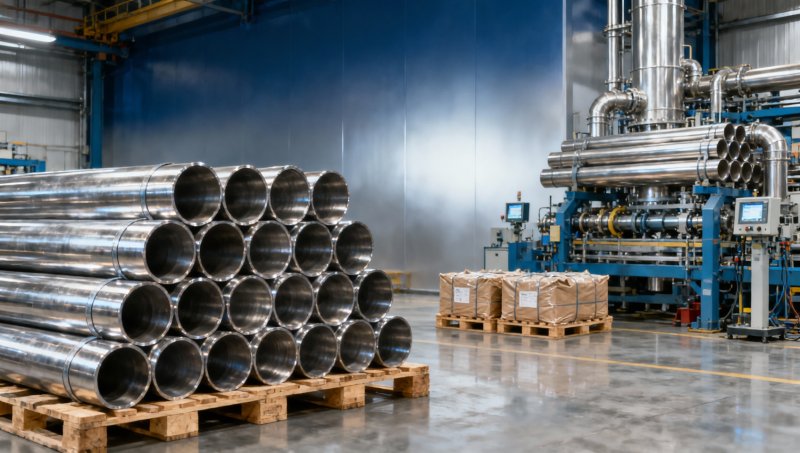
A stainless steel pipe manufacturer stands apart first through production capability. Buyers often compare 3 to 5 suppliers during the sourcing stage, but only a few can consistently maintain dimensional accuracy, stable metallurgy, and repeatable output across multiple batches. This matters for industrial piping, structural supports, mechanical fabrication, and infrastructure work where even a ±1% deviation can affect fit-up, welding efficiency, or final assembly.
Reliable manufacturers invest in controlled forming, welding, cutting, and inspection processes instead of relying only on trading channels. In practical terms, this means better control over OD, wall thickness, straightness, and surface finish. For project buyers, the result is lower rework risk, better installation speed, and fewer claims after delivery. For distributors, it means more predictable stock quality and fewer complaints across repeated orders.
In the broader steel sector, this same principle applies beyond stainless steel pipe. Companies such as Hongteng Fengda, known as a structural steel manufacturer and exporter from China, serve international construction and industrial markets by combining stable production capacity with specification-based supply. When a supplier can support ASTM, EN, JIS, and GB requirements across steel categories, it often signals stronger process discipline rather than one-off trading flexibility.
What buyers should verify in production capability
A serious review should go beyond catalog photos. Technical and commercial teams should verify whether the supplier can manage production schedules of 2 to 6 weeks, handle OEM specifications, and maintain process records for incoming materials, forming, heat-related operations, and final inspection. These checks become especially important for projects with phased deliveries or strict quality documentation requirements.
- Whether the supplier is a real manufacturer or mainly a trading intermediary
- Whether production supports standard and custom dimensions
- Whether tolerance control and inspection records are available batch by batch
- Whether export packaging and shipment planning are part of the factory workflow
These points directly influence consistency. A lower unit price may look attractive at the start, but if one delivery arrives out of tolerance, the hidden cost can include delayed installation, extra machining, replacement freight, and site labor losses that easily exceed the original savings.
The table below summarizes how manufacturing depth affects procurement decisions in steel supply.
The key conclusion is simple: manufacturing control is a commercial advantage, not just a technical one. It reduces variability, improves accountability, and supports better long-term sourcing outcomes.
Quality standards, inspection, and documentation separate serious suppliers
The second major differentiator is quality assurance. A stainless steel pipe exporter that serves North America, Europe, the Middle East, and Southeast Asia must understand that compliance is not optional. Buyers may require ASTM, EN, JIS, or GB alignment depending on the market, end use, and engineering documentation. The stronger manufacturer is the one that can connect standards, production, inspection, and documentation into one clear process.
Quality should be reviewed at 4 levels: raw material verification, dimensional inspection, mechanical or application-related checks where applicable, and shipment documentation. For pipe products, this may include grade confirmation, OD and thickness measurement, surface assessment, straightness control, and marking verification. For structural steel categories, the same disciplined approach applies to profiles, beams, channels, cold-formed sections, and fabricated components.
This broader quality mindset is why many buyers prefer suppliers with cross-category steel experience. A company used to supplying angle steel, channel steel, beams, and custom structural components often brings stronger control habits to all steel orders. That matters to QC managers and project engineers who must review multiple line items in one procurement package rather than evaluate a single product in isolation.
Key documents and checks to request
Documentation should not be requested only after production finishes. It should be part of the quotation and technical review stage. For most export projects, buyers should confirm the available documents before PO placement, especially when the delivery schedule is under 30 days or the project has third-party inspection requirements.
- Material grade confirmation and applicable standard
- Dimensional tolerance agreement, such as thickness and length limits
- Inspection records for appearance, dimensions, and count
- Packing list, marking details, and shipment identification
- If needed, pre-shipment photos or third-party inspection coordination
A manufacturer that responds clearly to these points usually creates fewer surprises later. Vague answers often indicate weak process control, even if the price is competitive.
The following table outlines a practical quality review framework for steel buyers.
Strong quality systems do not eliminate every issue, but they make issues measurable, traceable, and faster to resolve. For B2B steel sourcing, that is often the difference between a manageable problem and a project disruption.
A dependable supplier supports wider project needs, not just one item
Another factor that sets a stainless steel pipe manufacturer apart is the ability to support broader steel procurement needs. Many global projects do not buy pipe alone. They may require structural sections, support frames, fabricated steel parts, handrail systems, or rail-related components within the same supply plan. A supplier with wider steel manufacturing and export experience can simplify vendor management and reduce communication gaps.
This is where insertive product integration becomes relevant. In transport infrastructure, industrial platforms, and access systems, buyers may also need Rail products in addition to pipe or structural steel. Common grades include U74, U71Mn, PD2, PD3, BNbRE, Q235, 55Q, 50Q, U71, and 45Mn, with materials such as carbon steel and medium manganese steel. Typical lengths range from 12m to 30m, thickness from 3mm to 24mm, rail height from 134mm to 170mm, head width from 68mm to 73mm, bottom width from 114mm to 150mm, and tolerance around ±1%.
These specifications show why experienced exporters are valuable. A supplier that can handle railway rail, bridge railings or handrails, and deck railing applications with finish options such as oil, black, galvanized, or painted treatment is usually better prepared for multi-scenario steel supply. Certifications such as ISO9001-2008 and ISO14001:2004 further indicate that process and environmental management are part of the operating system, not an afterthought.
Why cross-category steel experience reduces sourcing risk
For project leaders and purchasing teams, handling 4 or 5 separate suppliers can increase the chance of dimensional mismatch, shipment delays, and document inconsistency. A manufacturer-exporter with capabilities across structural steel categories can coordinate standards, packing, and delivery more effectively. This is especially useful when the project timeline is split into 2 or 3 installation phases.
- Fewer supplier interfaces can shorten communication loops
- Shared quality procedures improve consistency across order lines
- Export packaging can be planned for mixed-product shipments
- Engineering teams can compare documents in a more unified format
For distributors and agents, wider product coverage also supports inventory strategy. Instead of sourcing pipe from one channel and structural items from another, they can consolidate purchase planning, reduce administrative cost, and improve customer response speed.
Examples of specification-driven value
In rail-related steel applications, product function is highly specific: guiding rolling stock wheels forward, bearing concentrated wheel pressure, transmitting pressure to sleepers, and providing a continuous rolling surface with minimal drag. In electrified railways or automatic blocking sections, rails may also serve in track circuit applications. This level of functional clarity is the kind of detail buyers should expect from any serious steel supplier, whether they are purchasing stainless steel pipe, beams, or specialized steel sections.
A supplier that explains application logic, not just price, is often more useful during engineering review. That expertise helps customers avoid mismatched specifications and shortens decision cycles in technical-commercial discussions.
Lead time, export execution, and service responsiveness define long-term value
Price matters, but delivery performance often decides whether a supplier becomes a long-term partner. A stainless steel pipe exporter can stand apart by maintaining dependable lead times, accurate packing, and responsive after-sales communication. For many buyers, a shipment arriving 10 days late can create more financial impact than a 3% difference in unit price, especially when cranes, installers, or shutdown windows have already been scheduled.
Export execution should be reviewed as a process, not a promise. Buyers should ask how the supplier handles production planning, packaging, marking, loading, and document preparation. A mature exporter usually has a step-based workflow that starts from technical confirmation and ends with shipment traceability. This benefits not only large EPC buyers but also smaller distributors who need predictable replenishment cycles.
A practical 5-step delivery review process
- Specification confirmation: size, grade, standard, quantity, finish, and tolerance
- Production scheduling: estimated cycle such as 15 to 35 days depending on order complexity
- Inspection and packing: dimensional checks, quantity count, protective packing, marking
- Export documents: invoice, packing list, shipment labels, and agreed certificates
- After-sales follow-up: receiving support, claim handling, and repeat order preparation
This structure is useful because it makes delays visible earlier. If a supplier cannot clearly explain these 5 steps, buyers should expect weaker control once the order begins moving.
Hongteng Fengda’s business profile reflects why this matters in global steel trade. With service experience across multiple regions and a focus on stable production, consistent quality, and dependable lead times, this type of manufacturer-exporter supports customers not only with products but also with lower sourcing risk, better cost control, and smoother project execution.
Common mistakes when comparing suppliers
Buyers often make 3 avoidable mistakes. First, they compare only ex-works or FOB price without calculating the cost of delay, inspection failure, or repacking. Second, they assume all exporters can support the same document accuracy and delivery planning. Third, they overlook communication speed, even though a 24-hour response window can be critical when project schedules are tight.
- Do not treat quoted price as total procurement cost
- Do not skip tolerance and packing confirmation
- Do not assume technical compliance without document review
- Do not ignore response speed during the sample and quotation stage
In steel sourcing, responsiveness is often a preview of future service. The supplier who answers clearly before PO is usually the supplier who handles issues more effectively after shipment.
How to select the right manufacturer for your application
Different buyer groups evaluate a stainless steel pipe manufacturer from different angles. Technical evaluators focus on standard compliance and dimensions. Procurement teams look at total cost and lead time. Decision-makers care about supply continuity and business risk. Quality managers watch documentation and traceability. The best selection process combines these views into one practical framework rather than allowing each department to work in isolation.
A useful approach is to score suppliers across 4 categories: manufacturing capability, quality assurance, export execution, and service support. Each category can be scored from 1 to 5. A supplier with a low price but weak scores in 2 categories may create more project exposure than a slightly higher-priced manufacturer with balanced strength across all 4 areas.
Recommended supplier selection checklist
The table below can help teams evaluate stainless steel pipe suppliers and broader steel partners in a more structured way.
Using a checklist helps teams move from subjective impressions to evidence-based selection. It also reduces the chance of choosing a supplier based only on short-term price pressure.
FAQ: key questions buyers often ask
How long is a typical export lead time?
For standard steel items, lead time often falls within 15 to 35 days, depending on quantity, specification complexity, and production queue. Custom processing or mixed-product export orders may take longer, especially if multiple inspections are required.
What should procurement teams verify first?
Start with grade, size, tolerance, standard, and delivery terms. If these 5 points are unclear, later discussions about price, packing, or inspection may be based on the wrong technical assumption.
Is a broad steel product range really useful?
Yes, especially for industrial and construction projects. A manufacturer that can support pipe, structural profiles, and selected specialty steel items can simplify sourcing, reduce coordination cost, and improve schedule alignment across the project.
What sets a stainless steel pipe manufacturer apart is not a single feature but a combination of controllable production, clear quality systems, export reliability, and practical project support. Buyers who evaluate suppliers across these dimensions usually make better long-term decisions than those who compare only initial ss pipe price.
For companies sourcing from China, a capable structural steel manufacturer and exporter with international standards awareness, customized solution support, and dependable delivery can create real value across procurement, engineering, and project execution. That is especially true when orders extend beyond one product category and require coordinated steel supply.
If you are evaluating steel supply options for construction, industrial manufacturing, infrastructure, or distribution, now is the right time to review specifications, lead times, and service expectations in detail. Contact Hongteng Fengda to discuss your project, request product details, or get a customized steel sourcing solution tailored to your application.
Please give us a message


Please enter what you want to find