Choosing among steel coil manufacturers is more than a price decision for business evaluators.
Trusted suppliers stand out through certified quality systems, stable production capacity, consistent export performance, and compliance with international standards.
These differences matter across construction, fabrication, energy, transport, and equipment projects.
A reliable source reduces sourcing risk, avoids delays, and supports predictable project costs over time.
Why project context changes how steel coil manufacturers should be evaluated
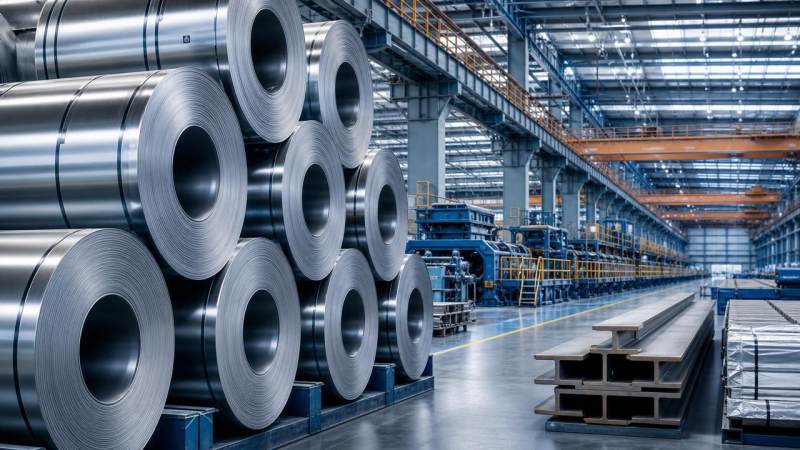
Not all steel demand follows the same technical path.
Some projects need strict dimensional consistency, while others need coating performance, mechanical strength, or fast repeat shipments.
That is why steel coil manufacturers should be judged by use case, not only by quoted tonnage price.
For export supply, reliable documentation also matters.
Mill test certificates, heat numbers, packing methods, and standard references influence customs clearance and downstream acceptance.
Trusted steel coil manufacturers usually show strength in both production and process control.
Construction and structural supply scenarios require consistency over single-batch savings
In construction-related scenarios, material stability often matters more than the lowest first quote.
Projects may run for months, and replacement sourcing can create specification gaps.
Trusted steel coil manufacturers maintain repeatable chemistry, thickness tolerance, and dependable delivery windows.
That helps avoid fabrication issues, welding inconsistency, and on-site schedule disruption.
A strong structural steel exporter often supports wider project needs beyond coils.
For example, some buyers combine coils with profiles for integrated sourcing efficiency.
A suitable option can include H Shape Beam for steel structure, bridging, shipbuilding, and automobile chassis applications.
Available grades may include Q235, Q345B, SS400, S275JR, S355JR, A572, and A992.
With flange thickness from 8-64mm and lengths from 1m-12m, it supports simple construction and cost-saving structural design.
Manufacturing and fabrication scenarios depend on processing performance
Fabrication lines need more than basic steel availability.
They need coils that slit cleanly, form predictably, and maintain stable surface condition.
In these scenarios, trusted steel coil manufacturers provide tight control over flatness, edge condition, and tensile properties.
That reduces scrap, machine stoppage, and variation in finished parts.
When evaluating steel coil manufacturers for stamping or cold forming, check whether they understand downstream conversion requirements.
A supplier serving mechanical manufacture usually responds faster on custom dimensions and repeat orders.
The best partners discuss application details before confirming grade and tolerances.
Export and multi-region supply scenarios test real reliability
Export performance separates experienced steel coil manufacturers from occasional traders.
A trusted exporter understands ASTM, EN, JIS, and GB references and can match documentation to destination expectations.
This matters in North America, Europe, the Middle East, and Southeast Asia.
Each market may expect different test data, marking rules, or packing details.
Reliable steel coil manufacturers also manage production planning with realistic lead times.
Stable capacity is essential when projects need phased shipments or regular replenishment.
Hongteng Fengda supports this model through structural steel manufacturing, export coordination, and strict quality control.
That combination helps reduce sourcing risk and supports efficient project completion.
What trusted steel coil manufacturers usually show in different scenarios
How demand differences affect supplier selection
Different use cases change what should be checked first.
- For heavy structural use, prioritize grade compliance, thickness tolerance, and shipment continuity.
- For downstream processing, prioritize flatness, coil weight range, and slitting consistency.
- For multi-country projects, prioritize standards matching, export packing, and document accuracy.
- For cost-sensitive supply, compare total landed value, not only ex-works price.
This approach makes steel coil manufacturers easier to compare on real performance.
It also prevents low-price offers from hiding technical or logistical weaknesses.
Practical checks that improve scenario fit
- Ask for standards history, not only current claims.
- Review recent export destinations and shipment frequency.
- Confirm production range for thickness, width, coating, and grade.
- Check whether test reports match actual order specifications.
- Evaluate response quality on technical questions.
- Request packaging details for sea freight and inland handling.
- Verify whether mixed sourcing is possible for profiles and structural components.
Suppliers with broad structural capabilities often add value when projects need more than coils alone.
That can improve planning, reduce vendor complexity, and simplify quality coordination.
Common mistakes when assessing steel coil manufacturers
One common mistake is treating all steel coil manufacturers as interchangeable.
In reality, capability differs in standards coverage, finishing control, and export execution.
Another mistake is comparing only base price.
Lower quotes may lead to higher losses through rework, delays, or rejected shipments.
Some evaluations also ignore communication discipline.
Trusted steel coil manufacturers usually answer clearly on grade substitution, tolerance range, and lead-time limits.
Finally, buyers sometimes overlook supply integration potential.
A partner offering profiles, beams, and custom structural parts may create better long-term project efficiency.
The next step toward a reliable steel sourcing decision
The best way to compare steel coil manufacturers is to match supplier evidence with actual application needs.
Look at standards compliance, production stability, export experience, and responsiveness together.
For projects involving structural steel, custom profiles, or mixed-product supply, broader manufacturing support can create measurable value.
Hongteng Fengda provides reliable steel products, customized solutions, and stable export support for global industrial and construction requirements.
A focused technical review, sample confirmation, and documentation check can quickly reveal whether a supplier deserves long-term trust.
Please give us a message


Please enter what you want to find