The stainless steel coil price is under close watch this year as global demand, raw material costs, energy pressure, and supply chain shifts continue to influence market movement.
For business evaluators, understanding these pricing drivers is essential for controlling procurement risk, budgeting accurately, and comparing sourcing options.
This article explains what is driving stainless steel coil price this year, where the biggest uncertainties remain, and how industrial buyers can evaluate supply decisions more effectively.
Why Is Stainless Steel Coil Price Still So Sensitive This Year?
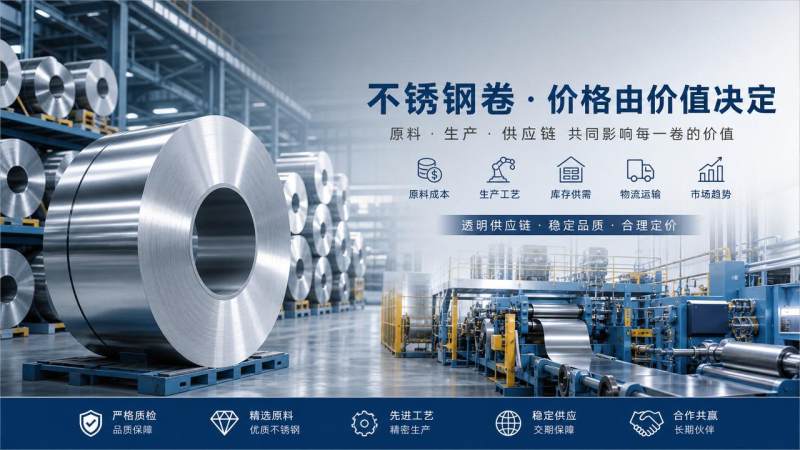
The short answer is that stainless steel coil pricing is being pulled by several forces at the same time, rather than by one single market event.
For commercial evaluators, the most important point is not whether prices move up or down in one week, but what is driving structural cost change.
Stainless steel coil sits at the intersection of metals pricing, industrial demand, energy cost, freight volatility, and regional trade policy.
That means even when end-user demand appears stable, the stainless steel coil price can still change because upstream and cross-border variables remain unstable.
This year, buyers are mainly watching nickel, chromium, and iron input costs, along with mill production strategy, energy pricing, and shipment reliability.
In many markets, the pricing environment is not purely demand-led. It is also shaped by margin protection decisions from mills and distributors.
As a result, purchasers should avoid relying on historical averages alone. Current pricing needs to be judged against fresh cost signals and lead-time conditions.
Raw Material Costs Remain the Most Direct Price Driver
The biggest factor behind stainless steel coil price movement is still raw material cost, especially nickel for austenitic grades such as 304 and 316.
When nickel prices rise sharply, stainless producers usually face immediate pressure, and that pressure is often passed through to downstream coil quotations.
Chromium and molybdenum also matter, particularly for specific grades that require better corrosion resistance, heat performance, or more demanding industrial use.
Even when nickel becomes less volatile, alloy surcharges can still shift because mills recalculate based on changing input formulas and inventory positions.
For evaluators, this means any quotation should be reviewed not only by total price, but also by base price and alloy-related adjustment logic.
It is also useful to ask whether the supplier is pricing from current raw material replacement cost or from lower-cost older inventory.
That distinction can explain why two offers for similar coil specifications may differ more than expected, even during the same purchase period.
Energy and Production Costs Are Putting Upward Pressure on Mills
Steel production is energy intensive, and stainless manufacturing is especially exposed to electricity, natural gas, and processing cost changes.
In regions where power prices remain elevated, mills may increase quotations to protect margins, especially when demand is not strong enough to absorb inefficiency.
Environmental compliance costs also matter. Producers operating under stricter emissions rules may face higher production expenses than low-regulation competitors.
For global buyers, this creates a regional price spread that is not always explained by material quality alone.
Processing costs such as annealing, pickling, slitting, and finishing can also affect final coil prices, especially for custom thickness or surface requirements.
Business evaluators should therefore separate commodity assumptions from actual manufacturing economics when reviewing supplier pricing.
A low headline offer may look attractive at first, but hidden processing surcharges or unstable energy-linked adjustments can reduce its real value.
Demand Is Uneven Across Industries and Regions
Demand this year is not moving in one direction everywhere. Some sectors are active, while others remain cautious because of slower investment cycles.
Construction, white goods, food processing equipment, transport, and industrial fabrication all influence stainless steel coil purchasing behavior.
In some regions, infrastructure and manufacturing investment support order flow. In others, high financing costs are delaying procurement and restocking.
This uneven demand creates a mixed pricing environment where mills may discount standard products while holding firm on faster-moving grades.
For evaluators, this means market timing should be linked to the exact grade, finish, and order size required, not to broad market headlines alone.
If your company consumes niche specifications or requires tight delivery windows, your pricing reality may differ from general market commentary.
Understanding real downstream demand helps buyers judge whether a quoted price reflects scarcity, caution, or a temporary negotiation position.
Supply Chain Shifts Are Changing the Cost of Sourcing
Another reason the stainless steel coil price remains difficult to predict is that supply chains are still adjusting after several years of disruption.
Freight rates may have eased from peak levels, but shipping reliability, port handling, route selection, and customs timing still affect landed cost.
Buyers sourcing internationally must also consider container availability, inland transport, insurance, and local warehousing constraints.
Even when the mill price is competitive, total procurement cost can rise if logistics become slower or more fragmented.
This is particularly important for project-based purchasing, where delayed delivery can create costs far beyond the coil price itself.
For many industrial buyers, reliable lead time is now a financial factor, not just an operational preference.
That same principle applies across steel procurement categories. Many buyers comparing stainless inputs also review structural and carbon steel options.
For example, products such as A36 Carbon Steel Round Bar are often evaluated for strength, specification compliance, and stable availability in broader sourcing plans.
In that segment, buyers typically value multiple size options, common lengths from 2m to 12m, diameter ranges from 5mm to 2500mm, and standards such as ASTM, EN, JIS, and GB.
That comparison mindset is useful here as well, because procurement quality depends on complete landed-value analysis rather than quoted price alone.
Trade Policy and Regional Competition Can Quickly Change Offers
Import duties, anti-dumping measures, local content preferences, and certification requirements all influence the stainless steel coil price in many markets.
A supplier with a low ex-works quotation may become less competitive after tariffs, customs costs, or local compliance expenses are included.
At the same time, changes in regional oversupply can temporarily push exporters to offer more aggressive prices to protect utilization rates.
This creates opportunities for buyers, but also risks if those offers come with long lead times, inconsistent documentation, or changing payment terms.
Business evaluators should pay close attention to origin, applicable duties, quality certificates, and whether the offer aligns with destination market rules.
Price advantage is meaningful only when the material can clear import procedures smoothly and perform to specification in actual use.
In global sourcing, a compliant offer with predictable execution often creates more value than a cheaper quote with unresolved trade exposure.
How Should Business Evaluators Judge Whether a Price Is Reasonable?
When reviewing stainless steel coil quotations, evaluators should build a framework that goes beyond spot market comparison.
First, confirm the exact grade, thickness, width, finish, quantity, and tolerance. Small specification changes can materially affect the stainless steel coil price.
Second, separate base material cost from alloy surcharge, processing charge, packaging, freight, and destination-related expenses.
Third, compare lead time and supply consistency. A slightly higher price may be justified if it lowers project delay risk or reduces safety stock needs.
Fourth, assess supplier credibility through quality records, export experience, certification alignment, and responsiveness during technical clarification.
Fifth, review payment terms and currency exposure. A lower nominal quote can become less favorable once financing and exchange risk are considered.
Finally, check whether the supplier can support repeat orders. One-time pricing is less valuable if future supply becomes unstable.
This disciplined approach helps evaluators move from price checking to commercial decision-making, which is the real goal of sourcing assessment.
What Price Risks Should Buyers Watch in the Coming Months?
Looking ahead, buyers should monitor several risk areas that could influence stainless steel coil price movement over the near and medium term.
The first is raw material volatility, especially if nickel experiences renewed speculative movement or supply-side disruption.
The second is energy cost fluctuation, which can quickly affect mill operating economics and downstream quotations.
The third is any sudden shift in industrial demand, particularly from manufacturing, infrastructure, and export-oriented fabrication sectors.
The fourth is geopolitical or trade-related disruption that affects shipping lanes, import policy, or cross-border payment security.
The fifth is inventory behavior. If service centers and end users begin aggressive restocking, prices may move faster than underlying consumption suggests.
On the other hand, weak confidence and delayed purchasing can also pressure mills into short-term concessions, especially for standard specifications.
For this reason, timing strategy should be based on procurement urgency, inventory tolerance, and supplier reliability rather than on market guessing alone.
What Should Buyers Do If They Need Better Cost Control?
For companies under budget pressure, the best response is not always to wait for lower prices.
Instead, buyers should improve quote comparability, define acceptable grade alternatives where technically possible, and negotiate based on delivery structure.
Splitting orders, locking part of volume, or using scheduled release arrangements can reduce exposure when market direction is unclear.
It may also help to qualify more than one supply region, provided quality standards and documentation remain consistent.
Close communication between procurement, engineering, finance, and project teams is especially important when stainless inputs affect delivery-critical operations.
Evaluators should also distinguish between strategic purchases and transactional buys. Not every order needs the same sourcing logic.
Where broader steel procurement is involved, reviewing adjacent materials such as A36 Carbon Steel Round Bar and structural products can also support cost benchmarking across categories.
The strongest sourcing outcomes usually come from balanced decisions that protect quality, timing, and total cost at the same time.
Conclusion: What Is Really Driving Stainless Steel Coil Price This Year?
The stainless steel coil price this year is being driven by a combination of alloy costs, energy pressure, uneven demand, supply chain adjustment, and trade conditions.
For business evaluators, the key takeaway is that price movement cannot be judged accurately through market headlines or single-factor assumptions.
The most useful evaluation method is to connect supplier quotes with raw material logic, production cost, logistics exposure, compliance requirements, and delivery reliability.
That approach helps buyers reduce procurement risk, build more accurate budgets, and choose sourcing partners based on full commercial value.
In a market that remains fluid, better decisions come from structured comparison, not from chasing the lowest short-term offer.
Please give us a message


Please enter what you want to find