For procurement planning, the galvanized steel sheet price per ton directly affects project budgets, cash flow, and contract timing.
Price movement is rarely caused by one factor alone. It usually reflects changes in zinc, hot rolled coil, coating weight, order size, logistics, and market sentiment.
A clear pricing framework helps reduce sourcing risks. It also supports better negotiation, specification control, and supplier comparison across different global steel markets.
Understanding the galvanized steel sheet price per ton
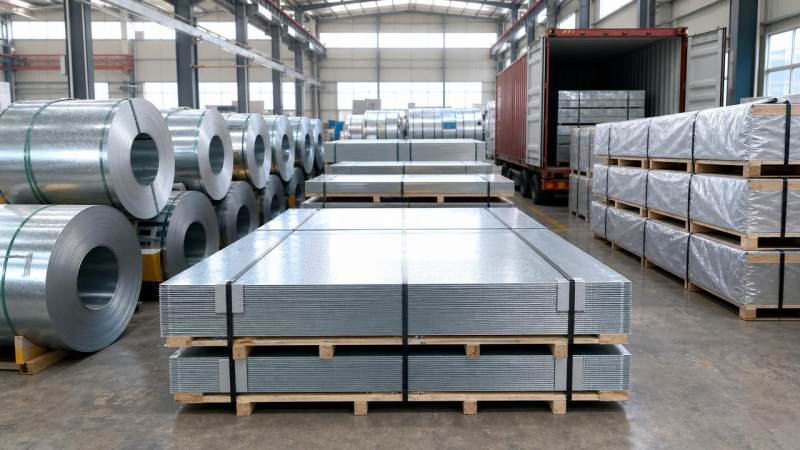
The galvanized steel sheet price per ton is the delivered or ex-works cost of zinc-coated steel sheet measured by metric ton.
This value includes more than raw steel. It often reflects coating process cost, thickness tolerance, width, surface treatment, packaging, and destination requirements.
In commercial practice, quoted prices may be based on base steel plus zinc cost, then adjusted by fabrication, testing, freight, and payment terms.
Because specifications vary widely, comparing the galvanized steel sheet price per ton without checking full technical details can be misleading.
What usually appears in a quotation
- Base material grade and standard
- Thickness, width, and coil or sheet format
- Zinc coating weight such as Z80, Z120, or Z275
- Surface finish, passivation, oiling, or anti-fingerprint treatment
- Tolerance level, packaging method, and delivery term
Core factors that change pricing
The most important driver behind the galvanized steel sheet price per ton is the cost of substrate steel.
When hot rolled coil or cold rolled coil prices rise, galvanized sheet quotations usually increase shortly after. Mills pass upstream costs into finished products.
Zinc is the second major variable. Since galvanizing depends on zinc coating, fluctuations in zinc markets can quickly change export offers.
Heavier coating means better corrosion resistance, but it also means more zinc consumption. That raises the galvanized steel sheet price per ton in a direct way.
Energy cost also matters. Galvanizing lines consume electricity and fuel, and these costs become more visible during periods of tight utility supply.
Environmental regulation can increase operating expense too. Emission controls, wastewater treatment, and compliance upgrades often affect mill pricing.
Specification-related pricing variables
- Thicker material usually costs more per ton when processing tolerance is stricter
- Ultra-thin gauges may carry higher conversion premiums
- Special widths or nonstandard lengths can increase scrap and setup cost
- Higher coating classes increase zinc usage and production time
- Extra testing or certification raises final transaction value
Market signals that influence the galvanized steel sheet price per ton
Global supply and demand conditions strongly influence pricing trends. Construction activity, appliance output, automotive demand, and infrastructure spending all matter.
When demand improves faster than mill capacity, the galvanized steel sheet price per ton often rises due to tighter lead times.
Trade policy can also shift prices quickly. Anti-dumping duties, import quotas, and country-of-origin restrictions can reshape regional supply balance.
Ocean freight is another key factor for export business. Even if mill prices stay flat, delivered cost may increase because of vessel shortages or route disruptions.
Currency exchange rates should not be ignored. A weaker exporting currency may improve quote competitiveness, while a stronger one can raise overseas prices.
Business value of understanding price structure
Knowing what changes the galvanized steel sheet price per ton helps build better sourcing strategies instead of reacting only to short-term quotes.
It supports cleaner cost breakdowns during supplier evaluation. This makes it easier to identify whether a price difference comes from coating, raw material, logistics, or service level.
It also improves substitution planning across steel categories. In some structural or fabrication projects, related carbon steel products may offer scheduling flexibility.
For example, Q235 Carbon Steel Round Bar is widely used in decoration, construction, water supplying, railings, balconies, fences, and furniture fabrication.
Available in grades such as Q235, S235JR, S355JR, ASTM A53, A106, and ST37, it offers excellent strength and wear resistance for many industrial applications.
With diameter ranges from 5mm to 2500mm and common lengths including 2m, 5m, 6m, and 12m, specification flexibility supports varied project needs.
Surface options include passivation, oiling, lacquer sealing, phosphating, untreated, galvanized, PVC, and black or color painting, depending on transport and end use.
Certified to standards such as ASTM, DIN, JIS, GB, AISI, and EN, this type of carbon steel product can complement broader steel procurement plans.
Typical pricing scenarios by application and order pattern
Different use cases lead to different price sensitivities. The galvanized steel sheet price per ton is not equally driven in every project.
Large-volume orders may secure better unit pricing, but only when shipment planning, packaging, and payment terms are aligned with production schedules.
Small orders may face higher conversion costs. Mills and traders often add premiums for low quantities or special specification combinations.
Practical methods to manage cost and sourcing risk
A disciplined buying process can reduce exposure to sudden changes in the galvanized steel sheet price per ton.
- Define exact grade, thickness, width, and coating before requesting quotes.
- Ask suppliers to separate base steel, zinc, processing, and freight costs.
- Compare offers on the same Incoterms and payment conditions.
- Track zinc and coil market trends weekly, not only at purchase time.
- Use phased purchasing when markets are highly volatile.
- Confirm tolerance, inspection, and packaging requirements in writing.
It is also useful to review supplier production capacity, export experience, and compliance with ASTM, EN, JIS, or GB standards.
Reliable mills and exporters help reduce hidden costs linked to claims, delays, rework, or inconsistent coating quality.
Stable partners are especially important when lead times are tight or when projects require repeat shipments over several months.
Next-step approach for better purchasing decisions
The galvanized steel sheet price per ton should be evaluated as a full cost structure, not just a headline number.
A strong decision process combines market monitoring, precise specification control, supplier qualification, and freight visibility.
When these elements are reviewed together, pricing becomes easier to explain, compare, and optimize across international sourcing options.
For better results, prepare a clear inquiry sheet, track zinc and coil movements, and request quotations with transparent technical and commercial breakdowns.
This approach improves budget accuracy, lowers sourcing risk, and creates more stable outcomes in galvanized steel procurement.
Please give us a message


Please enter what you want to find