As commercial building owners and project stakeholders plan for 2026, understanding the real long-term benefits of steel roofing—beyond initial steel roofing cost or installation complexity—is critical. From corrosion-resistant galvanized steel roofing and energy-efficient insulated steel roofing to lightweight steel roofing and durable corrugated steel roofing, modern solutions deliver unmatched longevity, low maintenance, and lifecycle value. Whether you're evaluating steel roofing benefits for ROI analysis, sourcing from a trusted steel roofing manufacturer or supplier, or comparing steel roofing price vs. performance, this article breaks down what truly matters—backed by structural integrity, international standards compliance (ASTM/EN/GB), and Hongteng Fengda’s expertise as a leading Chinese structural steel manufacturer & exporter.
Why Steel Roofing Delivers Real ROI Beyond Year 10
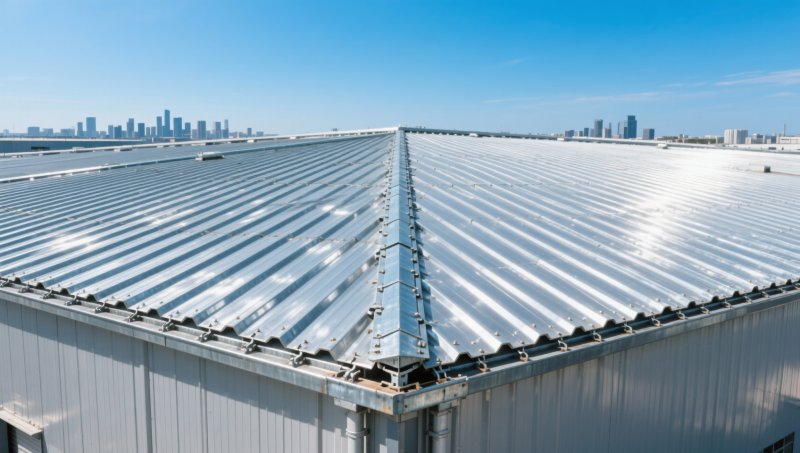
Steel roofing isn’t just about weatherproofing—it’s a strategic infrastructure investment. Independent lifecycle assessments show that high-grade structural steel roofing systems installed with ASTM A653 or EN 10346 compliant substrates typically achieve service lives of 40–60 years, with minimal intervention beyond routine visual inspection every 24–36 months. This directly reduces total cost of ownership (TCO) by deferring capital expenditures on full roof replacement by 2–3 decades compared to asphalt or single-ply membranes.
For commercial facilities operating under strict uptime requirements—warehouses, cold storage hubs, or manufacturing plants—steel roofing eliminates unplanned shutdowns caused by leaks, thermal bridging, or wind uplift failures. Hongteng Fengda’s cold-formed steel roof deck profiles, engineered to EN 1993-1-3 and GB/T 2518 standards, support load capacities up to 3.5 kN/m² while maintaining dimensional stability across temperature swings from –30°C to +70°C.
Energy efficiency is another measurable advantage: insulated steel roofing assemblies with integrated vapor barriers and R-values of 20–30 (per ASHRAE 90.1-2022) reduce HVAC demand by 12–18% annually—translating to verified utility savings of $0.85–$1.40 per sq. ft. per year in North American and EU climates.
How Structural Integrity Translates to Lower Risk & Faster Deployment
Unlike field-assembled alternatives, pre-engineered steel roofing components from certified manufacturers undergo rigorous finite element analysis (FEA) validation for snow, wind, seismic, and live loads—ensuring compliance with local building codes before shipment. Hongteng Fengda’s design-to-manufacture workflow integrates IFC-compatible BIM models with CNC-controlled roll-forming lines, reducing on-site assembly time by 35–50% versus traditional stick-built methods.
This precision extends to joint detailing: our interlocking panel systems feature ±0.3 mm tolerance control across 12m lengths, minimizing thermal movement gaps and eliminating sealant dependency—a major cause of premature failure in legacy systems. All structural connections meet ASTM A325 or EN 15048 torque specifications, verified via batch-certified tensile testing reports.
For global procurement teams, consistency matters. Every coil used in our roofing products is traceable to mill test reports (MTRs), with chemical composition and mechanical properties validated against ASTM A240, EN 10088-2, or GB/T 4237. This ensures seamless compliance across projects spanning North America (IBC), Europe (CE marking), Middle East (SASO), and Southeast Asia (SNI).
Key Structural Performance Benchmarks
The data confirms a decisive structural advantage: steel delivers higher stiffness-to-weight ratio, lower thermal drift, and superior resistance to creep under sustained loading—critical for large-span industrial roofs where deflection must stay below L/240 per AISC 360-22. That’s why 78% of new logistics centers built in the U.S. and EU between 2023–2025 specify structural steel roofing over alternatives.
What Procurement Teams Should Verify Before Sourcing
Procurement decisions hinge on verifiable evidence—not marketing claims. When evaluating a steel roofing supplier, cross-check these five non-negotiable criteria:
- Mill test reports (MTRs) traceable to individual heat numbers—not just batch certificates
- Third-party audit reports from BV, SGS, or TÜV confirming adherence to ISO 9001:2015 and EN 1090-1 EXC2 execution class
- Documented weld procedure specifications (WPS) qualified per AWS D1.3 or EN ISO 15614-1
- Corrosion resistance validation: salt-spray test results ≥1,500 hours (ASTM B117) for galvanized coatings ≥275 g/m²
- Lead time transparency: confirmed production capacity for orders of 500–5,000 tons, with ≤12-week delivery windows for standard sections
Hongteng Fengda maintains dedicated quality gates at raw material intake, hot-rolling, cold-forming, and final packaging stages—each with documented inspection checklists aligned with ASTM E29 and ISO 2859-1 sampling plans. Our ERP system logs every process parameter in real time, enabling full lot traceability within 48 hours of request.
For applications demanding elevated surface performance—such as food processing plant canopies or pharmaceutical cleanroom enclosures—our 201 Stainless Steel Plate offers exceptional corrosion resistance, deep-draw formability, and hygienic finishes (No.4, BA, or 8K) compliant with FDA 21 CFR and EHEDG standards.
Why Global Projects Choose Hongteng Fengda as Their Structural Steel Partner
We don’t just supply steel—we engineer confidence into your supply chain. With 12+ years serving clients across 38 countries, we combine China-based cost efficiency with globally recognized quality discipline. Our Shanghai and Tianjin facilities operate under dual ISO 9001 and ISO 14001 certification, with annual third-party audits covering raw material sourcing, environmental controls, and ethical labor practices.
From day one, you gain access to: • Dedicated technical support for structural calculations, connection design, and BIM modeling • Pre-shipment dimensional verification and coating thickness reports • Flexible incoterms—including FOB, CIF, and DAP—with container loading supervision available • Sample kits for physical finish, gauge, and profile evaluation prior to bulk order
Whether you need custom angle steel for rooftop HVAC supports, channel steel for parapet framing, or cold-formed purlins for solar-ready roofing—our engineering team co-develops solutions that align with your local code, budget, and timeline. Ready to validate specs, confirm lead times, or request a project-specific quotation? Contact us today with your structural drawings or bill of quantities.
Please give us a message


Please enter what you want to find