For global buyers, stainless steel pipe exporter lead times are shaped by more than factory schedules alone. From raw material availability and order customization to quality standards, logistics, and supplier coordination, every step matters. Whether you source from a stainless steel pipe manufacturer, compare a stainless steel pipe supplier, or need stainless steel pipe wholesale for projects, understanding these factors helps reduce delays, control costs, and improve purchasing decisions.
Which factors have the biggest impact on stainless steel pipe exporter lead times?
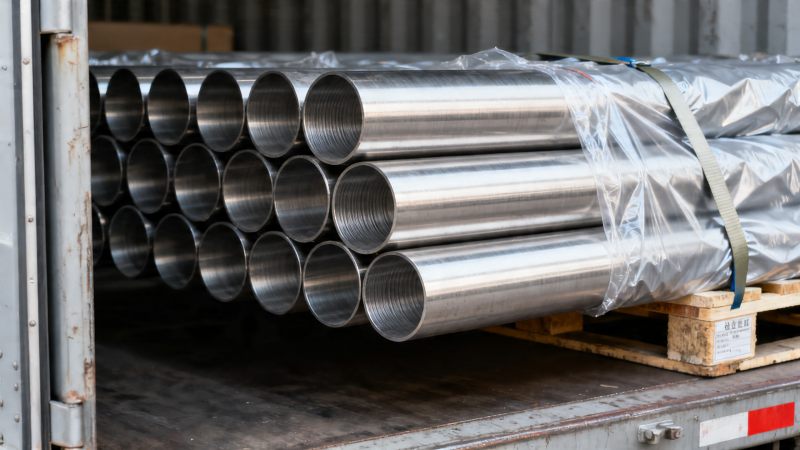
In steel export projects, lead time is rarely decided by one issue alone. For a stainless steel pipe exporter, the most visible timeline may be quoted as 2–6 weeks for standard orders, but the actual delivery window depends on linked stages such as raw material booking, rolling or forming schedules, welding or finishing, inspection, packing, and vessel space. If one stage slips by 3–5 days, the final shipment can miss the planned departure.
Buyers often focus on the production date, while experienced procurement teams also check mill availability, specification complexity, and destination shipping routes. In practice, a standard stainless steel pipe order with common grades and dimensions can move faster than a customized order requiring non-standard wall thickness, cut-to-length service, or extra testing. This matters to project managers, technical reviewers, and finance approvers because delays influence installation sequence, labor planning, and cash flow timing.
For global sourcing, supplier coordination is another hidden driver. If the exporter relies on multiple upstream processors, packaging vendors, and external testing bodies, the lead time becomes more variable. By contrast, manufacturers with more integrated production and stable process control can reduce handoff risk. This is one reason many international buyers work with established Chinese steel exporters that combine manufacturing discipline, export experience, and documentation support.
Hongteng Fengda serves buyers in construction, industrial, and manufacturing sectors with a practical understanding of schedule risk. Although the company is known for structural steel products rather than only stainless steel pipe categories, the same export discipline applies: stable production capacity, control of specification details, compliance with ASTM, EN, JIS, and GB-related requirements, and closer coordination between manufacturing, quality checks, and shipment planning.
The 5 lead-time drivers buyers should review first
- Raw material availability: common sizes are usually faster, while special grades or thickness ranges may need additional mill booking time of 7–15 days.
- Order complexity: plain lengths move faster than orders including beveling, polishing, threading, punching, or mixed bundle packaging.
- Inspection scope: basic dimensional inspection is quicker than third-party testing, PMI, hydro test, or extra document review.
- Export packaging and loading: seaworthy packing, fumigation-related needs, and container loading plans can add 2–5 days.
- Shipping conditions: vessel schedules, port congestion, customs timing, and destination transit windows may extend total delivery beyond factory completion.
When buyers compare a stainless steel pipe supplier, they should separate production lead time from total delivered lead time. A supplier may promise fast manufacturing but still face unstable export booking or incomplete documentation. In B2B steel sourcing, the more accurate question is not “How fast can you produce?” but “How fast can you produce, inspect, pack, book, and deliver without changing the specification or shipment plan?”
How do material, customization, and quality requirements change delivery schedules?
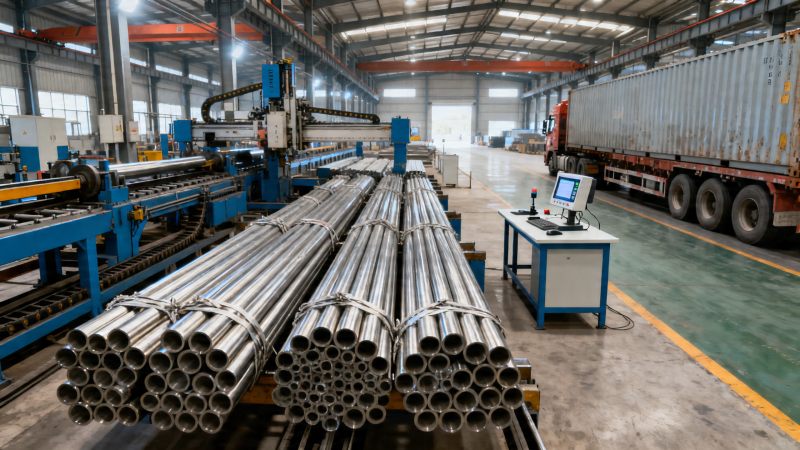
The first major variable is the material itself. Stainless steel pipe exporter lead times can change significantly depending on whether the buyer needs standard commodity grades or less common requirements. Even if the market demand is strong, mills do not always keep every size and grade combination in ready stock. Orders involving uncommon outer diameters, heavier wall thickness, or strict tolerance control often move into a planned production queue rather than immediate processing.
Customization adds another layer. In project supply, buyers may require exact cut lengths, end treatment, surface finish, marking rules, heat number traceability, or mixed-size containers. Each extra requirement may seem minor, but together they can add 1–2 weeks. For example, combining custom packing marks, third-party inspection, and multiple destination labels often creates more delay than the forming process itself. This is why detailed pre-confirmation is essential before the purchase order is released.
Quality standards also affect timeline control. If the order follows ASTM, EN, JIS, or GB requirements, the exporter must align production, testing, and documents accordingly. Some buyers need mill test certificates only, while others request additional visual inspection records, dimensional reports, or witness inspection. The broader the quality package, the more time must be reserved before shipment. Quality control is not a problem to avoid; it is a timeline factor to plan correctly from day one.
The same planning logic applies across the steel sector. In industrial structure supply, for example, buyers sourcing I Shaped Beams also face lead-time shifts based on thickness, flange size, length, punching, cutting, or welding needs. Standard hot rolled sections in carbon steel can move faster than customized structural components. Typical size ranges such as thickness 4.5mm–15.8mm, length 6–12m/pc, flange width 100mm–400mm, and web width 100mm–900mm show why production scheduling must match exact technical requirements rather than only product names.
Typical schedule impact by order condition
The table below helps procurement teams estimate where stainless steel pipe exporter lead times usually expand. These are common B2B planning ranges used for evaluation, not fixed promises for every order.
For technical evaluators and buyers, the key lesson is simple: lead time follows specification clarity. When requirements are fragmented across emails and not locked before production, schedule slippage becomes more likely. A well-prepared RFQ often saves more time than an aggressive delivery target.
Why specification accuracy matters more than speed promises
In steel procurement, speed without confirmation usually creates rework. If wall thickness tolerance, surface condition, destination packing, or required certificates are revised after production starts, the exporter may need to re-sort or reprocess the order. That can turn a 20-day plan into 30 days or more. For project owners, such delay is more expensive than spending an extra 48 hours on technical alignment before order release.
This is where a manufacturer-exporter with broad steel experience adds value. Hongteng Fengda supports customers through specification review, production feasibility discussion, and standard alignment before final confirmation. That approach reduces risk for procurement teams, quality managers, and distributors that must coordinate both local customer needs and overseas factory execution.
What should buyers compare when selecting a stainless steel pipe supplier for stable lead times?
Many buyers compare price first, but stable delivery depends on a wider evaluation model. For stainless steel pipe wholesale and project purchasing, the right supplier is not only the one with a competitive quote. It is the one that can match production capability, inspection control, export documentation, and communication speed. In practical terms, procurement teams should review at least 6 checkpoints before approval: material source, production route, customization capacity, testing method, packing standard, and shipping coordination.
This is especially important for enterprise decision makers and finance approvers. A supplier that appears cheaper may create hidden cost through late shipment, split delivery, port storage, or site downtime. In steel supply chains, one delayed container can affect installation crews, crane reservations, and customer commitments downstream. That is why experienced project buyers evaluate total schedule reliability, not only unit price per ton.
Hongteng Fengda’s advantage in export-oriented steel supply is built around consistency. The company manufactures and exports structural steel with modern facilities, controlled processing, and compliance with major international standards. For buyers, that means a more disciplined supply model: clearer specifications, predictable lead-time communication, and stronger support for global construction and industrial projects. These practices are directly relevant when assessing any stainless steel pipe exporter or broader steel sourcing partner.
The following comparison table is useful for sourcing teams that need to separate low-visibility suppliers from reliable export partners. It can also help distributors and agents build a more objective supplier shortlist in 2–3 review rounds.
A useful rule for buyers is to ask for milestone visibility. If the supplier can explain the 4 key stages—material preparation, production, inspection, and shipment booking—you will have a more realistic view of schedule risk. If the supplier only repeats “fast delivery,” you still do not know where delays are likely to happen.
A practical supplier screening checklist
- Ask whether the quoted lead time is for standard stock, fresh production, or mixed sourcing.
- Confirm whether ASTM, EN, JIS, or GB-related requirements affect testing or documentation time.
- Check if custom packing, private labels, or distributor marks add processing days.
- Verify the packing method for container or break bulk shipment, especially for long steel products.
- Request an update rhythm, such as confirmation at order release, mid-production, and pre-shipment stage.
This checklist is also useful when evaluating industrial steel items beyond pipe. If your project portfolio includes I Shaped Beams, angle steel, channel steel, or cold formed profiles, the same review logic helps align schedule expectations with production reality.
How can procurement teams reduce delays before placing the order?
The best way to shorten stainless steel pipe exporter lead times is to prevent uncertainty before manufacturing starts. Many delays begin with incomplete RFQs, unclear drawing versions, or late document requests. A disciplined buyer can often cut 5–10 days of avoidable delay simply by locking the commercial and technical scope earlier. This is valuable for project managers facing fixed site milestones and for distributors trying to maintain inventory turnover.
A strong purchasing package should include grade, standard, dimensions, tolerance expectations, end finish, test requirements, destination, packaging method, labeling instructions, and target shipment window. If any of these are left open, the supplier may quote a nominal lead time that changes after review. The more complete the order input, the less back-and-forth is needed during production planning.
Buyers should also match order size to manufacturing logic. Small trial orders, mid-volume project lots, and large repeat contracts do not move through the same planning path. For example, a small urgent order may depend on stock or shared production capacity, while a larger batch may need dedicated mill time but achieve better schedule visibility. Understanding this difference helps business evaluators and finance teams weigh freight, storage, and order-splitting decisions more accurately.
When the supplier has experience serving North America, Europe, the Middle East, and Southeast Asia, destination-specific issues are easier to manage. Hongteng Fengda supports global buyers with stable production coordination and professional export communication, which is important when different markets ask for different standards, document formats, or packing practices.
4-step approach to protect delivery schedules
- Step 1: Freeze technical details before PO release, including dimensions, tolerance, finish, and test scope.
- Step 2: Confirm milestone dates for production start, inspection completion, packing, and booking.
- Step 3: Prepare documents early, especially if third-party inspection or destination-specific customs files are needed.
- Step 4: Build a buffer of 3–7 days for export handling, especially during peak shipping periods or before holidays.
Common mistakes that extend lead time
One common mistake is approving price first and discussing documents later. Another is mixing urgent and non-urgent items in one shipment without agreeing on split-delivery rules. Some buyers also underestimate the time needed for final packing photos, third-party visits, or certificate review. These issues are not dramatic, but they often delay shipment by several working days and create unnecessary pressure at the end of the process.
A second mistake is choosing a supplier that cannot explain the difference between nominal lead time and confirmed dispatch time. In steel export, these are not the same. Production may finish on schedule, while loading, booking, or customs preparation still cause postponement. That is why buyers should ask for a realistic shipment-ready date, not only a factory completion estimate.
FAQ: what buyers ask most about stainless steel pipe exporter lead times
The questions below reflect common search and procurement concerns from technical teams, project buyers, distributors, and company decision makers. They focus on practical timing, risk control, and purchase planning rather than generic theory.
How long does a normal stainless steel pipe export order usually take?
For standard grades and common sizes, production lead time is often around 2–4 weeks, while total export lead time may become 3–6 weeks once inspection, packing, and vessel booking are included. If the order is highly customized or requires special material sourcing, the schedule can extend by another 1–3 weeks. Buyers should always separate factory production time from shipment-ready time.
What causes the biggest delay after production is finished?
The most common post-production delays are pending inspections, incomplete documents, export packing adjustments, and shipping space changes. In many cases, final coordination adds 3–7 days. This is why quality managers and procurement staff should confirm document scope early, including MTC, packing list details, marks, and any third-party verification requirement.
Is it faster to buy from stock than from a manufacturer?
Not always. Stock can be faster for common specifications, but stock suppliers may not meet exact project standards, packing needs, or traceability requirements. A manufacturer with controlled planning may be better for repeat projects, OEM work, or compliance-sensitive orders. The right choice depends on whether your priority is immediate availability, technical accuracy, or long-term supply consistency.
How can I evaluate whether a quoted lead time is realistic?
Ask the supplier to break the timeline into 4 parts: raw material preparation, production, inspection and documentation, and shipment booking. Then compare this with your technical requirements and destination route. If a supplier cannot explain those stages or ignores custom testing and packing needs, the lead time may be too optimistic for project use.
Why work with Hongteng Fengda for steel sourcing and schedule control?
In global steel purchasing, reliable lead times come from process control, not from simple promises. Hongteng Fengda combines manufacturing capability, export experience, and practical communication for international buyers in construction, industrial, and manufacturing sectors. The company supplies angle steel, channel steel, steel beams, cold formed steel profiles, and customized structural steel components with attention to specification detail and production consistency.
For buyers comparing a stainless steel pipe supplier or broader steel sourcing partner, the value is clear: support for standard and OEM requirements, alignment with ASTM, EN, JIS, and GB-related expectations, and dependable coordination from order review to shipment planning. This reduces sourcing risk for procurement personnel, quality teams, project engineers, distributors, and corporate decision makers who need both technical accuracy and commercial predictability.
If you are planning a new project or reviewing existing suppliers, you can discuss the points that matter most before ordering: parameter confirmation, material and standard matching, product selection, delivery cycle planning, customization options, sample support, packaging method, inspection scope, and quotation structure. Early alignment is often the fastest way to protect your delivery schedule and budget.
Contact Hongteng Fengda to review your steel product requirements, compare feasible lead-time options, and build a sourcing plan that fits your project timeline. Whether you need routine sections, custom structural components, or export-ready support for multi-market orders, a detailed pre-order discussion can help avoid delay, control cost, and improve decision quality.
Please give us a message


Please enter what you want to find