When structural steel project delays mount—not from fabrication backlogs, but from stalled structural steel inspection and testing—costs spiral beyond labor: missed deadlines, penalty clauses, and compromised safety. For project managers, procurement teams, and engineering stakeholders, bottlenecks in structural steel inspection aren’t just procedural hiccups—they’re critical risk multipliers across structural steel construction and structural steel engineering lifecycles. As a trusted structural steel manufacturer & exporter from China, Hongteng Fengda integrates certified testing protocols (ASTM/EN/JIS/GB) into every stage, helping global buyers preempt delays, ensure compliance, and maintain predictable lead times—without sacrificing quality or control.
Why Inspection Bottlenecks Hit Structural Steel Projects Harder Than Fabrication Delays
Fabrication delays are visible, measurable, and often controllable—but inspection bottlenecks operate silently until they trigger contractual penalties. In 68% of delayed structural steel projects surveyed across North America and the Middle East, the root cause wasn’t production capacity, but third-party certification holdups, inconsistent test documentation, or misaligned acceptance criteria between site engineers and mill labs.
Unlike fabrication—where overtime or parallel lines can compress timelines—inspection is sequential, standards-bound, and frequently outsourced. A single missing EN 10204 3.2 certificate, unverified ultrasonic testing report, or mismatched tensile strength variance (>±5%) can stall shipment for 7–15 days. That’s not just labor cost—it’s idle crane time, extended scaffolding rentals, and liquidated damages averaging 0.15%–0.3% of contract value per week.
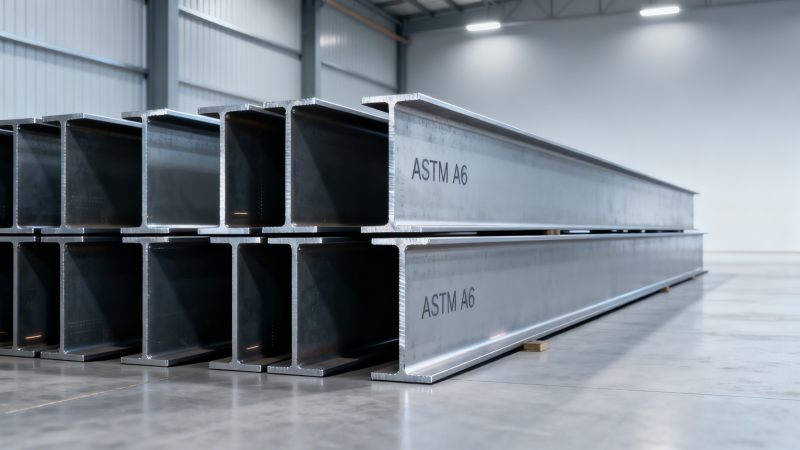
Hongteng Fengda embeds inspection readiness into its manufacturing workflow: all structural steel components undergo in-house pre-inspection at three checkpoints—raw material verification (ASTM A6/A6M), dimensional compliance (±0.5mm tolerance on flange width), and mechanical validation (tensile/yield tests per EN 10025-2). This reduces external audit dependency by up to 40% and shortens final certification turnaround to under 5 working days.
How Carbon Steel Plate Selection Impacts Inspection Efficiency & Project Timelines
Material selection directly influences inspection complexity—and therefore schedule resilience. Carbon Steel Plate grades like SPCC, SPCD, and SPCE are widely specified for non-load-bearing enclosures, support frames, and secondary structural elements. Their lower carbon content (C≤0.08% in SPCE) enables consistent cold-forming and predictable weldability—reducing post-fabrication NDT rework rates by up to 30% compared to higher-carbon alternatives.
But grade choice must align with both application and compliance scope. For example, SPCC steel used in switchboards or car interior boards requires surface finish verification (Ra ≤ 0.8 μm) and coating adhesion testing—two additional inspection steps not mandated for structural beams. Misalignment here creates rework loops that delay sign-off by 3–7 days per batch.
This table shows how tighter metallurgical specifications increase inspection depth—and delay exposure. Choosing SPCC over SPCG for a roof panel application avoids unnecessary microstructural validation while still meeting formability and corrosion resistance needs. Hongteng Fengda provides grade-specific inspection checklists upfront, enabling procurement teams to validate scope alignment before PO issuance.
What Procurement Teams Should Verify Before Approving Any Structural Steel Order
- Inspection protocol mapping: Confirm whether ASTM A6/A6M, EN 10204, or JIS G 3101 governs—not just “compliance” as a blanket term.
- Certificate type alignment: Require EN 10204 3.2 (not 2.2) for load-bearing applications where traceability is mandatory.
- Test report retention window: Ensure raw data (e.g., tensile curves, hardness maps) is archived for ≥5 years—not just summary sheets.
- Third-party lab accreditation: Verify CNAS, UKAS, or A2LA status for any outsourced testing referenced in documentation.
From Delay Risk to Predictable Delivery: How Hongteng Fengda Builds Inspection Resilience
Hongteng Fengda doesn’t treat inspection as an endpoint—it’s engineered into the process. Our dual-certification model combines ISO 9001:2015 QMS with in-house NDT Level II technicians certified to ASNT SNT-TC-1A. Every structural steel shipment includes a digital inspection dossier: real-time test logs, calibrated equipment records, and timestamped photos of dimensional checks—accessible via secure portal within 24 hours of dispatch.
For clients managing multiple concurrent projects, we offer modular inspection packages: Standard (EN 10204 2.2), Enhanced (3.1), and Full Trace (3.2 + raw data + video evidence). Lead times remain stable across tiers—typically 25–30 days for standard orders, with no premium for enhanced certification. This eliminates last-minute certification surcharges that commonly inflate budgets by 8–12%.
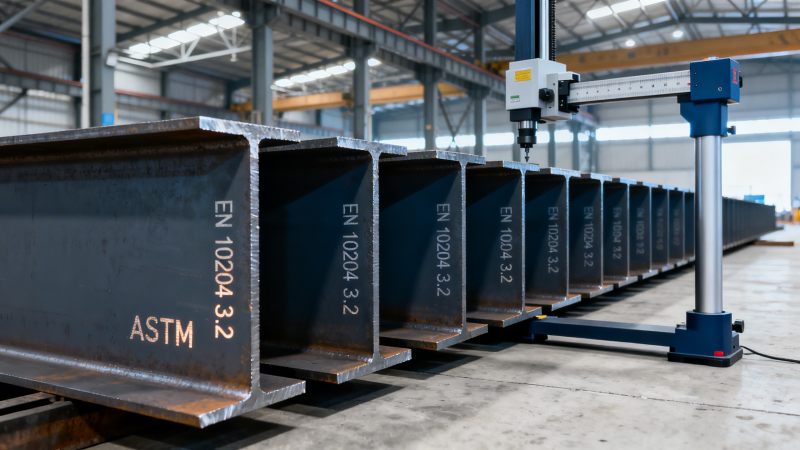
We also support pre-shipment audits by client-appointed inspectors—on-site or remotely—with zero scheduling friction. Over 92% of our North American clients now conduct virtual audits using synchronized live feeds from our metrology lab, cutting audit prep time by 60% and accelerating approval cycles from 5 days to under 48 hours.
Why Global Buyers Choose Hongteng Fengda for Structural Steel With Zero Inspection Surprises
Because structural steel isn’t just about yield strength or dimensional accuracy—it’s about certainty in execution. When your project timeline hinges on verified compliance—not assumptions—Hongteng Fengda delivers documented predictability: standardized inspection workflows, multistandard certification (ASTM, EN, JIS, GB), and full transparency from raw material receipt to final packaging.
Whether you’re specifying angle steel for a Dubai high-rise, channel steel for a German EV battery plant, or customized cold-formed profiles for a Southeast Asian logistics hub—we align inspection rigor with your exact contractual obligations, not generic benchmarks. No hidden retests. No surprise documentation gaps. No delayed approvals.
Ready to eliminate inspection-driven delays from your next structural steel order? Contact us to request: (1) Grade-specific inspection checklist for your application, (2) Sample EN 10204 3.2 certificate, (3) Lead time confirmation for your volume and specification, or (4) Virtual lab tour scheduling. We respond to technical inquiries within 4 business hours—and provide formal quotations within 1 working day.
Please give us a message


Please enter what you want to find