When selecting structural steel grades with identical yield strength but divergent Charpy impact values, low-temperature toughness isn’t just a spec—it’s a project-critical safety and compliance factor. For global buyers sourcing flexible steel wire, lightweight steel tube, high strength steel tubing, or galvanized sheet for roofing, understanding this distinction prevents brittle fracture in cold climates or dynamic loading. As a trusted structural steel manufacturer & exporter from China, Hongteng Fengda ensures ASTM/EN/GB-compliant solutions—from H-beam weight chart guidance to precise steel rod diameter and steel wire gauge control—supporting engineers, procurement teams, and safety managers in making technically sound, risk-averse decisions.
Why Identical Yield Strength Doesn’t Guarantee Equivalent Performance
Yield strength (e.g., 235 MPa, 355 MPa) is often the first parameter engineers and procurement teams compare—but it only reflects resistance to plastic deformation under static load. In real-world applications—especially in sub-zero environments or seismic zones—steel must also resist sudden energy absorption without cracking. That’s where Charpy V-notch impact testing becomes decisive: it measures absorbed energy (in joules) at specific temperatures (e.g., –20°C, –40°C), revealing how ductile or brittle the material behaves under dynamic stress.
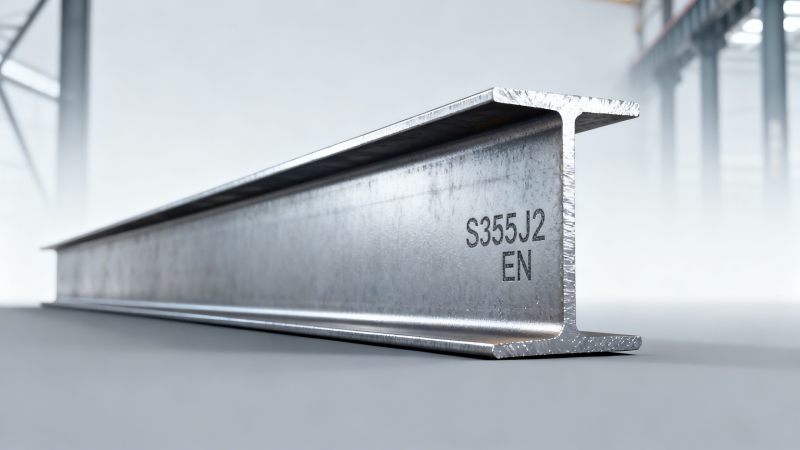
For example, EN S355JR and S355J2 share the same minimum yield strength (≥355 MPa), yet their guaranteed Charpy values differ significantly: JR requires ≥27 J at +20°C, while J2 mandates ≥27 J at –20°C. This 40°C shift isn’t academic—it directly affects structural integrity in winter construction in Scandinavia, oil & gas infrastructure in Siberia, or wind turbine towers operating at altitudes above 2,000 m.
Ignoring this difference can lead to catastrophic brittle fracture—particularly in welded joints, notches, or thick-section members where residual stress concentrates. Over 60% of documented low-temperature failures in structural steel projects trace back to misaligned Charpy specifications—not yield or tensile strength errors.
Where Low-Temperature Toughness Becomes Non-Negotiable
Three application-driven thresholds make Charpy performance mandatory—not optional:
- Cold-climate construction: Projects in regions with design temperatures ≤ –10°C (e.g., Canada, Northern Europe, Kazakhstan) require minimum Charpy values at –20°C or lower—per EN 1993-1-1 Annex C or ASTM A6/A6M Table 2.
- Dynamic or cyclic loading: Bridges, cranes, offshore platforms, and rail infrastructure demand ≥40 J at service temperature—due to fatigue crack propagation risks under repeated stress.
- Thickness-dependent specification: For plates > 40 mm thick, EN 10025-2 mandates upgraded toughness classes (e.g., J2G3, K2G4) even if yield strength remains unchanged—because thicker sections cool slower during rolling, increasing susceptibility to coarse grain embrittlement.
Hongteng Fengda applies thickness- and climate-specific Charpy validation across all structural beams, channel steel, and cold-formed profiles—ensuring every batch meets required impact energy at designated test temperatures, verified via third-party labs accredited to ISO/IEC 17025.
Key Charpy Compliance Thresholds by Region & Application
This table underscores why “identical yield” is insufficient: a grade certified only to +20°C (e.g., S355JR) may legally meet procurement specs—but fail field validation in Norway or Alberta. Hongteng Fengda cross-references regional building codes, project location data, and loading conditions to pre-select appropriate toughness classes—reducing rework risk and certification delays by up to 7–15 days.
How Galvanized Steel Coil Fits Into the Toughness Equation
While galvanized steel coil itself is rarely used as primary load-bearing structural member, its role in roofing, cladding, purlins, and secondary framing makes Charpy compatibility critical—especially when integrated with high-strength structural components. For instance, mismatched toughness between hot-rolled H-beams (S355J2) and supporting galvanized purlins (DX52D+Z) can create localized stress concentrations at connection points during thermal cycling or wind-induced vibration.
Our Galvanized Steel Coil Manufacturers supply DX51D+Z through DX57D+Z and SGCC/SGCD series—each with documented Charpy values at –20°C (≥27 J) upon request. Zinc coating (60–275 g/m² hot-dip, 80–275 g/m² pre-galvanized) enhances corrosion resistance without compromising base steel ductility—provided substrate grades (e.g., S250GD+Z, S350GD+Z) are selected with matching toughness class.
We support full traceability: mill test reports include tensile strength (≥340–510 MPa), elongation (≥18–30%), and optional Charpy verification—ensuring seamless integration with structural frames in multi-material systems.
Procurement Checklist: 5 Critical Actions Before Finalizing Orders
To avoid costly specification gaps, procurement and technical evaluation teams should verify these five items before approving structural steel purchase orders:
- Confirm required Charpy test temperature and minimum absorbed energy—not just yield strength—against local code annexes (e.g., EN 1993-1-10, AISC 360-22 Annex D).
- Validate that mill test reports include actual Charpy results—not just compliance statements—and that testing was performed on final product thickness.
- Require impact testing on transverse specimens for welded structures (per EN 1090-2 EXC3/EXC4) to assess heat-affected zone (HAZ) brittleness.
- For galvanized components, specify substrate grade (e.g., S350GD+Z) and request Charpy data at service temperature—especially if used below –10°C.
- Align delivery timelines with third-party inspection windows: Charpy verification adds 3–5 working days to standard QA/QC cycles.
Hongteng Fengda embeds these checks into our OEM workflow—providing pre-shipment Charpy test reports, dimensional inspection certificates, and EN 10204 3.2 documentation—all within 7–10 business days of order confirmation.
Why Global Buyers Choose Hongteng Fengda for Structurally Sound Steel
We don’t just supply steel—we engineer assurance. As a structural steel manufacturer & exporter from China, we combine ISO 9001-certified production, dual-standard compliance (ASTM + EN + GB), and project-tailored QA protocols to eliminate ambiguity in toughness-critical applications.
Whether you need angle steel for Arctic logistics hubs, cold-formed purlins for Middle East solar farms, or custom H-beams for Southeast Asian high-rises—our team delivers verified Charpy performance, consistent zinc coating mass, and transparent documentation. With stable monthly capacity of 80,000+ tons and lead times as short as 25–35 days for standard orders, we help procurement managers reduce sourcing risk while maintaining full compliance.
Ready to align your next order with precise low-temperature toughness requirements? Contact us for: Charpy specification review, custom-grade quotation, pre-shipment test report samples, or GB/EN/ASTM cross-reference support.
Please give us a message


Please enter what you want to find