Structural steel erection delays often begin long before materials arrive on site, affecting budgets, schedules, and safety. From structural steel components and structural steel connection planning to supplier selection for a steel beam manufacturer or steel tube supplier, early decisions shape project outcomes. Understanding these hidden risks helps project managers, buyers, and engineers improve coordination, control costs, and keep installation on track.
Why structural steel erection delays usually start in the pre-delivery phase
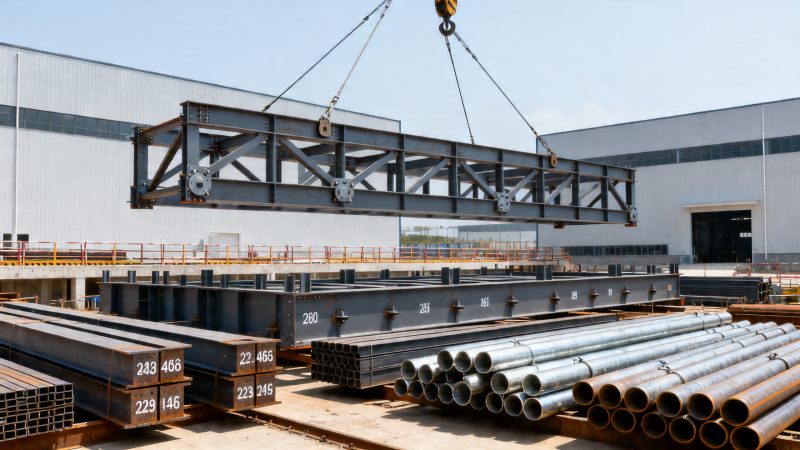
On many construction and industrial projects, erection problems are blamed on transport, customs, weather, or site congestion. In reality, delays often start 2–8 weeks earlier, during design confirmation, shop drawing review, connection detailing, procurement planning, and production scheduling. When these upstream steps are not aligned, the structural steel arrives on time but still cannot be installed efficiently.
For project managers and procurement teams, the real risk is not only late delivery. It is mismatch. A beam may meet the basic dimension, but if hole positions, end plate details, tolerances, or identification marks do not match erection sequencing, site crews lose time. Even a 1–3 day interruption in crane scheduling or labor coordination can create wider cost pressure across related trades.
Technical evaluators and quality teams usually focus on material grade, standards, and certificates. Those are essential, but not enough. Structural steel erection depends on three linked layers: product compliance, fabrication accuracy, and installation readiness. If one layer is weak, the full package underperforms. This is especially critical for projects using ASTM, EN, JIS, or GB-based specifications across different markets.
A reliable structural steel manufacturer should therefore support more than production. It should help reduce uncertainty before shipment through drawing coordination, clear marking logic, stable lead times, and practical communication between engineering, purchasing, and site teams. That is where experienced exporters create measurable value for buyers and decision-makers.
What typically goes wrong before the steel reaches site
Early-stage issues are usually predictable. They often appear in fragmented responsibilities, where designers, fabricators, buyers, and installers each optimize their own task but not the total erection workflow. In steel construction, fragmented planning often costs more than visible manufacturing defects.
- Connection details are frozen too late, leaving only 3–7 days for fabrication adjustment on components that need longer planning.
- Material grade and section size are approved, but bolt interface, welding preparation, or splice arrangement are not fully coordinated.
- Packaging and bundle identification do not match erection sequence, causing unnecessary on-site sorting and crane idle time.
- International sourcing teams confirm price first and technical release later, which increases revision cycles and shipping pressure.
In practical terms, a project may still receive all steel tonnage within the agreed window, yet erection falls behind because the installation path was not engineered early enough. This distinction matters to financial approvers and commercial managers because schedule delay costs often exceed small savings made during supplier selection.
Which hidden planning gaps create the biggest installation risk?
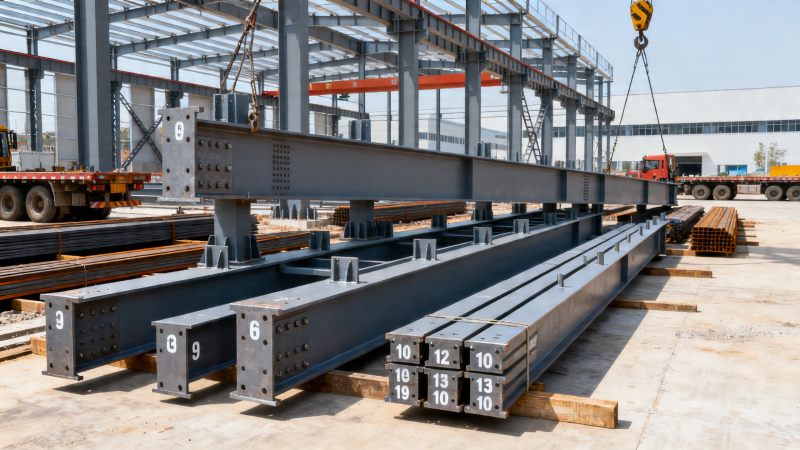
The biggest pre-delivery risks are not always complex. In many steel structure projects, 4 recurring gaps account for most installation disruption: incomplete connection design, unclear tolerance control, weak document synchronization, and poor sequencing logic. These are common across warehouses, industrial plants, commercial buildings, bridges, and equipment-support structures.
For example, a project can approve section sizes such as angle steel, channel steel, steel beams, and cold formed steel profiles, but still overlook how these members are assembled in the field. If the installation team needs field drilling, site welding, or rework because pre-fabricated interfaces were not coordinated, the apparent savings from a low initial price disappear quickly.
Another hidden issue is document timing. If bill of materials, shop drawings, packing lists, and marking plans are issued in different revision states, site teams may work from outdated references. On cross-border projects, even a 24–48 hour communication delay can affect booking, inspection planning, and erection sequencing.
Buyers should also consider whether the supplier can support both standard sections and OEM structural steel components. Projects with mixed specifications need stronger production control because custom parts usually have tighter coordination windows than stock-based items.
A practical risk matrix for steel erection planning
The table below helps procurement teams, engineers, and project leaders identify where structural steel erection delays are most likely to begin and how those risks affect downstream work.
This matrix shows why project delay is often a coordination problem before it becomes a manufacturing problem. The most effective response is early integration of engineering, procurement, quality, and logistics, preferably in the first 1–2 review rounds instead of after fabrication starts.
Why supplier type matters in global steel sourcing
A trader may help with pricing speed, but projects with installation sensitivity often benefit from a manufacturer-exporter that understands fabrication logic. Hongteng Fengda supports global construction, industrial, and manufacturing projects with structural steel products and customized solutions, including angle steel, channel steel, steel beams, cold formed profiles, and tailored structural steel components.
For buyers in North America, Europe, the Middle East, and Southeast Asia, the advantage is not only supply range. It is the ability to coordinate standards, production capacity, and dependable lead times under one operational structure. That reduces sourcing risk, especially when projects require both standard sections and project-specific components.
How should buyers evaluate structural steel suppliers before placing an order?
A strong buying decision should not rely on price per ton alone. In structural steel erection, a lower price can become a higher installed cost if fabrication readiness and delivery coordination are weak. A more practical approach is to evaluate suppliers through 5 dimensions: technical capability, standards compliance, document control, delivery planning, and communication speed.
For technical teams, the first question is whether the supplier can work to your required standards and drawing logic. For procurement teams, the next question is whether the supplier can maintain schedule stability over 2–6 production weeks or longer, depending on tonnage, processing complexity, and shipping mode. For finance teams, predictability often matters more than a nominally low quote.
Quality and safety personnel should also look at traceability. Material certificates, inspection points, heat number linkage, and packing identification should connect clearly to the delivered steel. This is especially important when multiple sizes, zones, or erection packages are shipped in one lot.
Mid-project material decisions also affect structural continuity. In reinforced applications or composite construction areas, buyers may need products such as HRB500 Rebar for building structures subjected to significant loads, super high-rise buildings, long-span bridges, and heavy-duty industrial plants. Typical specifications range from φ6 to φ50, with common lengths such as 1M, 4M, 6M, 8M, and 12M, and standards may include ASTM, JIS, GB, DIN, bs, and AiSi depending on project requirements.
A supplier comparison framework that supports procurement and erection goals
The following table can be used during supplier prequalification, bid clarification, or final sourcing review. It helps different decision-makers compare offers using installation-oriented criteria instead of price only.
This type of evaluation supports procurement personnel, project leaders, and commercial reviewers at the same time. It also helps distributors and agents explain value to end customers who may not immediately see how pre-delivery planning influences installation cost and schedule.
A simple 4-step pre-order checklist
- Confirm standards, grades, sizes, and connection assumptions before final quotation approval.
- Align shop drawing release dates with planned fabrication start, not just target shipment date.
- Define packing, labeling, and batch sequence by erection area or installation stage.
- Agree on inspection documents, traceability items, and issue response time before order execution.
These 4 steps do not add much cost, but they often save significant time during unloading, sorting, fit-up, and field assembly. That is a meaningful advantage when labor, lifting equipment, and shutdown windows are tightly scheduled.
What can project teams do to reduce delay, cost pressure, and rework?
The most effective way to control structural steel erection delay is to treat procurement and installation as one process, not two separate milestones. This means that before shipment, the team should already know installation zones, lifting constraints, connection priorities, and document responsibilities. A 3-stage coordination model works well on many projects: pre-engineering review, production alignment, and pre-shipment verification.
In stage one, engineering and procurement confirm which details are critical to field installation. In stage two, the supplier aligns production, quality checks, and marking methods with those details. In stage three, logistics and site teams verify batch sequence, unloading order, and receiving documents. This structure is especially useful when projects involve multiple steel categories or mixed standard and OEM items.
For complex jobs, teams should define 6 key acceptance points before dispatch: material grade, section size, connection detail, identification mark, packing sequence, and document package. These checkpoints reduce the chance that an issue discovered on site turns into an expensive stop-work event.
Experienced exporters can support this process by linking manufacturing discipline with international project communication. Hongteng Fengda combines modern manufacturing facilities, strict quality control, and broad export experience to help customers manage stable production capacity, consistent quality, and dependable lead times without overcomplicating the sourcing process.
Common misconceptions that lead to avoidable delay
Some project teams assume that if the steel meets standard specifications, installation will naturally go smoothly. That is not always true. Compliance is necessary, but erection success depends on execution details as much as material properties.
- “If delivery is on time, the supplier performed well.” In practice, delivery should also match sequence, identification, and installation readiness.
- “Site crews can solve minor fit-up issues.” Small issues can still consume hours of crane time and create safety pressure.
- “Cheaper steel means lower project cost.” Installed cost includes rework, idle labor, equipment waiting, and approval delay.
- “Documentation can be finalized after production.” Late documentation often creates confusion in inspection, customs, and receiving.
Teams that recognize these misconceptions early usually make better sourcing decisions. They focus not only on steel supply, but also on whether the supplier can support smooth project execution from drawing release to final installation.
FAQ: practical questions buyers and project teams often ask
The questions below reflect common search intent from engineers, procurement staff, contractors, distributors, and decision-makers who need actionable guidance before ordering structural steel.
How early should connection details be confirmed before fabrication?
As a practical rule, critical connection details should be frozen before fabrication release, not after cutting or drilling begins. On many projects, keeping at least a 1–2 week buffer between final connection approval and full production start helps reduce revision risk. The exact timing depends on component complexity, but late changes almost always cost more than early coordination.
What should procurement teams ask a structural steel supplier besides price?
Ask about standards compliance, fabrication capability, traceability documents, marking logic, batch shipment planning, and response time for technical clarification. Also ask how the supplier handles mixed orders involving standard sections and customized components. These questions reveal whether the supplier can support erection efficiency, not just supply steel.
What is a common lead-time consideration for structural steel export orders?
Lead time varies by tonnage, processing depth, coating requirements, and shipping route. Many projects review production in phases such as drawing confirmation, fabrication, inspection, and dispatch rather than relying on one headline date. A realistic schedule should include approval cycles, not just workshop time, because document delay often affects shipment more than machine capacity.
When is seismic-grade reinforcing steel relevant to the project?
It becomes relevant when the project includes reinforced concrete elements exposed to significant loads or seismic performance requirements, such as super high-rise buildings, long-span bridges, and heavy-duty industrial plants. In those cases, buyers may compare bar grade, diameter range from 6MM to 50MM, and applicable standards before combining reinforcing products with structural steel packages.
Why choose a manufacturer-exporter that understands both steel supply and project execution?
When structural steel erection delays start before delivery, the best supplier is not simply the one that offers steel products. It is the one that helps the project team prevent delay at the planning stage. That means understanding technical drawings, coordinating production with real installation needs, and supporting global customers with dependable communication and delivery discipline.
Hongteng Fengda serves buyers across North America, Europe, the Middle East, and Southeast Asia with structural steel manufacturing and export support for construction, industrial, and manufacturing projects. Our product scope covers angle steel, channel steel, steel beams, cold formed steel profiles, and customized structural steel components built around practical sourcing and execution needs.
If you are comparing suppliers or trying to reduce sourcing risk, you can discuss specific topics before ordering: section sizes, applicable standards, OEM fabrication scope, batch delivery planning, packing sequence, document requirements, and quality checkpoints. This is often the fastest way to identify hidden risk before it affects schedule or budget.
Please give us a message


Please enter what you want to find