Structural steel benefits make it a top choice for large projects that demand strength, speed, and cost control. From structural steel cutting and structural steel drilling to custom steel profiles and hot dip galvanized steel beam solutions, the right materials improve efficiency and long-term performance. This article explores why global buyers and project teams rely on quality structural steel for safer, more reliable construction outcomes.
For large commercial, industrial, infrastructure, and manufacturing projects, the main question is not simply whether structural steel is strong. It is whether steel can reduce total project risk while improving schedule control, quality consistency, and long-term asset value. In most cases, the answer is yes. Structural steel is often the preferred material because it combines high strength-to-weight performance, fast fabrication, easier installation, reliable standardization, and strong adaptability for custom engineering needs.
For project managers, buyers, technical reviewers, and decision-makers, the real value of structural steel lies in what it helps prevent: delays, material waste, rework, safety issues, and lifecycle cost overruns. When sourced from a capable manufacturer with stable production and international quality control, structural steel can support both technical performance and commercial efficiency.
Why do large projects choose structural steel over other materials?
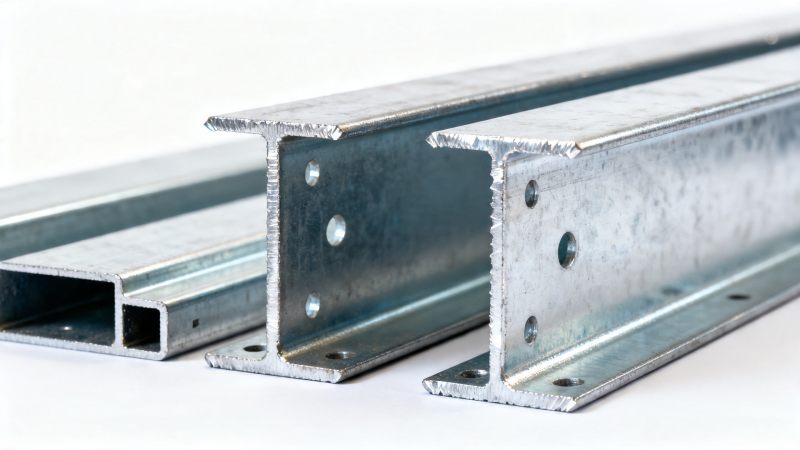
Large projects usually involve tight schedules, complex load requirements, multi-party coordination, and strict budget oversight. In that environment, structural steel offers several practical advantages that directly affect project outcomes.
First, structural steel provides excellent strength with efficient weight control. Compared with heavier traditional materials, steel can achieve high load-bearing capacity without requiring excessively bulky sections. This can help optimize foundation loads, transportation planning, and structural design efficiency.
Second, steel supports faster project delivery. Many components can be prefabricated in controlled factory conditions before arriving on site. This reduces on-site labor intensity, shortens installation time, and lowers the chance of weather-related disruption. For large projects, shorter schedules often translate into earlier operation, faster revenue generation, and lower indirect costs.
Third, precision fabrication improves fit-up and assembly. Processes such as structural steel cutting, structural steel drilling, and profile forming make it possible to deliver components that match engineering drawings more accurately. Better dimensional consistency reduces adjustment work during erection and lowers rework risk.
Fourth, steel is highly adaptable for custom project demands. Large projects rarely use only standard sizes. Many need custom steel profiles, non-standard connections, or project-specific fabrication details. Structural steel is well suited for this level of customization while still maintaining production efficiency.
Fifth, lifecycle value is often better than buyers expect. When steel is properly processed, coated, and installed, it can provide durable long-term performance with manageable maintenance requirements. Hot dip galvanized steel beam solutions, for example, are often selected where corrosion resistance is especially important.
Which structural steel benefits matter most to each stakeholder?
Different readers evaluate structural steel from different perspectives, and a useful decision must reflect all of them.
For technical evaluation teams, the priority is structural reliability, standard compliance, mechanical performance, dimensional accuracy, weldability, and fabrication feasibility. They want confidence that the supplied material meets design requirements and can be integrated smoothly into the engineering system.
For procurement teams, the key concerns are supply stability, price consistency, lead time control, packaging, export capability, and the ability to manage both standard and custom orders. A lower unit price is not enough if late delivery or inconsistent quality creates bigger downstream costs.
For project managers, the focus is schedule certainty, coordination simplicity, installation efficiency, and reduced site problems. Materials that arrive ready for use and match approved drawings help keep the project moving.
For quality and safety personnel, the most important issues are compliance, traceability, inspection records, coating quality, dimensional tolerance, and process control. Reliable steel supply reduces the chance of defects affecting site safety or structural performance.
For financial approvers and business decision-makers, the real question is total value. They need to know whether structural steel can lower total installed cost, reduce delays, limit project risk, and deliver long-term asset performance. In large projects, avoiding one major delay or one batch of rework can create more savings than a small reduction in material price.
How does structural steel improve project speed, cost control, and risk management?
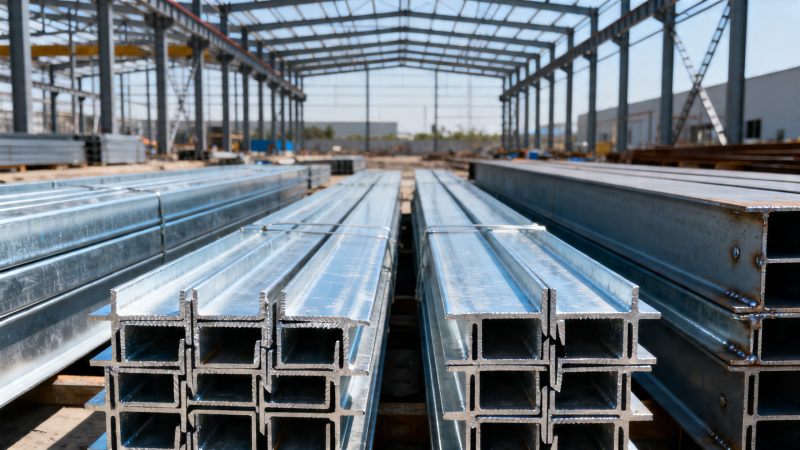
The biggest reason structural steel remains dominant in large projects is that its benefits affect more than the structure itself. It improves the whole delivery process.
Faster fabrication and erection: Factory-based production allows beams, channels, angles, and custom components to be prepared before site readiness is fully complete. This overlapping of production and site work can shorten the critical path.
Better material utilization: Accurate production planning and processing reduce waste. This matters even more in projects with high steel volume, where small efficiency gains can create meaningful budget improvements.
Lower labor pressure on site: Prefabricated structural steel components reduce manual processing in the field. Less cutting and drilling on site often means better safety control, lower labor costs, and more predictable installation quality.
More reliable quality consistency: Modern manufacturing facilities can control dimensions, surface condition, and processing quality more consistently than variable on-site operations. This helps contractors reduce fit-up issues and improve installation productivity.
Stronger supply planning for global projects: For international buyers, a structural steel manufacturer with export experience can simplify compliance, packing, shipping coordination, and lead time planning. This is especially valuable for buyers sourcing from China for projects in North America, Europe, the Middle East, or Southeast Asia.
In some projects, structural steel systems are also combined with corrosion-resistant or specialty metal materials for specific environments. For example, in facilities where hygiene, chemical exposure, or elevated temperatures matter, buyers may also evaluate materials such as 304 Stainless Steel Coil. This grade is widely used in chemical processing, food industry applications, medical equipment construction, transportation components, and equipment parts because of its rust resistance, high temperature resistance, and excellent corrosion resistance. With tensile strength of at least 520, yield strength of at least 275, elongation of at least 55-60, and finishes such as BA, 2B, NO.1, NO.4, HL, and 8K, it can complement structural systems in demanding environments where both formability and corrosion performance matter.
What should buyers check before selecting a structural steel supplier?
Not all structural steel supply creates the same project outcome. For large projects, supplier evaluation should go beyond catalog specifications.
Check manufacturing capability. Can the supplier produce angle steel, channel steel, steel beams, cold formed steel profiles, and customized structural steel components under one coordinated system? Broader capability often means better control over compatibility, scheduling, and quality consistency.
Check standards compliance. For export and cross-border projects, suppliers should be familiar with major standards such as ASTM, EN, JIS, and GB. This reduces technical communication errors and helps buyers align procurement with project specifications.
Check customization support. Large projects often require non-standard sizes, fabricated parts, punching, drilling, cutting, coating, and other value-added processing. A supplier that can support OEM and custom fabrication can reduce outsourcing complexity.
Check quality control systems. Ask about raw material inspection, dimensional checks, mechanical testing, coating inspection, traceability, and final shipment verification. Stable quality is one of the strongest structural steel benefits in practice, but only when backed by real process control.
Check delivery reliability. Stable production capacity and dependable lead times are critical. Delayed structural steel affects procurement sequencing, site planning, and contractor productivity across the whole project.
Check export and service experience. Packaging quality, document accuracy, communication speed, and issue response all matter in international procurement. Buyers need a partner that can reduce sourcing risk, not add to it.
When is structural steel the smartest choice for large-scale construction?
Structural steel is especially suitable when a project needs one or more of the following: long spans, heavy loads, fast-track schedules, modular construction, custom fabrication, future expansion flexibility, or multi-region sourcing support.
Typical applications include industrial plants, logistics centers, warehouses, transport infrastructure, commercial complexes, energy facilities, equipment support systems, and multi-functional manufacturing buildings. In these settings, steel supports efficient engineering while allowing design flexibility and phased construction.
It is also a strong choice when project owners want a balance between performance and predictability. While every material has its place, structural steel often stands out because it helps teams control both technical and commercial variables at the same time.
For distributors, contractors, and project owners working with global supply chains, this combination is especially valuable. A dependable structural steel manufacturer can support not just material supply, but also planning confidence, lower procurement friction, and smoother project execution.
Conclusion: the real value of structural steel benefits in large projects
Structural steel benefits are most meaningful when viewed from a project outcome perspective. Yes, steel offers strength, durability, and design flexibility. But for large projects, its deeper value is that it helps reduce risk, accelerate delivery, improve quality consistency, and support better cost control across the full project lifecycle.
For buyers and decision-makers, the best approach is to evaluate structural steel not only by price or section size, but by manufacturing capability, customization support, standards compliance, quality control, and delivery reliability. When these factors are aligned, structural steel becomes more than a material choice. It becomes a practical strategy for building safer, faster, and more efficient large-scale projects.
For global customers seeking a long-term structural steel partner, working with an experienced Chinese manufacturer and exporter can offer both competitive sourcing and dependable execution. The right supplier helps ensure that structural steel benefits are fully realized from design review to final installation.
Please give us a message


Please enter what you want to find