Choosing the right structural angle iron can directly affect load capacity, fabrication efficiency, and long-term project costs.
For steel construction and industrial sourcing, knowing when structural angle iron suits load-bearing designs helps balance strength, compliance, and budget.
This article explains practical use cases, engineering checks, and sourcing points that support better structural steel decisions across global projects.
When structural angle iron becomes a practical load-bearing choice
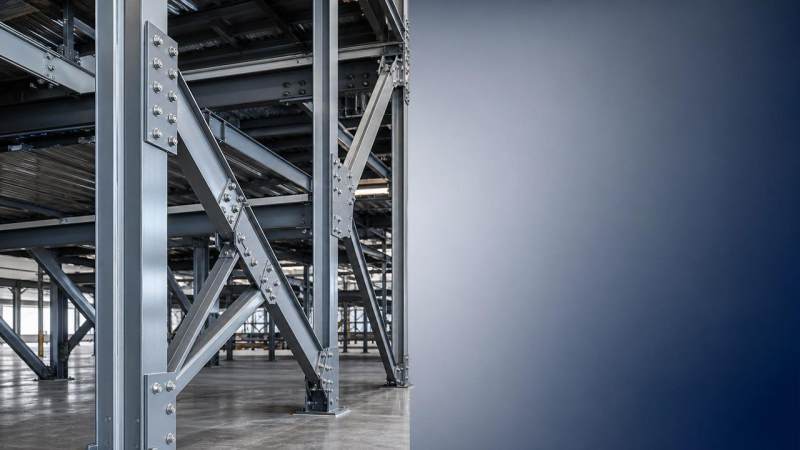
Structural angle iron works well when loads are moderate, connections are simple, and space efficiency matters.
It is widely used in frames, supports, bracing systems, platforms, towers, and equipment bases.
Compared with larger beams, structural angle iron can reduce material weight and simplify fabrication in many secondary structural applications.
However, it is not automatically the best option for every load-bearing design.
Its fit depends on load direction, span length, connection detail, local buckling risk, and service environment.
Why project scenarios change the structural angle iron decision
Different projects place very different demands on structural angle iron.
A warehouse brace, a conveyor support, and a platform frame may all use angle sections, but their design priorities differ sharply.
Some scenarios value torsional stability and easy bolting.
Others need corrosion resistance, precise tolerances, or compatibility with seismic and wind requirements.
That is why a good selection process starts with the use case, not only with section size.
Scenario 1: Bracing systems where structural angle iron performs efficiently
Bracing is one of the most common uses for structural angle iron in load-bearing designs.
In roof bracing, wall bracing, and tower bracing, angle sections often provide an efficient balance between stiffness and cost.
This scenario fits because bracing members usually carry axial tension or compression rather than large bending moments.
Structural angle iron is especially practical when connection plates are straightforward and field installation speed matters.
Key checks include slenderness ratio, connection eccentricity, and buckling resistance under compression.
Scenario 2: Frames, supports, and edge members with moderate loads
Structural angle iron is also suitable for equipment frames, mezzanine edges, stair stringers, rack supports, and machine guards.
These applications often involve shorter spans and localized loads.
In such cases, angle steel can offer enough capacity while reducing fabrication complexity.
If the design needs related cold-formed members for wall beams or roof framing, C Beam Steel may complement angle sections well.
Its galvanized options, perforated format, and processing flexibility support purlins, wall beams, brackets, and lightweight structural components.
Scenario 3: Connection-heavy structures where simple detailing matters
Some structures contain many repetitive joints.
Examples include support frames, access platforms, utility structures, and modular steel assemblies.
Here, structural angle iron becomes attractive because one leg can sit against a plate or frame face easily.
That can lower welding time and simplify bolted detailing.
Still, the connection must be checked carefully.
Single-angle behavior can introduce eccentric loading that affects actual capacity.
Scenario 4: When structural angle iron may not be the best main member
Structural angle iron is not always ideal for long-span primary beams or heavily loaded columns.
Sections such as I-beams, H-beams, channels, or built-up members may perform better under strong bending demands.
If torsional stiffness is critical, an angle section can become less efficient than more symmetrical profiles.
In dynamic or fatigue-sensitive environments, the designer should also review vibration, stress concentration, and repetitive load effects.
Key engineering checks before selecting structural angle iron
Before confirming structural angle iron, several technical points should be reviewed.
- Load type: axial, bending, combined, impact, or cyclic.
- Span and support condition: simply supported, fixed, or braced.
- Section orientation: equal or unequal angle, single or double arrangement.
- Connection detail: bolt spacing, weld length, gusset layout, and edge distance.
- Environment: indoor, outdoor, marine, humid, or corrosive service.
- Standard compliance: ASTM, EN, JIS, or GB project requirements.
These checks help determine whether structural angle iron provides enough safety margin without overdesign.
How scenario needs differ across common steel applications
Practical selection advice for better structural angle iron sourcing
A reliable sourcing decision should connect engineering intent with manufacturing capability.
- Confirm design standard and required steel grade first.
- Match the angle size to actual load path, not only past project habit.
- Review whether equal or unequal angles improve connection efficiency.
- Check galvanizing or coating needs for outdoor durability.
- Request tolerance, test, and inspection details before production.
- Coordinate cut length, punching, and welding services to reduce site work.
For projects combining angle members with cold-formed sections, C Beam Steel can support purlins, wall beams, lightweight trusses, and mechanical light industry structures.
Available materials such as Q195, Q235, Q345, A36, SS400, and S235JR allow matching to different specification systems.
Common mistakes when evaluating structural angle iron
One frequent mistake is choosing structural angle iron only by thickness or leg size.
Real performance depends on section properties, unsupported length, and connection behavior.
Another mistake is ignoring corrosion exposure.
Outdoor or humid conditions may require galvanized surfaces or additional coatings to protect long-term value.
A third issue is underestimating fabrication effects.
Punching, welding, and cutting can change usable capacity if details are not controlled properly.
Finally, some buyers overlook delivery reliability.
Stable production, standard compliance, and processing support are often as important as section price.
Next steps for deciding if structural angle iron fits your design
Structural angle iron is a strong option when the application favors moderate loads, efficient connections, and practical fabrication.
It is especially effective in bracing, supports, frames, and many secondary load-bearing systems.
The best results come from checking the actual scenario, required standard, service environment, and processing plan together.
For better outcomes, prepare section requirements, loading conditions, coating needs, and fabrication details before requesting quotation.
That approach makes structural angle iron selection more accurate, more economical, and more dependable across international steel projects.
Please give us a message


Please enter what you want to find