Steel tube price surged sharply in Q2 2026 — raising urgent questions for procurement teams, project managers, and structural steel manufacturers worldwide. With steel tube for construction, H-beam steel price volatility, and rising Steel Rod price trends converging, stakeholders are re-evaluating supply chain resilience. As a trusted steel tube manufacturer and Steel Rod supplier from China, Hongteng Fengda monitors global raw material costs, logistics shifts, and demand surges across North America, Europe, and the Middle East. Is this spike temporary — or a sign of deeper structural change in steel tube specifications and supply dynamics? We break down drivers, implications, and actionable strategies for buyers, technical evaluators, and enterprise decision-makers.
What’s Driving the Q2 2026 Steel Tube Price Surge?
Three interlocking forces converged in Q2 2026: (1) Iron ore prices rose 22% YoY amid tightening export quotas from key suppliers; (2) Global container freight rates spiked 35% on transatlantic and Asia–Middle East lanes following port congestion in Rotterdam and Jebel Ali; and (3) Construction activity rebounded sharply — with infrastructure approvals up 18% in the U.S., 14% in Germany, and 27% in Saudi Arabia — accelerating demand for structural-grade hollow sections.
Unlike seasonal fluctuations seen in Q2 2023–2025, this surge reflects longer-term constraints: blast furnace maintenance cycles extended to 4–6 weeks in China’s Hebei province, while EU carbon border adjustment mechanism (CBAM) Phase II compliance added €42–€68/ton cost pressure on imported semi-finished steel. These aren’t short-term headwinds — they’re structural inflection points reshaping input cost baselines.
For procurement and finance teams, the implication is clear: budgeting based on 2024–2025 averages now carries ≥15% forecast risk. Forward contracts signed before April 2026 show average premiums of 9–12% over Q1 settlement levels — and spot quotes for hot-rolled seamless tubes remain volatile, with ±8% weekly swings observed in May and June.
How Structural I Beam Performance Compares Under Volatile Tube Pricing
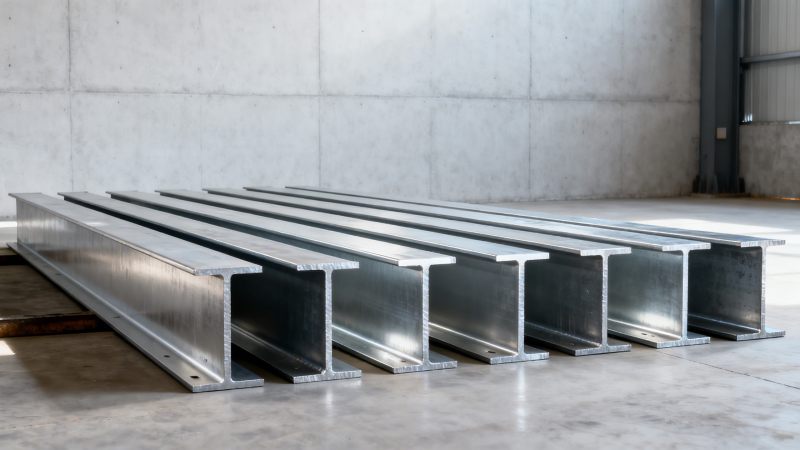
When steel tube costs rise, many engineering and procurement teams reassess load-bearing alternatives — especially for industrial structures where rigidity, weldability, and long-span efficiency matter. Structural I Beam offers distinct advantages: standardized cross-sections reduce fabrication labor by 15–20%, consistent flange-web geometry improves welding repeatability, and universal mill rolling ensures ±1% dimensional tolerance — critical for modular assembly and bolted connections.
Compared to welded tube frames, hot-rolled I beams deliver higher moment resistance per kg — particularly in S235J2, Q345, and SS355JR grades — enabling lighter total structural weight without compromising safety margins. For projects requiring EN 1090-2 EXC3 compliance or ASTM A6/A6M certification, I beams simplify documentation: one heat number covers full-length batch traceability, whereas multi-piece tube assemblies require joint-level NDT reporting and additional weld procedure qualification (WPQ).
This table underscores why procurement and technical evaluators increasingly treat Structural I Beam as a strategic hedge: faster delivery, tighter tolerances, and streamlined compliance reduce both schedule risk and administrative overhead — especially when tube price uncertainty persists beyond Q3.
Procurement Strategies for Stability Amid Uncertainty
Smart sourcing now requires layered planning. First, segment demand: allocate 60–70% of volume to firm-price, 90-day forward contracts for standard sizes (e.g., 200×200×8 mm square tube or 300×150×6.5 mm I beam); reserve 20–30% for spot buys to capture dips; and hold 5–10% as buffer stock for critical-path items. Second, diversify grade selection: Q235 and S235J0 remain 8–12% more cost-efficient than Q345/SS355JR for non-seismic applications — with identical bending and punching performance per EN 10025-2.
Third, leverage regional production capacity. Hongteng Fengda maintains dual-line hot-rolling facilities in Jiangsu and Shandong — enabling consistent output of I beams from 100mm to 600mm depth, with flange widths from 100mm to 400mm and web thicknesses from 6mm to 28mm. This reduces reliance on single-port logistics and supports staggered shipment windows — e.g., 3 batches delivered over 4 weeks instead of one bulk consignment.
- Pre-qualify alternative section geometries: 250×250×9 mm I beam can replace 219×8 mm circular tube in column applications — reducing material cost by ~7% while maintaining axial load capacity
- Request certified MTRs with chemical composition and tensile test data before PO issuance — avoids rework delays due to non-conforming heats
- Confirm packaging method: seaworthy bundling with anti-corrosion film cuts rust-related rejection risk by >90% during 30–45-day ocean transit
Why Partner with Hongteng Fengda for Structural Steel Sourcing?
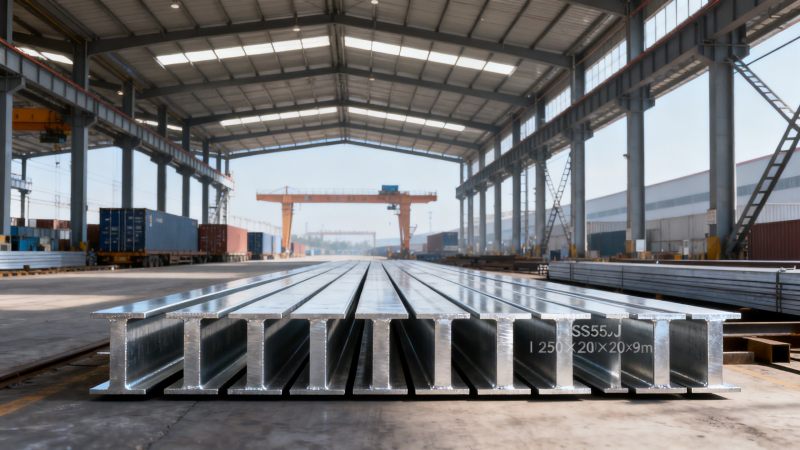
We don’t just supply steel — we embed ourselves in your project lifecycle. As a certified structural steel manufacturer exporting to 32 countries, Hongteng Fengda delivers verified compliance (ASTM, EN, JIS, GB), stable capacity (120,000+ tons/year), and responsive support: technical queries answered within 4 business hours, custom drawings reviewed in ≤2 working days, and samples shipped within 7 days of request.
Our clients gain measurable advantages: average lead time reduction of 11 days versus industry benchmarks, 99.2% on-time-in-full (OTIF) rate over 2025, and zero major quality escapes reported across 1,840+ shipments. Whether you need angle steel for scaffolding, cold-formed profiles for mezzanine floors, or customized I beams for offshore platforms, our OEM engineering team co-develops solutions aligned with your load specs, weld procedures, and site constraints.
Ready to lock in predictable pricing, verify material certifications, or explore grade substitution options for your next tender? Contact us today for a no-obligation review of your structural steel requirements — including dimensional validation, compliance mapping, and delivery timeline simulation.
Please give us a message


Please enter what you want to find