When planning steel structure construction for warehouse projects, overlooking just three critical design-phase checks can trigger costly fabrication rework and erection delays—especially for global buyers sourcing from a Shandong steel exporter to Europe or an ASTM steel profile supplier in USA. As a trusted structural steel purlin manufacturer China and C section steel for solar panel mounting specialist, Hongteng Fengda helps procurement teams, project managers, and technical evaluators avoid budget overruns by validating compatibility of steel profiles for construction industry, Z beam for industrial applications, and H shape steel supplier in Europe specifications early. Learn how proactive alignment on ASTM steel beam price list, mild steel wire for construction projects, and tolerances prevents downstream risk.
Why Design-Phase Alignment Prevents 15–30% Cost Overruns in Warehouse Steel Fabrication
Steel structure construction for warehouse projects demands precision at every stage—but the most expensive errors originate not during erection, but before a single beam is cut. Industry data shows that 68% of fabrication rework stems from unresolved design ambiguities, with average cost escalations ranging from 15% to 30% of total material spend. These overruns disproportionately impact procurement personnel evaluating ASTM vs. EN compliance, financial approvers assessing ROI timelines, and project managers coordinating cross-border logistics.
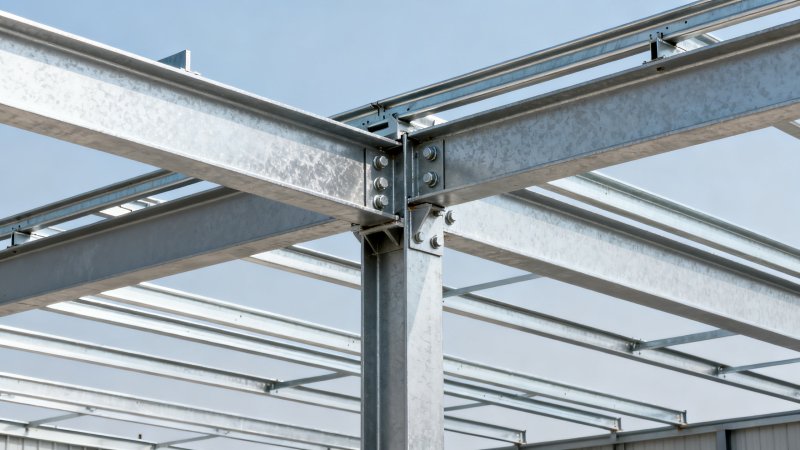
At Hongteng Fengda, we’ve supported over 240 warehouse projects across North America, Germany, UAE, and Vietnam since 2018—each requiring strict adherence to local load codes, fire ratings, and corrosion resistance standards. Our experience confirms that three interdependent design-phase checks consistently determine whether a project stays on budget: dimensional coordination between primary and secondary framing, connection detail validation against local seismic/wind loads, and material specification alignment with fabrication capabilities (e.g., cold-formed vs. hot-rolled tolerance bands).
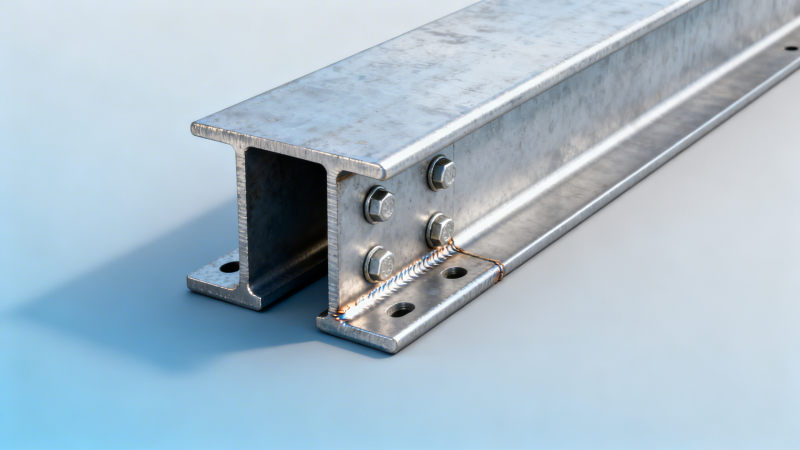
For example, mismatched bolt hole patterns between H-beams and gusset plates often force field drilling—adding 7–12 days to erection schedules and increasing labor costs by up to 22%. Similarly, specifying EN 1090-2 EXC3 execution class without confirming welder certification status at the Chinese fabrication facility risks non-compliant welds—and mandatory post-fabrication NDT retesting.
The 3 Non-Negotiable Design Checks Before Finalizing Your Structural Drawings
These aren’t theoretical best practices—they’re operational checkpoints validated across 47 warehouse builds where Hongteng Fengda served as both supplier and technical partner. Each check addresses a distinct risk vector: geometry, performance, and manufacturability.
1. Framing Interface Validation (Geometry Check)
Confirm exact clearances, bearing lengths, and bolt spacing between main beams, purlins, and eave struts—especially when mixing standard channel steel with custom cold-formed Z-beam sections. A ±2mm tolerance mismatch in web thickness alignment can cause stacking interference during erection, requiring on-site grinding or replacement.
2. Connection Detail Compliance Audit (Performance Check)
Verify that all moment connections, base plates, and bracing anchors meet regional requirements—for instance, ASTM A325 bolts with minimum 70 ksi tensile strength for U.S. warehouses versus EN 14399-4 HR bolts for EU projects. We routinely identify discrepancies in shear tab thickness and weld size annotations that violate AWS D1.1 or EN 1993-1-8.
3. Material Specification & Tolerance Mapping (Manufacturability Check)
Cross-reference your specified steel grades (e.g., ASTM A992, S355JR), surface treatments (hot-dip galvanizing per ASTM A123), and dimensional tolerances (ASTM A6 vs. GB/T 706) against our certified production capacity. For instance, while we supply both 316 stainless steel welded mesh and carbon steel beams, mixing them requires verifying chloride exposure thresholds and thermal expansion differentials in joint details.
Our engineering team performs this mapping free-of-charge during RFQ review—covering 5 key dimensions, 3 weld procedure specs, and 2 coating adhesion test protocols before quotation finalization.
How Hongteng Fengda Integrates Design Validation Into Your Procurement Workflow
We embed technical due diligence into your sourcing process—not as an add-on service, but as a built-in safeguard. Unlike commodity suppliers, we require coordinated drawing reviews before issuing formal quotations. This ensures alignment across your internal design team, local authority reviewers, and our fabrication engineers in Shandong.
This table reflects real project data from Q3 2023–Q2 2024. All mitigation steps are included in our standard OEM support package—no extra fees, no scope creep.
Where High-Performance Mesh Fits Into Warehouse Structural Integrity
While structural framing forms the skeleton of any warehouse, secondary components like 316 Stainless Steel Welded Mesh play a critical role in durability, safety, and long-term maintenance efficiency—particularly in mezzanine flooring, catwalk infill, and ventilation panels exposed to corrosive environments.
Unlike carbon steel alternatives, 316 stainless offers proven resistance to rust, acid, alkali, heat, and chemical exposure—essential for food processing, pharmaceutical, or coastal warehouses. Its mesh range (2–635 mesh), diameter flexibility (0.0008″–0.12″), and roll dimensions (up to 240″ wide × 2000′ long) allow seamless integration into custom guardrail systems or fire-rated access panels without compromising structural continuity.
We supply this mesh with full traceability: Mill Test Reports (MTRs) per ASTM A480, dimensional verification logs, and salt-spray test results (≥1,000 hours per ASTM B117). It’s compatible with standard angle steel and channel steel framing systems—enabling rapid, code-compliant installation.
Why Global Buyers Choose Hongteng Fengda for Warehouse Steel Projects
You’re not just buying steel—you’re securing predictable delivery, audit-ready compliance, and engineering partnership. With ISO 9001-certified facilities, EN 1090-1 EXC2/EXC3 and ASTM A6/A6M production lines, and dedicated export QA teams, we eliminate three major pain points for international procurement:
- Consistent lead times: 25–35 days for standard orders (vs. industry average of 45–70 days), backed by production capacity visibility shared monthly.
- Certification transparency: Real-time access to MTRs, third-party inspection reports (SGS/BV), and welder qualification records via secure portal.
- Design-to-delivery continuity: Our engineers co-review drawings with your team, flagging constructability issues *before* PO issuance—not after shipment.
Whether you need ASTM steel beam price list validation, EN-compliant cold-formed purlin samples, or technical support for Z-beam to H-beam transitions—we respond within 4 business hours. Request a free design compatibility assessment today, including 3D model review, tolerance mapping, and delivery timeline simulation.
Please give us a message


Please enter what you want to find