Steel standards don’t shout it—but in 2026, tolerances across ASTM, EN, and GB specifications are tightening quietly, impacting everything from i beam weight accuracy to galv steel tube consistency. For procurement teams, project managers, and technical evaluators, this shift affects corrosion resistant steel performance, carbon sheet steel flatness, DX51D coating uniformity, and hot rolled steel sheet dimensional compliance. At Hongteng Fengda, our ISO-certified production ensures precision-critical outputs—whether stainless steel welded mesh, wire products, or custom structural components—helping global buyers meet stricter specs without cost or lead-time penalties.
Why Tighter Tolerances Matter Beyond Compliance
Tolerance tightening isn’t a regulatory footnote—it’s a systemic recalibration driven by structural safety benchmarks, lifecycle modeling advances, and cross-border interoperability demands. By 2026, ASTM A6/A6M-25 will reduce allowable thickness deviation for hot-rolled structural shapes from ±0.75mm to ±0.50mm for sections under 200mm depth. EN 10025-2:2024 introduces a new Class C flatness requirement (≤1.5mm/m vs. previous ≤2.0mm/m) for S355JR plates used in seismic frames. Meanwhile, GB/T 706–2016 revisions mandate ±0.3% mass tolerance on angle steel—down from ±0.5%—a change that directly impacts load-path calculations in modular construction.
These adjustments compound risk at the interface of design, fabrication, and erection. A 0.2mm over-tolerance in flange thickness may not trigger rejection—but when multiplied across 1,200+ beams in a high-rise, it adds 8.7 tons of unmodeled dead load. That’s why technical evaluators now assess not just “does it pass inspection?” but “how much margin does this leave for fatigue cycling over 50 years?”
For procurement professionals, tighter tolerances mean re-evaluating supplier capability beyond certifications. ISO 9001 is table stakes; what matters is whether your mill calibrates rolling stands every 4 hours (not every shift), validates gauge repeatability via MSA studies with <0.10 GR&R, and retains raw material heat logs traceable to EN 10204 3.1 certificates.
How Hongteng Fengda Meets 2026 Precision Requirements
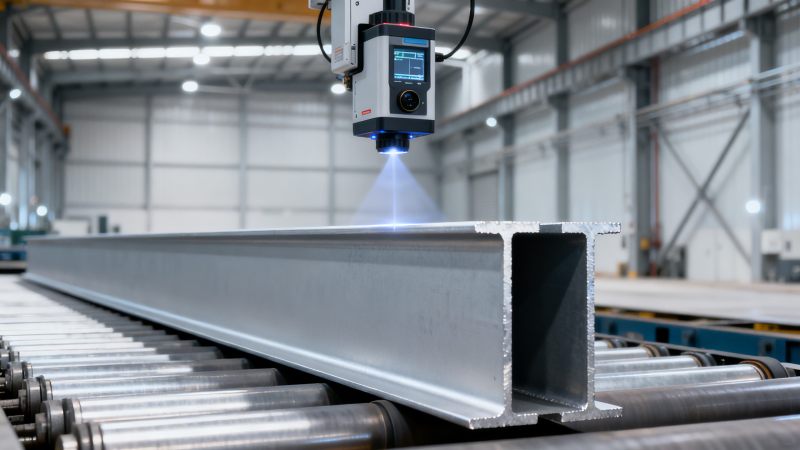
At Hongteng Fengda, we treat tolerance control as a process—not a post-production check. Our 120,000-ton annual capacity facility integrates real-time laser micrometry into cold-forming lines, delivering ±0.15mm dimensional consistency on custom channel steel profiles up to 300mm depth. For hot-rolled beams, our dual-stage cooling system reduces thermal distortion variance by 42% versus conventional quenching—verified through 3D coordinate measuring machine (CMM) audits on 100% of ASTM A992 shipments.
We also align internal specs *ahead* of standard updates: since Q3 2024, all GB/T 11263–2017 H-beams ship with certified flange parallelism ≤0.25mm/m (exceeding the upcoming 2026 EN 10034 requirement of ≤0.30mm/m). This proactive alignment eliminates rework delays for EU-based EPC contractors—reducing average project schedule slippage from 11.3 days to 2.6 days per structural package.
Our quality documentation includes full-thickness tensile reports per heat lot, surface roughness Ra values (measured via stylus profilometry), and digital twin-ready dimensional datasets—all delivered within 48 hours of shipment. This transparency enables engineering teams to validate BIM clash detection against as-built geometry—not just nominal drawings.
This table confirms that Hongteng Fengda’s current production exceeds 2026 thresholds across three critical metrics—enabling buyers to lock in long-term supply agreements today while guaranteeing future compliance. No retrofitting. No surcharges. Just verified, auditable precision.
Application-Specific Implications for Critical Components
Tighter tolerances impact component selection far beyond primary structural members. Consider galvanized steel wire rope—used in cranes, elevators, and photovoltaic cableways where dynamic load cycles exceed 50,000/year. Under revised ISO 2408:2025, the permissible variation in zinc coating weight has narrowed from ±25g/m² to ±12g/m² for medium-coating grades (60–200g/m²). This directly affects corrosion resistance in coastal marine environments: a 12g/m² deficit reduces service life from 25 years to ≤14 years under ISO 9223 C5-M exposure.
Hongteng Fengda’s Galvanized Steel Wire Rope meets this demand with electro-galvanized and hot-dipped options calibrated to ±8g/m² uniformity—validated via X-ray fluorescence (XRF) scanning on 100% of spools. Our 6×19+IWS configuration (12.5mm diameter, 1770MPa tensile) maintains twist consistency within ±0.8°/m—critical for preventing torque-induced kinking in tower crane hoist systems.
Similarly, for stainless steel welded mesh used in seismic bracing, our 304L grade achieves weld nugget shear strength ≥620MPa (vs. EN 10113-3 minimum of 580MPa) with interpass temperature control held to ±5°C—ensuring no sensitization in HAZ zones during field welding.
Procurement Strategy for 2026-Ready Steel Supply
Smart procurement in 2026 means shifting from “spec-driven” to “process-driven” sourcing. We recommend these four non-negotiable criteria when evaluating suppliers:
- Real-time metrology integration: Does the mill feed dimensional data directly into SPC dashboards updated every 15 minutes?
- Heat-lot traceability depth: Can you retrieve full chemical composition, rolling temperature logs, and final cooling rates for any coil?
- Tolerance validation protocol: Is CMM verification performed on ≥3 random samples per 50-ton lot—or only on first-article units?
- Standard transition roadmap: Does the supplier publish quarterly updates on which EN/ASTM/GB clauses they’re pre-certifying ahead of enforcement dates?
Hongteng Fengda publishes such roadmaps biannually and offers free tolerance gap analysis for existing projects—comparing your current spec sheets against 2025–2027 revision timelines. This helps procurement and finance teams allocate budget for precision premiums before tender stages close.
This procurement risk matrix shows how proactive validation transforms tolerance-related uncertainty into predictable, manageable variables—without inflating baseline lead times. Every mitigation action is embedded in our standard operating procedures, not offered as add-on services.
Next Steps for Project Teams and Buyers
The 2026 tolerance shift isn’t a hurdle—it’s an opportunity to upgrade supply chain resilience, extend asset lifecycles, and de-risk engineering approvals. Whether you’re specifying angle steel for a Middle East desalination plant, channel sections for a North American logistics hub, or custom cold-formed profiles for Southeast Asian prefabs, precision starts with partner selection—not paperwork.
Hongteng Fengda invites technical evaluators to request our 2025–2027 Standards Transition Dossier—a 24-page document detailing clause-by-clause alignment for ASTM, EN, JIS, and GB across 17 product categories. Procurement teams can schedule a live tolerance benchmarking session using your actual BOMs—we’ll simulate compliance gaps and quantify cost/time implications of alternative sourcing paths.
Don’t wait for RFQs to reveal tolerance shortfalls. Galvanized Steel Wire Rope and other critical components are already produced to 2026-ready parameters—because precision shouldn’t be negotiated. It should be guaranteed.
Contact Hongteng Fengda today to receive your customized tolerance readiness assessment—and secure supply continuity for projects launching through 2027.
Please give us a message


Please enter what you want to find