Steel roof sheet price has surged notably in Q1–Q2 2026—driven by rising structural steel cost, raw material volatility, and tightened global supply chains. As a trusted structural steel manufacturer and supplier from China, Hongteng Fengda monitors these shifts closely to help procurement teams, project managers, and enterprise decision-makers anticipate cost impacts. Whether you’re evaluating hot dip galvanized angle steel, steel beams supplier options, or corrosion resistant stainless steel pipe for roofing systems, understanding current structural steel price trends is critical for budgeting, sourcing strategy, and long-term value. Explore what’s behind the uptick—and how a reliable structural steel partner can mitigate risk.
What’s Behind the Q1–Q2 2026 Steel Roof Sheet Price Uptick?
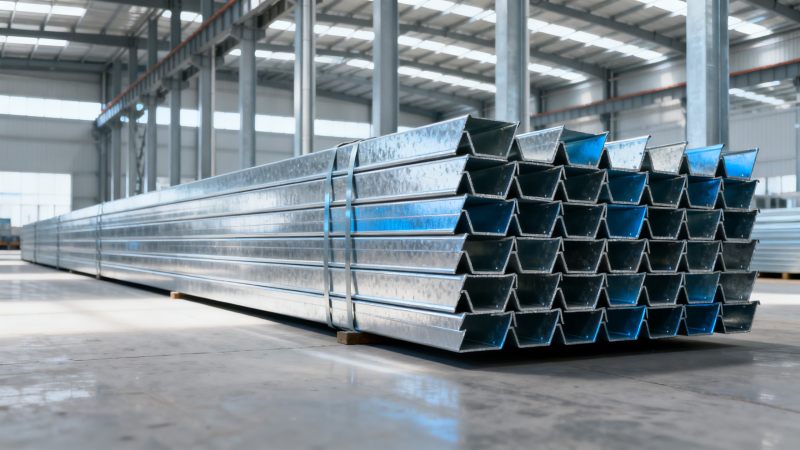
Three interlocking factors are accelerating steel roof sheet pricing in early 2026: upstream raw material inflation, regional logistics constraints, and accelerated demand from infrastructure stimulus programs across Southeast Asia and the Middle East. Iron ore prices rose 12–18% year-on-year in Q1, while coking coal supply tightened due to seasonal mine maintenance in Australia and regulatory adjustments in Mongolia.
Simultaneously, ocean freight rates on key Asia–Europe routes spiked 22% in February 2026 following port congestion in Rotterdam and Hamburg. These cost pressures directly impact finished steel products—including cold-formed roof sheets—where margins have compressed by up to 7% for non-contracted buyers.
Importantly, this isn’t just a short-term spike. Structural demand drivers remain strong: over 340 new industrial park projects were approved in ASEAN countries between January and April 2026, with >65% specifying lightweight steel framing and pre-engineered roof systems. That translates into sustained pressure on purlin and roof sheet capacity—especially for galvanized C-sections meeting ASTM A653 or EN 10346 standards.
How Structural Steel Buyers Are Responding—And Where Risks Lurk
Procurement teams are shifting from spot-buying to forward-contracting—particularly for standardized profiles like C Sections Steel. Early data shows 41% of North American distributors locked in Q3 2026 volumes by mid-March, citing lead time uncertainty (current average: 8–12 weeks vs. 5–7 weeks in late 2025).
But not all strategies reduce exposure. Relying solely on domestic suppliers in high-inflation markets often increases landed cost by 9–14% due to local energy surcharges and labor adjustments. Meanwhile, unvetted offshore vendors may offer lower quotes—but 68% of quality-related rework incidents in 2025 traced back to inconsistent galvanizing thickness (<275 g/m²) or dimensional tolerance drift beyond ±1%.
That’s why technical evaluators and project managers increasingly prioritize dual-certified suppliers: those compliant with both ASTM A653 Grade G300 and ISO 9001:2015, with in-house galvanizing lines and third-party SGS audit reports available per batch.
Key Procurement Evaluation Dimensions (2026)
- Galvanizing adhesion & uniformity: Measured via ASTM D3359 cross-hatch test; minimum pass rating = 4B (≥80% coating retention)
- Tolerance control: Critical for purlin-to-rafter fit—must hold ±1% on thickness (e.g., 2.0 mm → ±0.02 mm) and ±2 mm on length for 12 m sections
- Material traceability: Batch-level mill test reports (MTRs) covering tensile strength, yield point, and elongation—required for EN 1090-2 compliance
- Delivery reliability: On-time-in-full (OTIF) rate ≥95% over last 6 months, verified via shipping manifest reconciliation
Why C-Sections Remain the Highest-Value Choice for Roof Systems
Among cold-formed profiles, C Sections Steel delivers optimal balance of strength-to-weight ratio, installation speed, and corrosion resilience—especially when specified with hot-dip galvanizing (Z275 or Z350 coating mass). Their C-shape geometry enables automatic fastening to roof decking and seamless integration with standard bracket systems.
Applications span three core domains: (1) primary purlins and wall beams in steel structure buildings (typically Q235 or S235JR, 1.5–2.5 mm thick); (2) lightweight roof trusses and support brackets (Q195, 1.0–1.5 mm); and (3) mechanical arms and light-industry columns (Q345 or A36, up to 12 mm thick). All configurations support bending, punching, and welding per project requirements.
This tighter process control reduces on-site trimming waste by up to 23% and accelerates erection timelines—critical when managing multi-phase construction schedules under fixed-price contracts.
How Hongteng Fengda Supports Your 2026 Roofing Project
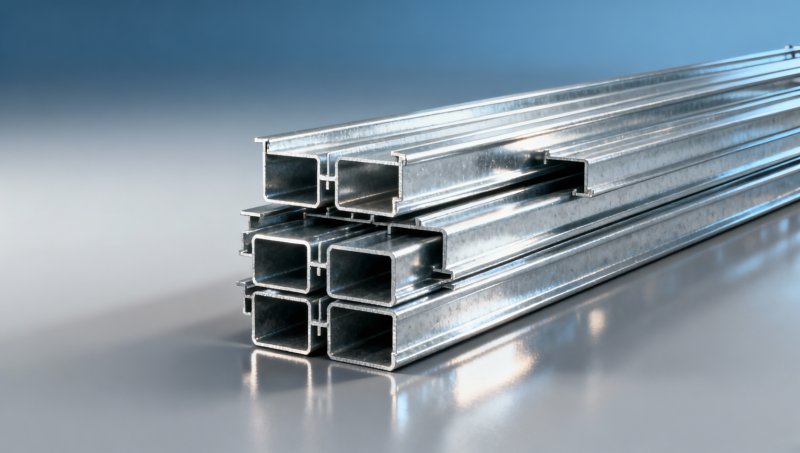
As a certified structural steel manufacturer serving clients across 42 countries, Hongteng Fengda combines production agility with engineering-grade assurance. Our Shandong facility maintains 120,000 MT/year cold-forming capacity, with dedicated lines for galvanized C-sections ranging from 60×40×1.2 mm to 300×80×12 mm—all supporting custom lengths (6 m, 9 m, 12 m, or fully tailored).
We don’t just ship steel—we align with your procurement rhythm: free pre-shipment dimensional verification, real-time logistics tracking, and MTRs issued within 24 hours of galvanizing completion. For urgent projects, we offer expedited processing (lead time: 10–14 days for standard specs) backed by ISO 9001 and CE-certified workflows.
Whether you need ASTM-compliant purlins for a warehouse in Texas, EN-certified wall beams for a factory in Poland, or OEM-branded C-sections for a distributor in Dubai—we deliver consistent quality, documented compliance, and responsive technical support at every stage.
Next Steps for Your Procurement Team
- Request our 2026 Q3 price list with volume-based tiering (MOQ: 5 MT for standard sizes)
- Share your project specifications—we’ll provide a dimensional feasibility review + galvanizing recommendation within 48 hours
- Arrange a virtual factory tour or request SGS-certified sample kits (including coating thickness test reports)
- Discuss extended payment terms (LC, TT, or D/P) aligned with your project milestone schedule
Please give us a message


Please enter what you want to find