At first glance, simple steel rod specifications may seem easy to source, yet steel rod lead time often becomes longer due to raw material scheduling, rolling capacity, heat treatment, testing, and export coordination. For technical evaluation, it is not enough to read only diameter, length, and grade on a quotation sheet. Hidden production constraints can change delivery from a routine shipment into a schedule risk. Understanding why steel rod lead time expands helps improve supplier comparison, reduce planning errors, and secure structural steel products that meet both specification and delivery expectations.
Why does steel rod lead time get longer even when specifications look simple?
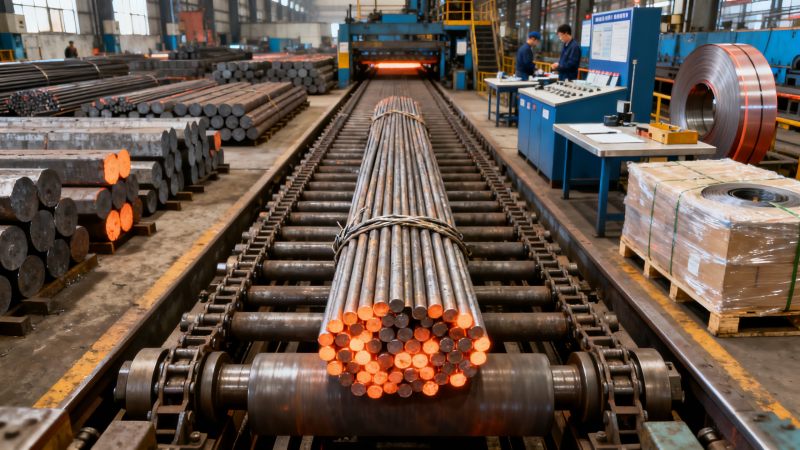
A common misunderstanding is that simple specifications always mean fast production. In steel processing, that is often untrue. A rod with standard dimensions may still require waiting for the correct billet chemistry, rolling slot availability, straightening, heat treatment, surface finishing, inspection, bundling, and export packing. As a result, steel rod lead time is influenced more by factory workflow and order combination than by how simple a drawing appears.
Another reason is production economy. Steel mills and downstream processors prefer to group similar grades and sizes into efficient campaign runs. If a requested steel rod size is technically ordinary but currently outside the active rolling schedule, it may wait until enough compatible orders are accumulated. This scheduling logic can add days or weeks, especially when mills are balancing domestic and export demand.
The term steel rod lead time therefore covers more than manufacturing hours. It includes queue time before production, testing time after production, and logistics time before shipment release. For project planning, these three stages matter as much as the actual rolling time.
Which production steps usually control steel rod lead time the most?
The most important factors are usually upstream material readiness and downstream quality confirmation. If the required steel grade needs controlled chemistry or specific mechanical properties, mills must align melting, casting, and rolling schedules carefully. Even for standard carbon or low alloy steel, production may be delayed if the required billet stock is committed elsewhere.
Heat treatment is another frequent bottleneck. Not every steel rod needs thermal processing, but when strength, toughness, or stress relief is required, furnace loading plans affect delivery. A short furnace campaign with partial capacity can extend steel rod lead time much more than buyers expect. The same applies to pickling, peeling, coating, or galvanizing when surface requirements are involved.
Inspection also matters. Mechanical testing, dimensional checks, chemistry analysis, ultrasonic examination, and third-party witness inspection all add real time. These are necessary controls, not avoidable delays. In export business, certification preparation can further affect the release date. Materials supplied under ASTM, EN, JIS, or GB standards often require organized documentation before dispatch.
In many steel supply chains, apparently similar products can have different timing profiles because of finishing and corrosion protection. For example, where a project also needs coated tubular or conduit solutions, evaluating delivery windows across categories becomes important. In that context, Galvanized Steel Electrical Conduit may be relevant for applications requiring galvanized steel, anti-corrosion performance, tensile strength of at least 520MPa, and compliance with standards such as AISI, ASTM, DIN, JIS, GB, SUS, and EN. With DX52D material options, thickness tolerance of ±0.15mm, and export seaworthy packing, it shows how protective coating, testing, and packaging can also shape lead time expectations across structural steel procurement.
How do order quantity, customization, and standards affect steel rod lead time?
Order quantity has a double effect. Very large volumes may secure better production priority, but they also need longer mill allocation, more inspection records, and more shipping coordination. Small quantities can be even slower if they are below efficient rolling or cutting thresholds. In both cases, steel rod lead time depends on whether the order fits the supplier’s standard production rhythm.
Customization is one of the biggest timing variables. Special cut lengths, tight straightness control, narrow diameter tolerance, additional marking, custom packaging, or bundled mixed sizes can all push delivery beyond the quoted baseline. Buyers often focus on the steel grade but underestimate finishing details. In practice, these details can decide whether the order ships in three weeks or eight.
Standards and destination markets also influence timing. A rod produced for local inventory may move quickly, while export material requiring mill test certificates, third-party verification, or customer-specific acceptance rules takes longer. When comparing suppliers, a shorter initial quote is useful only if the scope of compliance is truly equivalent. Otherwise, the advertised steel rod lead time may hide exclusions that later create disputes.
How can steel buyers judge whether a quoted lead time is realistic?
The best approach is to break the quote into visible stages. Ask for raw material readiness, rolling window, secondary processing, inspection duration, packing time, and port handover. A realistic supplier should be able to explain each step clearly. If the answer only gives one final date without process detail, the stated steel rod lead time may be optimistic.
It is also helpful to check whether the supplier owns production facilities, uses long-term partner mills, or relies on spot-market sourcing. Stable manufacturing capacity usually means better schedule control. Hongteng Fengda, as a structural steel manufacturer and exporter from China, supports global construction and industrial projects with angle steel, channel steel, beams, cold formed profiles, and customized structural steel components. This kind of integrated capability often improves timing predictability because quality control, production planning, and export execution are aligned rather than fragmented.
Another practical method is to compare promised timing with specification complexity. If a supplier offers very short steel rod lead time for a grade that requires heat treatment, special testing, or mixed-batch export documents, further verification is necessary. Reliable delivery is not the shortest promise; it is the most believable plan.
What mistakes most often cause steel rod lead time delays?
One frequent mistake is approving a quotation before freezing technical details. Later changes to diameter tolerance, rod end condition, marking, bundling method, coating, or certificate format can force rescheduling. Once production slots are set, even small changes may restart planning and extend steel rod lead time.
Another mistake is assuming all standards are interchangeable. Material described as equivalent in general use may still require different chemistry limits, tensile performance, or inspection methods. If the compliance basis is unclear at order stage, the supplier may need additional testing or even re-production. That is far more costly than clarifying the standard early.
Logistics assumptions also create trouble. Production completion does not guarantee immediate shipment. Port congestion, container availability, inland transportation, fumigation requirements for packing materials, and document review can all affect final dispatch. Therefore, real steel rod lead time should be discussed as a total delivery timeline, not just a factory finish date.
How can lead time risk be reduced without sacrificing steel quality?
Start with clear specification control. Define grade, dimensions, tolerance, surface condition, heat treatment, test scope, and certificate requirements in one consistent document. This reduces revision cycles and gives the supplier a usable production basis. When possible, allow rational alternatives for packaging or shipment splitting, because flexibility in non-critical areas can shorten steel rod lead time.
Second, request milestone reporting instead of waiting for a final update. A useful schedule may include order confirmation, raw material allocation, rolling date, testing completion, and shipping readiness. This makes it easier to detect delay early and respond before the project is affected.
Third, work with suppliers that combine manufacturing discipline with export experience. Structural steel programs often involve more than one product category, and coordination across beams, channels, angles, rods, profiles, and coated components can prevent isolated delays. Consistent quality control and dependable delivery are usually stronger indicators of value than aggressive promises on paper.
In summary, steel rod lead time becomes longer not because the specification looks difficult, but because steel production depends on scheduling logic, process sequence, verification steps, and shipment execution. The most effective way to avoid delays is to evaluate the entire chain: raw materials, rolling, finishing, testing, compliance, and export logistics. For structural steel sourcing, careful technical alignment and realistic planning create better outcomes than relying on appearance alone. If a project requires stable steel supply, customized support, and international-standard quality, the next step is to confirm the full production and delivery path before placing the order.
Please give us a message


Please enter what you want to find