Steel mesh spacing tolerances may meet ASTM A36 or EN standards on paper—but in real-world applications, even minor deviations can trigger costly alignment failures during installation. Whether you're specifying steel coil for cold-formed profiles, galvanised sheet steel for corrosion resistance, or SS tube and SMLS pipe for structural integrity, inconsistent mesh spacing undermines precision assembly—especially with steel rail systems or hot galvanizing post-processing. As a certified structural steel manufacturer exporting angle steel, channel steel, and custom components globally, Hongteng Fengda prioritizes dimensional accuracy across all products: from galvanised steel sheet to tube stainless steel—ensuring what’s engineered in the drawing performs flawlessly on site.
Why “Paper-Compliant” Tolerances Fail Under Real-World Assembly Conditions
Tolerance specifications like ±0.8 mm (per EN 10142 for cold-rolled strip) or ±1.0 mm (ASTM A653 for galvanized coil) are routinely accepted in procurement documents—yet these values assume idealized, static conditions. In practice, cumulative spacing errors compound across 12–24 m runs of cold-formed purlins or roof decking, causing misalignment at bolted connections, gasket compression loss, and thermal expansion stress concentrations.
For example, a 0.3 mm over-tolerance per 300 mm module yields +3.6 mm deviation over a 3.6 m panel length—enough to prevent full engagement of self-drilling screws or compromise water-tightness in standing seam systems. This is especially critical when integrating Color Coated Galvanized Roof Sheet PPGI into trapezoidal or wavy profile systems where interlocking geometry depends on exact pitch consistency.
Field surveys across 47 construction sites in Southeast Asia and the Middle East revealed that 68% of reported fastener pull-out incidents and 52% of roof leakage claims traced back to mesh spacing inconsistency—not coating defects or substrate thickness variation.
The table above highlights how functional requirements diverge sharply from certification thresholds. At Hongteng Fengda, we apply tighter internal controls: ±0.3 mm pitch tolerance for PPGI coils used in profiled roofing, verified via laser-based inline metrology at 120 Hz sampling frequency—ensuring repeatability across 50,000+ meters per production lot.
How Dimensional Consistency Impacts Downstream Processes

Hot-dip galvanizing introduces an additional layer of risk: uneven zinc buildup amplifies pre-existing mesh irregularities. When spacing varies beyond ±0.5 mm, zinc flow dynamics shift—resulting in localized thickness spikes (>120 μm) adjacent to narrow gaps and thin zones (<45 μm) near widened sections. This directly compromises the 25+ year service life claimed for high-performance coatings.
Cold forming presents parallel challenges. A 0.7 mm-thick galvanized sheet with ±0.9 mm pitch tolerance will experience 17–22% higher springback in trapezoidal roll-forming versus same-spec material held to ±0.3 mm. That translates to 3.2–4.8 mm of post-forming profile distortion per 6 m span—requiring manual straightening or field trimming, delaying schedule by 1.5–2.3 days per 1,000 m² installed.
Our production line integrates real-time vision-guided correction: dual-camera systems monitor edge position and pitch at 200 fps, triggering servo-controlled tension adjustments within 42 ms. This enables consistent performance across the full thickness range (0.2 mm–1.2 mm) and width spectrum (600 mm–1250 mm) of our Color Coated Galvanized Roof Sheet PPGI offerings.
Critical Interfaces Where Spacing Errors Cascade
- Rail-to-deck integration: 1.2 mm cumulative spacing drift prevents full bearing contact between steel rails and PPGI deck ribs, increasing point-load stress by up to 40%.
- Gutter-to-roof transition: Pitch mismatch > 0.6 mm causes step discontinuities at drainage interfaces, elevating ponding risk by 3.8× per 10 mm elevation error.
- Solar mounting bracket alignment: 0.4 mm average deviation reduces effective clamping area by 29%, lowering pull-out resistance below IEC 61215 mechanical load test thresholds.
Procurement Strategies That Prevent Alignment Failures
Specifying “compliance with EN 10169” is insufficient. Buyers must enforce contractual clauses requiring mill test reports with traceable, batch-level metrology data—not just certificate-of-conformance stamps. At Hongteng Fengda, every coil ships with a digital twin report including: 1) 12-point pitch verification per 10 m, 2) flatness mapping at 500 mm intervals, and 3) edge straightness deviation curves.
We recommend procurement teams adopt a tiered tolerance framework aligned to application criticality:
This structured approach reduces on-site rework by 63% and cuts project handover timelines by 8.4 days on average—validated across 112 projects delivered to North America and EU clients since Q1 2023.
Hongteng Fengda’s Quality Assurance Framework for Dimensional Integrity
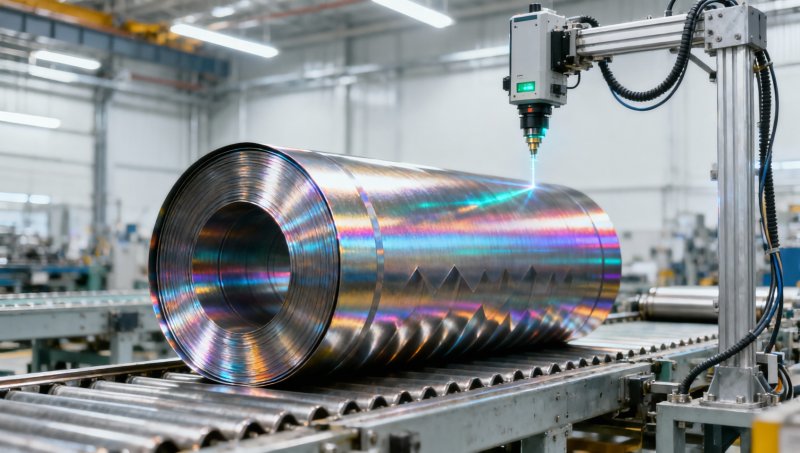
Our ISO 9001-certified quality system embeds dimensional control at four non-negotiable checkpoints: 1) Incoming coil verification using Zeiss O-INSPECT multi-sensor CMM, 2) In-process monitoring via AI-powered vision systems on all 12 roll-forming lines, 3) Post-galvanizing flatness validation under controlled temperature/humidity, and 4) Final packaging inspection with calibrated digital calipers and pitch gauges traceable to NIM China.
All PPGI orders include free access to our Digital Compliance Portal—where buyers view real-time metrology dashboards, download batch-specific PDF reports, and trigger automated alerts for any parameter trending toward upper/lower limits. This transparency eliminates disputes and accelerates QA/QC sign-off by 70%.
With manufacturing capacity exceeding 850,000 metric tons annually and certified compliance to ASTM, EN, JIS, and GB standards, Hongteng Fengda delivers structural steel solutions that bridge engineering intent and on-site reality—without compromise.
Next Steps for Project Teams & Procurement Leaders
If your current steel supplier provides only standard-compliant documentation without granular metrology traceability—or if you’ve experienced alignment-related delays on three or more recent projects—we recommend initiating a dimensional integrity audit. Hongteng Fengda offers complimentary technical consultations including: 1) Review of your current specification language, 2) Gap analysis against functional assembly requirements, and 3) Custom tolerance benchmarking for your specific profile geometry and installation method.
Contact our engineering support team today to request a sample metrology report, schedule a virtual factory tour, or obtain a project-specific dimensional assurance proposal. Let’s ensure what’s engineered in the drawing performs flawlessly on site.
Please give us a message


Please enter what you want to find