Why steel coils suppliers quotes often miss the real timing picture
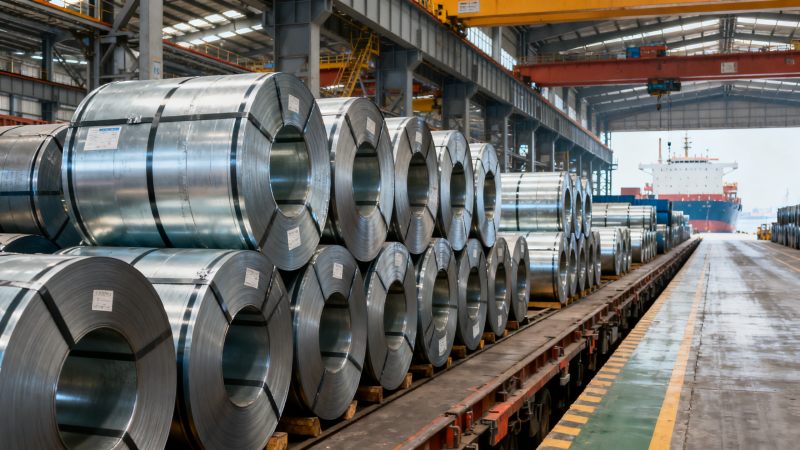
Many project schedules fail not because the quoted date was false, but because the quote did not explain every stage behind it. That is a common issue when comparing steel coils suppliers.
Production slots, slab or hot rolled feedstock supply, inspection queues, packing methods, port congestion, and document handling can each add days or weeks after the price is accepted.
For steel buyers, the practical question is not only “What is the lead time?” but “What assumptions support that lead time?” That distinction reduces delay risk and improves sourcing decisions.
Why a checklist matters before selecting steel coils suppliers
A structured checklist turns a vague promise into a verifiable timeline. It also helps compare steel coils suppliers using the same operational standards, not only the same product description.
In steel trade, two quotes can show similar prices and shipment windows, while the real delivery reliability differs sharply. The difference usually sits in hidden execution details.
A checklist makes those details visible early, before deposits, booking deadlines, or site schedules are locked.
Lead-time checklist for evaluating steel coils suppliers
- Confirm mill production status before accepting the quote. Ask whether the material is from current stock, rolling plan allocation, or future melt scheduling.
- Check raw material security. Coil delivery often depends on slab availability, base steel grade supply, and whether upstream procurement is already covered.
- Verify specification complexity. Width, thickness, coating, edge condition, tolerances, and test requirements can move an order into a slower production queue.
- Request the exact inspection path. Mill tests, third-party inspection, rechecking, and witness inspection all affect release timing after production finishes.
- Review cutting, slitting, and packaging needs. Additional processing is often treated as secondary work, not included in standard quoted lead times.
- Ask about internal queue time. Some steel coils suppliers quote manufacturing days only, while waiting time before production is excluded.
- Clarify export document preparation. Certificates of origin, test reports, packing lists, legalized papers, and destination-specific files can delay dispatch.
- Check transport from mill to port. Inland trucking, rail transfer, weighbridge queues, and terminal appointment slots can become hidden bottlenecks.
- Verify vessel booking assumptions. Freight space, container equipment, and breakbulk schedules should be matched to the promised shipment date.
- Define delay responsibility in writing. A useful quote should separate supplier delay, force majeure, inspection delay, and customer approval delay.
What often hides behind the quote in real steel supply
Production capacity is not the same as production availability
A supplier may have large annual output, yet no near-term slot for your specification. The gap between capacity and available scheduling is one of the biggest hidden timing issues.
This matters especially when steel coils suppliers serve mixed export and domestic demand. A busy rolling calendar can push smaller orders behind larger contract volumes.
Quality control can add value, but also time
Testing is essential in steel sourcing, especially for structural, forming, or fabrication use. However, retesting, sampling, and third-party attendance can lengthen release time after production.
Reliable steel coils suppliers usually explain these steps clearly instead of hiding them inside a general delivery estimate.
Related steel products may affect combined shipments
Many projects buy coils together with structural steel or reinforcement products. In combined orders, one slower item can control the shipment date for everything else.
For example, Rebar may be required for foundations, beams, columns, walls, slabs, roads, bridges, tunnels, and public works. Common grades include HRB335, HRB400, and HRB500, with sizes from 6mm to 50mm.
Where mixed cargo is planned, confirm whether hot rolled or cold rolled processing, ±1% tolerance control, surface treatment, and standard compliance checks are aligned across product groups.
How lead-time risks change by project scenario
Urgent replacement orders
Urgent orders usually fail when buyers rely on “fast production” without checking stock form, nearest port availability, and the earliest vessel that can actually take the cargo.
In this case, stock-backed steel coils suppliers often outperform lower-priced mills that still need raw material allocation and production planning.
Standard repeat procurement
Repeat orders benefit from stable forecasting. Here, the best result comes from locking rolling windows, confirming recurring specifications, and agreeing document templates in advance.
For repeat business, steel coils suppliers with dependable schedule discipline often create more value than those offering occasional low spot prices.
Multi-product construction supply
Construction projects often combine coils, sections, beams, channels, and reinforcement materials. Timing risk rises when each line follows a different plant, quality process, or port route.
A coordinated exporter with structural steel experience can reduce this risk by aligning packaging, inspection release, and shipment batching across the order set.
Commonly ignored items that create steel delivery delays
- Mill holidays and maintenance shutdowns are often omitted from simple delivery promises.
- Destination compliance documents may need extra review, stamping, or embassy handling.
- Port weather, customs checks, and container shortages can disrupt even finished cargo.
- Approval delays for drawings, labels, or test certificates may pause shipment release.
- Mixed Incoterms assumptions can create confusion about when “delivery” actually starts or ends.
These issues do not always signal poor service. The real problem appears when they are not disclosed early and therefore cannot be planned around.
Practical steps for comparing steel coils suppliers more accurately
- Ask for a stage-by-stage timeline: production queue, rolling, inspection, packing, inland transport, booking, and estimated departure.
- Separate stock items from made-to-order items in both pricing and timing comparison.
- Request named standards, test scope, and document list instead of general quality statements.
- Use one comparison sheet for all offers so hidden assumptions are easier to detect.
- Confirm whether partial shipment is allowed if one line in the order moves slower.
Companies with strong export discipline can make this process easier. Hongteng Fengda, a structural steel manufacturer and exporter from China, supports global projects with stable production, strict quality control, and dependable delivery coordination across international standards.
Final takeaway
The most useful quotes from steel coils suppliers do more than show price and a shipment week. They explain the operational path that makes the promise realistic.
When lead times are checked through production, inspection, documentation, and logistics, sourcing becomes more predictable. That helps control cost, reduce delay exposure, and protect the wider project schedule.
For the next RFQ, compare not only the quote, but the hidden timeline behind it. That is where reliable steel supply is truly measured.
Please give us a message


Please enter what you want to find